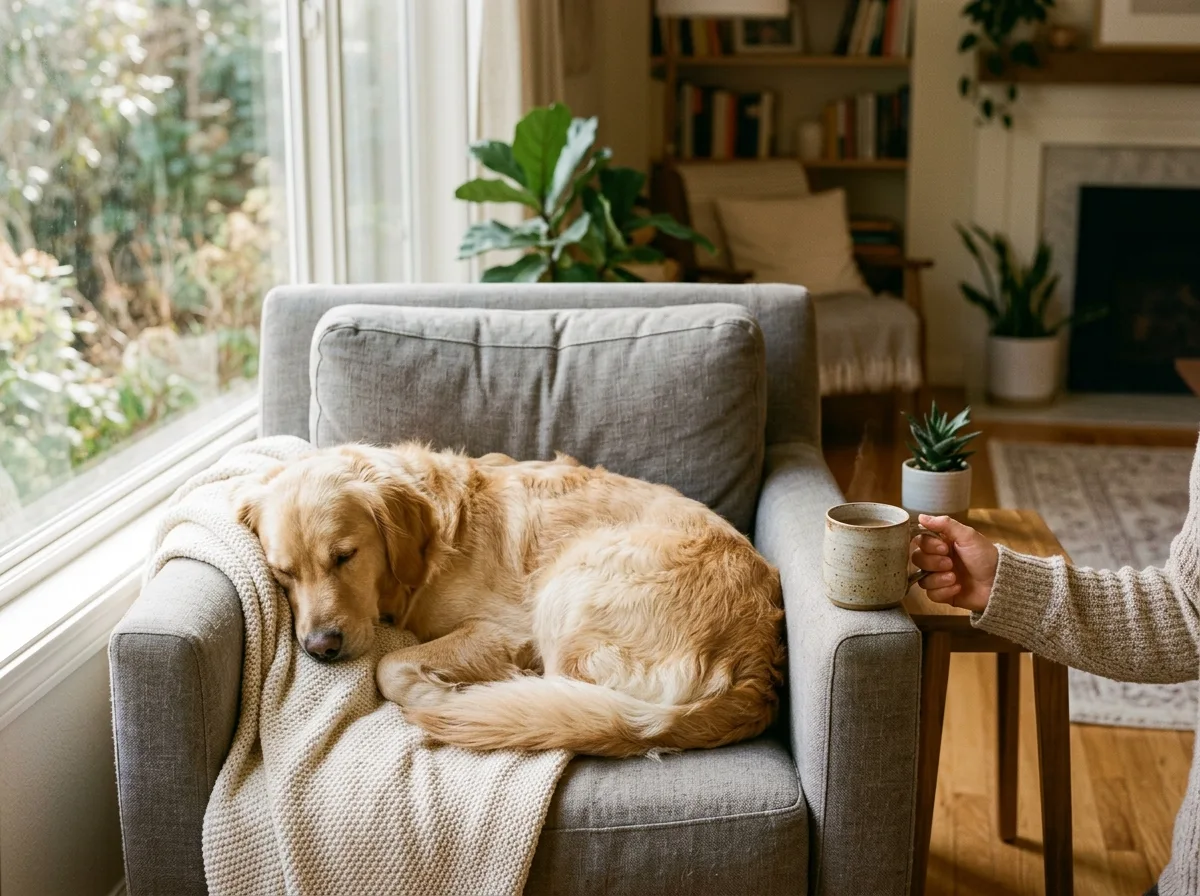
You get up for thirty seconds to grab a snack. By the time you turn around, your dog is in your seat, chin on the armrest, giving you a look like it’s been theirs all along. If you’ve ever asked yourself why does my dog take my spot every single time, you’ve got plenty of company. It’s one of the most common things dog owners notice, and it’s almost always a compliment, not a power grab.
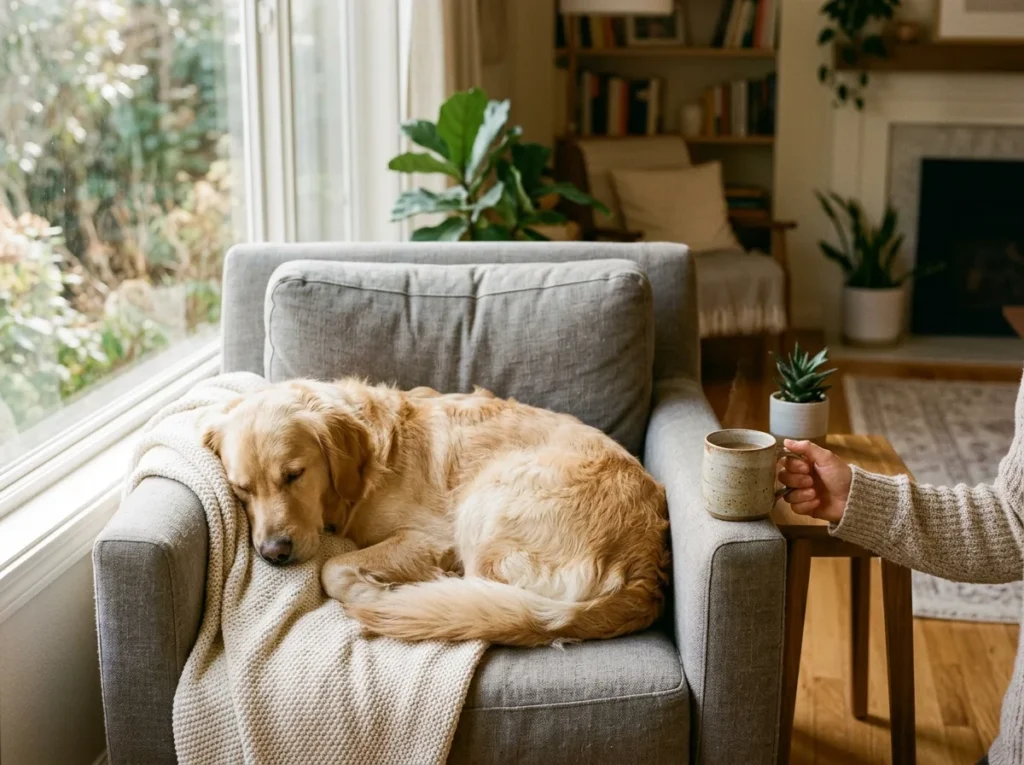
Short answer: your spot is warm, it smells like you, and as far as your dog’s concerned, it’s the best seat in the house. Most dogs take it for comfort, affection and plain habit. Only rarely is guarding or anxiety behind it, and when it is, there are other obvious signs.
The 7 most likely reasons your dog steals your seat
1. It is still warm
This one’s simple. Dogs love warmth, and a cushion you’ve been sitting on for an hour is the coziest bit of fabric in the room. Small dogs, short-haired dogs and older dogs do it most, especially when it’s cold out. If your dog only steals your seat in winter, warmth is probably the whole story.
2. It smells like you
Your dog’s nose is way more sensitive than yours, and your seat holds your smell more than anywhere else in the house except your bed. Curling up there is a bit like snuggling into your sweater. Soothing, familiar, and it keeps them close to you even after you’ve walked off.
3. They want to be where the action is
Your chair, or your end of the couch, usually has the best view: of you, the door, the kitchen. Dogs are social, and lots of them like to park wherever they can keep an eye on the family. You get up, the prime spot opens up, and in they go.
4. You have accidentally rewarded it
If you laughed, grabbed your phone for a photo, or gave your dog a cuddle the first few times they jumped in your seat, they learned it gets a great reaction. Dogs repeat whatever works. No problem, unless you want it to stop. Then you just need to stop rewarding it (more on that below).
5. It is a way to save your place
Some owners swear their dog is “saving the seat” for them, and they might be onto something. Plenty of dogs hop down the second you come back, then settle right beside you. For those dogs, sitting in your spot seems to be about staying connected to you, not keeping you out.
6. Mild worry when you walk away
Dogs who follow you from room to room, whine when you leave, or have a rough time home alone may use your spot like a comfort blanket. If the seat stealing comes with pacing, panting or chewed-up stuff when you go out, it’s worth reading up on separation stress and talking to your vet or a certified trainer.
7. Resource guarding (the rare one)
A small number of dogs growl, go stiff or snap when asked to get off the furniture. That’s not about your seat being special. It’s about guarding something they value. This is the only version of the habit that really needs work, ideally with a qualified professional. You can find behavior specialists through the American Veterinary Society of Animal Behavior.
Is taking your spot a sign of dominance?
Probably not. The old idea that dogs are always trying to climb some household “pack ladder” has mostly been dropped by modern behavior experts. A dog who hops into your warm seat and then happily moves when you ask isn’t challenging you. They’re just a dog who likes nice things. The better question isn’t that they sat there. It’s how they react when you come back.
| What you see when you return | What it usually means |
|---|---|
| Tail wagging, scoots over or hops down | Comfort and affection. Nothing to fix. |
| Stays put, but moves when asked | Comfort plus habit. Easy to train if you want to. |
| Totally ignores you | Learned habit. Needs a clear cue like “off.” |
| Stiff body, hard stare, growling | Could be resource guarding. Get expert help. |
How to get your seat back (without hurt feelings)
Don’t mind the habit? Then don’t change a thing. Would you rather keep your seat? Here’s a gentle routine that works for most dogs:
- Give them a better spot. Put a comfy bed or blanket right next to your seat so your dog can still be close and warm.
- Teach a clear “off.” Toss a treat onto the floor, say “off” as your dog steps down, and praise. Repeat until they move on the word alone.
- Reward the new spot. When your dog picks their own bed, drop a treat or a chew there. Make it the best place in the room.
- Be consistent. Everyone at home needs to use the same cue and the same rules. Mixed messages keep the habit going.
- Never drag or shove. Forcing a dog off furniture can create the exact guarding you’re trying to avoid.
If your dog is still learning basic cues, our guide to stopping leash pulling uses the same reward-based approach and pairs nicely with this.
When to talk to your vet
Seat stealing by itself isn’t a health worry. But a sudden change in behavior is always worth noting. If your dog has started hunting for warm spots all the time, seems stiff getting up, or has suddenly gone clingy, a checkup can rule out sore joints or other issues. Our tips on choosing a good veterinarian can help if you need one.
Frequently asked questions
Why does my dog take my spot on the bed?
Same reasons as the couch. Your side of the bed is warm and smells strongly of you. Lots of dogs also feel safest sleeping where their person sleeps.
Should I let my dog sit in my spot?
Totally up to you. If your dog moves happily when asked, there’s no harm in it. What matters is being able to ask them to move without a fuss.
Why does my dog take my spot but not my partner’s?
Dogs often bond most with whoever feeds, walks or plays with them the most. Your scent might just be the one they find most comforting.
For more on everyday habits and routines, check out our dog care basics guide.
Leave a Reply