You sink into the couch, and a minute later there’s 60 pounds of dog poured over your legs. Or it’s 3 a.m., you’re clinging to the edge of the mattress, and a warm, snoring lump has taken over your chest. Little dogs curl up in your lap. Big dogs seem to have no idea how big they are. So why does my dog lay on me when there’s a perfectly nice (and expensive) dog bed right there? Mostly for sweet reasons. A few exceptions are worth knowing about, though.
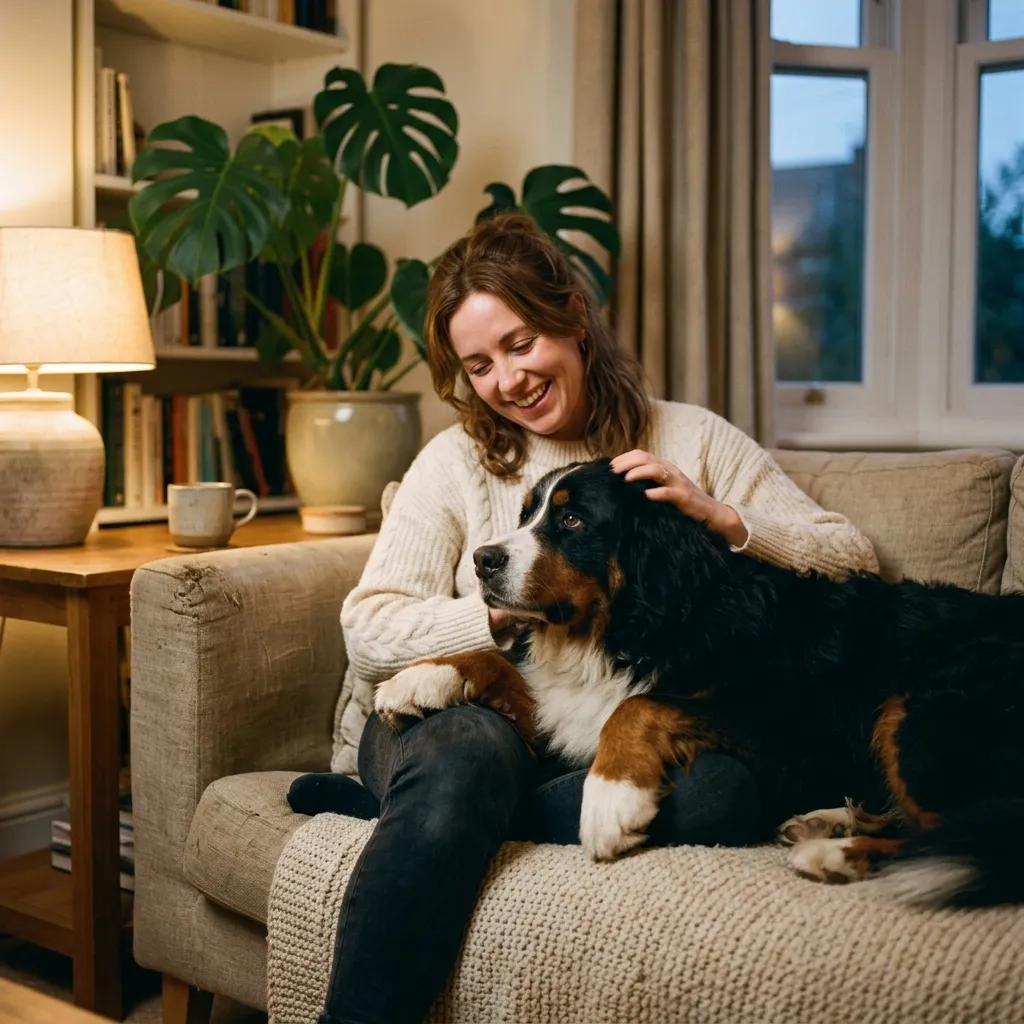
Quick answer: it’s mostly about closeness, comfort, warmth and feeling safe. You smell like home, you’re toasty, and touching you helps a lot of dogs unwind. Sometimes it’s a play for attention, or a way of keeping tabs on you. In a few dogs it’s tied to anxiety or possessiveness. Usually? Nothing to worry about. But sudden clinginess or any guarding deserves a closer look.
A bit of dog history: why contact feels good
Think back to puppyhood. For the first few weeks of life, a puppy is part of a warm heap of littermates and mom. That heap means warmth and safety, so touch and comfort get linked right from the start. Wild dogs and wolves rest close together too. When your grown-up dog flops on top of you, they’re recreating that cozy, safe feeling. Only now you’re the most important member of the pile.
Scientists are getting more and more curious about how touch works between people and their pets. A 2024 study in the journal Anthrozoös looked at everyday touch, like stroking and leaning, between people and their animals, and found that pets often go looking for contact and give it back, rather than just putting up with it (read the study). For lots of dogs, lying on you is their half of that conversation.
Why does my dog lay on me? 9 common reasons
1. Affection and bonding
This is the big one. Lying on you is about as trusting as a dog gets. It means switching off completely right next to you. You’ll often see soft eyes, big contented sighs and a body that goes heavy and floppy. Many dogs save this for one special person, usually the one they feel closest to.
2. Comfort and your scent
Your clothes, your blanket, you. It all smells like home, and to a dog that’s incredibly soothing. Same reason they steal your pillow or nest in the hoodie you just took off.
3. Warmth
You’re warm. Dogs love warm. Small dogs, short-haired dogs and older dogs especially go looking for body heat, more so on chilly evenings or in rooms with the AC blasting. Notice your dog gets extra lap-happy in winter? Warmth is part of it.
4. Security and reassurance
Thunderstorms, fireworks, visitors, new places. Plenty of dogs squish in closer or climb right on top of their person when life gets scary. Touching you helps them feel safe. If your dog mostly does this when something’s unsettling them, you’re their safe place.
5. Keeping tabs on you
Some dogs lie on you, or on your feet, so they’ll know the second you move. It’s the same instinct behind following you from room to room. You’re not sneaking off anywhere without them.
6. Attention seeking
If climbing on you always gets pets, belly rubs or a treat, your dog is going to keep doing it. Smart dog. Totally fine, as long as you’re happy with it.
7. Your dog is simply a lap dog
Lots of small companion breeds, like Cavaliers, Shih Tzus, Pugs and Maltese, were bred for centuries to sit with people. Some big breeds, like Great Danes, Berners and Greyhounds, are famous for thinking they’re lap dogs too. Personality counts as much as breed, though.
8. Guarding you or a resource
Once in a while, a dog lies on someone to control who gets near them. You’ll see the body stiffen, maybe a growl or a snap when another pet or person comes close. That’s resource guarding, and it’s not the same as affection. It needs a calm, structured plan with a qualified trainer or behavior professional.
9. Not feeling well
A dog who’s suddenly way clingier than normal might be sore, sick or dealing with age-related changes. If the extra cuddling comes with changes in appetite, energy, sleep or how they move, a vet check makes sense.
Why does my dog lay on top of me in bed?
Night is when a lot of dogs feel most connected to their people. The house is quiet, your scent is everywhere, and you’ve finally stopped moving. Some dogs want to be as close as physically possible, which can mean draped across your legs or parked on your chest.
So is sharing a bed a problem? Not necessarily. A 2018 study from Canisius College, published in Anthrozoös, surveyed nearly 1,000 women in the US. Many said sleeping with a dog was less disruptive than sleeping next to a human partner or a cat, and that it made them feel more secure and comfortable (Canisius University summary). Every household is different, though. If a dog on your chest wrecks your sleep, setting some boundaries is fine.
Healthy closeness vs. a sign of a problem
| Usually healthy | Worth a closer look |
|---|---|
| Loose, heavy, sighing body | Stiff body, staring or growling when someone comes close |
| Happily settles in other spots too | Panics if you move away or leave the room |
| Happens during quiet, cozy moments | Came on suddenly, along with other behavior changes |
| Moves easily when you ask nicely | Snaps or guards when asked to get down |
| Otherwise eating and playing like normal | Clingy plus limping, panting or eating less |
If your dog really struggles being apart from you, this can overlap with separation problems. You might also see your dog leaning against you or taking your spot the moment you stand up, which often comes from the same place.
How to set gentle limits
You can have cuddles without getting squashed flat. Dogs pick up clear, kind rules pretty fast:
- Invite them up, don’t make it automatic. Teach “up” to join you and “off” to get down, and reward both generously.
- Offer something better. A plush bed right next to the couch or your bed, with a blanket that smells like you, makes the switch easier.
- Reward settling on their own bed with a chew or a quiet treat.
- Stay consistent. Cuddles on weekends only? That’ll confuse them. Pick rules everyone at home can stick to.
- Be careful with guarding. Never shove a dog who guards. Get a professional in, and in the meantime use treats to lure them off calmly.
- Think about size and health. A big dog lying on kids, older people or anyone who’s injured can cause pain or harm, so be firm about limits there.
Special cases: puppies, seniors and rescue dogs
Puppies naturally look for contact, especially in their first weeks away from their littermates. A warm, snuggly spot near you, like we describe in our guide to your puppy’s first night home, helps them feel safe. Older dogs may want more contact as sight or hearing fades, or because they feel the cold more. Rescue dogs can be super clingy at first while they learn to trust. Predictable routines and a safe space of their own help them grow in confidence.
What your dog’s cuddle position can tell you
How your dog lies on you tells you even more. Sprawled on their side or back across your lap, belly up? That’s deep trust and total relaxation. Chin resting on your leg while their eyes scan the room? Settled, but still on duty. You see this a lot in herding and guarding breeds. Back pressed up against you? Often about security, the same way they’d lean on a littermate. And a dog who climbs right on top of you when you’re lying down is usually after maximum contact and warmth. None of these is wrong. Noticing them just helps you tell whether your dog is relaxed, anxious or simply extremely comfy.
Frequently asked questions
Why does my dog lay on me and not my partner?
Dogs usually choose whoever they feel most bonded to or safest with. Maybe that’s the person who feeds them, walks them, or just spends the most calm time with them. Sometimes it’s simply who’s warmer or sits still longest.
Why does my dog lay on my feet?
It’s a low-effort way to stay close and keep track of you. Some dogs also do it to feel safe when things are busy or unfamiliar.
Why does my dog lay on me when I’m sick?
Dogs pick up on changes in our routine, our energy, and maybe even our smell. Plenty get more attentive and snuggly when their person is sick or upset.
Is it bad to let my dog sleep on me?
Not if you both sleep well and your dog is healthy and parasite-free. Cut back if you have allergies, a weakened immune system or broken sleep, and keep up with flea and tick prevention.
Why did my dog suddenly start laying on me?
Something may have changed: stress, a shake-up at home, colder weather, or not feeling great. Watch for other signs, and ask your vet if the new clinginess comes with any health changes.
This article is for general information and is not a substitute for advice from your veterinarian.
Leave a Reply