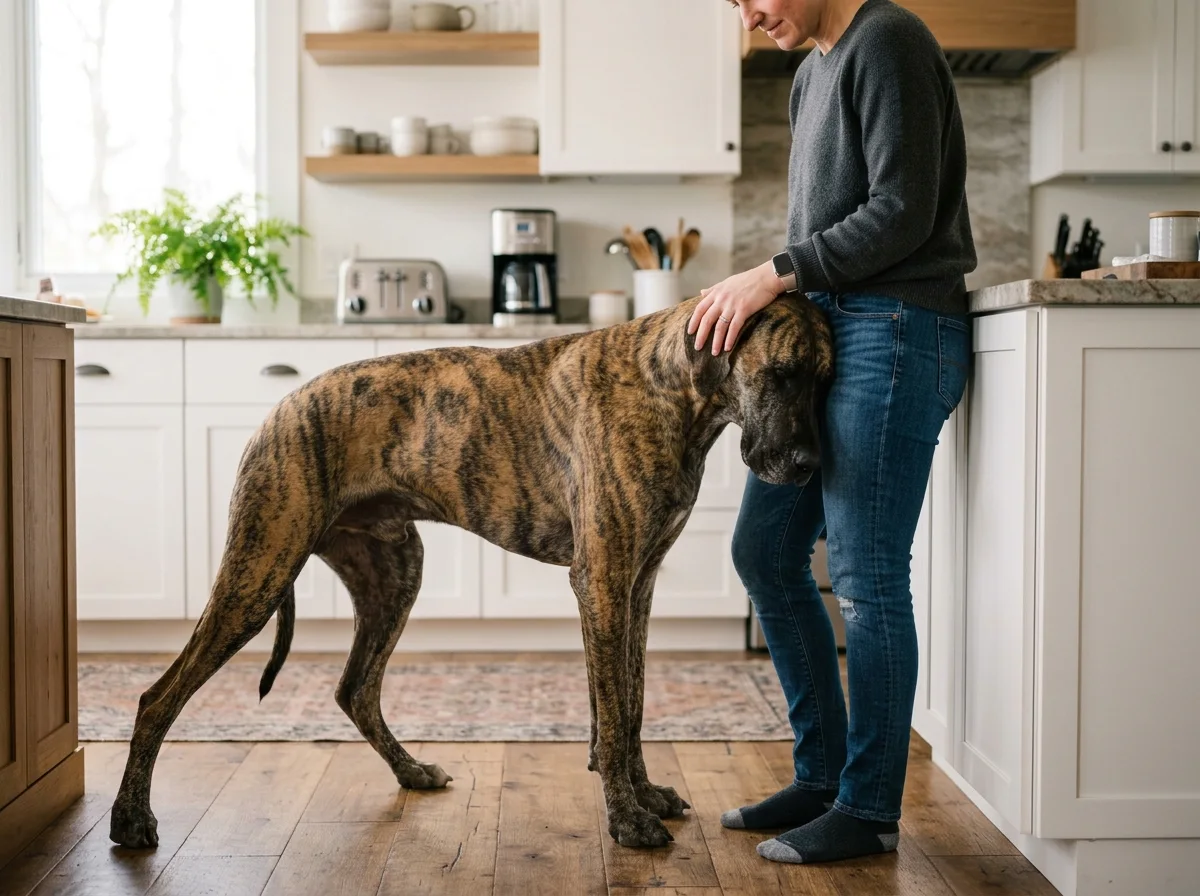
You’re standing at the kitchen counter. Your dog wanders over, turns sideways, and slowly presses every ounce of their weight into your shins. No barking. No pawing. Just one long, heavy lean. With a big dog, you practically need to brace yourself. So why does my dog lean against me like that?
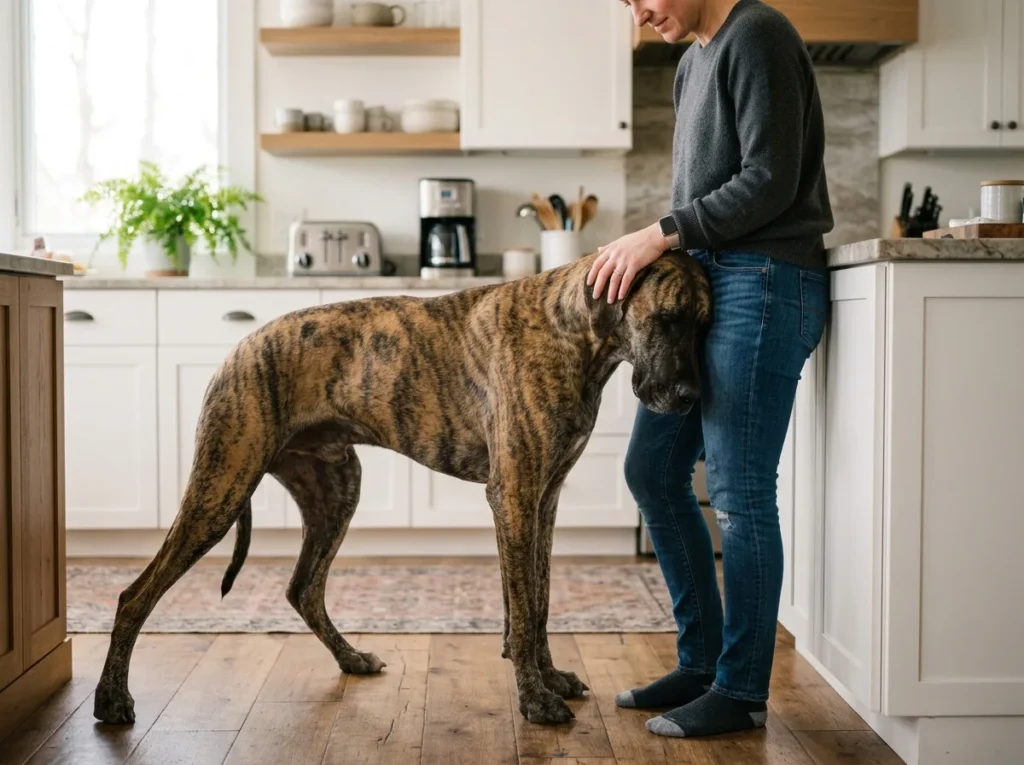
Most of the time, it’s a quiet way of saying “I want to be close to you.” Dogs are touchy-feely animals, and pressing up against their person feels comforting. But the exact same lean can also mean your dog is nervous, angling for attention, or now and then, not feeling great. The trick is paying attention to when it happens.
Read the lean by the situation
Forget the long list of theories. Here’s a simpler way to crack it, based on what’s going on around your dog in that moment.
| When your dog leans | What it most likely means |
|---|---|
| Quiet moments at home | Love and bonding. Your dog just likes the contact. |
| When guests show up, or at the vet | Looking for reassurance. You’re their safe place. |
| Storms, fireworks or loud noises | Fear. Your dog is leaning on you for comfort. |
| When you’re busy or on the phone | Wants attention. They’ve learned it gets a reaction. |
| All the time, and it’s new | Could be discomfort, balance trouble or anxiety. Worth a vet visit. |
Leaning out of affection
This is the classic lean. Your dog leans in, lets out a big sigh, maybe shuts their eyes while you scratch their chest. Touch releases feel-good hormones in dogs and people alike, which is part of why a good lean feels so nice for you too. Loose body, relaxed tail, happy face? That’s just love. Nothing more to it.
Leaning for reassurance
Watch for this one in new places. A dog who leans hard into your legs at the vet, a busy park or a big family party is often saying, “I’m not sure about this, and I feel better next to you.” Other clues: a low tail, ears pulled back, lip licking, yawning. Help by staying calm, talking softly and giving your dog a bit of space away from whatever’s bothering them.
Leaning because it works
Dogs are geniuses at figuring out what gets our attention. If every lean earns a pat or a treat, you’re going to get more leaning. That’s fine if you like it. If you don’t, wait until your dog is standing on all four feet by themselves, then reward that instead.
Breeds that are famous for leaning
Any dog can lean, but some breeds are practically famous for it. Big, people-loving dogs seem to do it the most, maybe because it’s an easy way for a large body to make contact.
- Great Danes, often called the kings of the lean
- Irish Wolfhounds and other giant breeds
- Pit bull type dogs and Staffordshire terriers
- Golden Retrievers and Labradors
- Mastiffs and Bernese Mountain Dogs
Little dogs lean too. They just tend to go for your ankle, or climb into your lap instead. Curious about a particular breed’s personality? The American Kennel Club has detailed breed profiles, and you can also browse our own dog breed guides.
When leaning might be a health sign
This one’s less common, but it matters. If your dog suddenly starts leaning on you or on walls all the time, especially if they’ve never been a leaner, watch for:
- Stumbling, wobbling or a head tilt
- Struggling to get up or lie down
- Limping, or not wanting to do stairs
- Signs of pain, like panting at rest or hiding
Leaning for physical support can point to sore joints, weakness or an inner ear problem that’s throwing off their balance. If that’s what you’re seeing, book a vet check instead of waiting it out.
Should you stop your dog from leaning?
For most families, no. Leaning is harmless and usually a sign of a strong bond. The one exception: a really big dog leaning on small kids or older people who might lose their balance. In that case, teach a simple “sit” or “go to bed” cue and reward it generously, so your dog has another way to be close without knocking anyone over.
If your dog’s leaning seems to come from worry rather than affection, building their confidence helps a lot. Positive routines, like the ones in our dog care basics guide, are a great place to start.
Quick answers
Is leaning a sign of dominance? No. Modern behavior science doesn’t back that idea up. Leaning is about closeness, comfort or attention.
Why does my dog lean on me and not other people? You’re probably their favorite person, or the one they feel safest with.
Why does my dog lean against me and look up? Usually that’s a request. Pets, a walk, dinner, or just your attention.
Leave a Reply