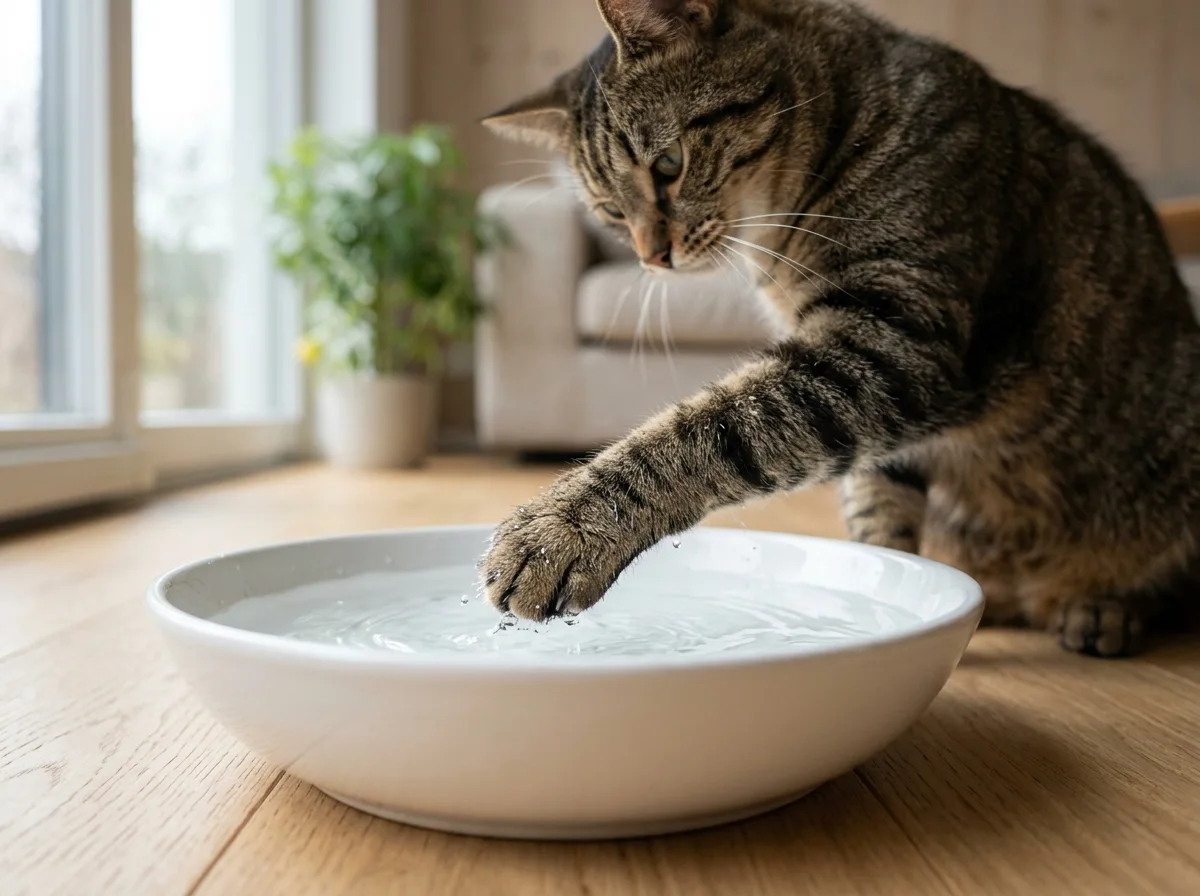
Picture it. Your cat strolls up to her water bowl, stares at it like it’s done something to offend her, dips one front paw in, then licks the water off her toes. Again. And again. Until she’s had enough. If that’s your cat, you’ve probably wondered why does my cat drink water with her paw instead of just lapping it up like a normal cat.
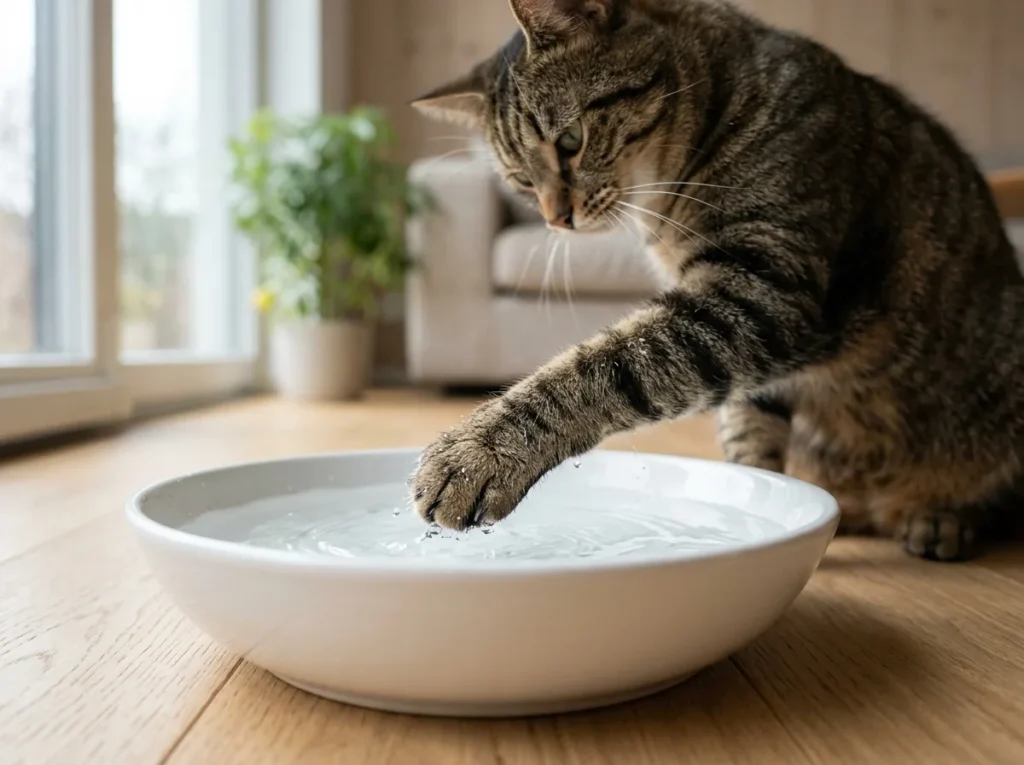
Relax, it’s usually nothing. Paw drinking is really common and mostly harmless. Nine times out of ten, your cat is quietly complaining about the bowl or where you’ve put it. Run through this checklist, easy fixes first.
The quick checklist
- Is the bowl too narrow or too deep?
- Is it hard to tell where the water level is?
- Is the bowl in a busy or exposed spot?
- Is the water moving, or does she want it to?
- Could her eyesight be changing?
- Has she started drinking way more than usual?
Let’s go through them one by one.
1. The bowl bothers her whiskers
Ever noticed how many nerves are in a cat’s whiskers? Loads. Push her face into a skinny, deep bowl and those whiskers scrape the sides. Some cats find that awful. Vets have a name for it: “whisker stress.” So she outsmarts the bowl. Paw in, paw out, lick. Water achieved, whiskers untouched.
Try this: swap to a wide, shallow bowl, or even a small ceramic plate. Lots of cats quit paw dipping within a day or two.
2. She cannot tell where the water starts
Here’s a weird one. Still water in a dark or patterned bowl can be tricky for a cat to see, especially when the level keeps changing through the day. Cats are brilliant at spotting movement. A flat, clear surface right under their nose? Not so much. One quick paw dip and she knows exactly how deep it is before her face goes in.
Try this: keep the bowl filled to the same level every day, and pick a plain, light-colored bowl so the surface is easier to see.
3. She feels exposed while drinking
Think like a wild cat for a sec. Head down at a watering hole means you can’t see who’s sneaking up. If her bowl is in a busy hallway, next to a rattling washing machine, or pushed against a wall so she has to turn her back on the room, scooping with a paw lets her keep her head up and her eyes peeled. It happens more in homes with other cats, or a dog.
Try this: move the bowl somewhere quieter where she can see the room while she drinks, and keep water away from the litter box and her food.
4. She likes moving water
Loads of cats love moving water. That’s why yours might go nuts for a dripping tap. Some bat at the bowl just to make it ripple, and rippling water seems more inviting to them. And sometimes? It’s just a game, especially with kittens and young cats.
Try this: a cat water fountain is worth a go. Clean it regularly, though, because a grubby fountain can put cats off drinking entirely.
5. Her vision may be changing
In older cats, paw dipping can start as eyesight begins to fade. New habit in a senior? Also bumping into furniture, hesitating before jumps, or pupils that look big all the time? Let your vet know.
6. She is drinking more than usual
Now the important bit. Using a paw isn’t a warning sign by itself. But if you’re topping up the bowl a lot more than you used to, or she’s parked at the water dish all the time, that extra thirst can be linked to kidney disease, diabetes or an overactive thyroid. All three are common in older cats, and all three are very manageable if you catch them early. The Cornell Feline Health Center has solid information on each.
| What you notice | Likely cause | First step |
|---|---|---|
| Paw dipping, drinking a normal amount | Bowl shape or spot | Try a wide, shallow bowl |
| Pawing and splashing, feeling playful | Play, or loves moving water | Try a fountain |
| New habit in an older cat, a bit clumsy | Changes in eyesight | Vet eye check |
| Drinking and peeing a lot more | Could be medical | Book a vet visit soon |
Is it a problem if my cat keeps doing it?
Nah. If she’s drinking enough, she’s healthy, and she just likes doing it her way, leave her to it. Some cats keep paw drinking for life, even with the perfect bowl, just because it’s their thing. Pop a towel or mat underneath and your floors will thank you.
How to help your cat drink more
Cats don’t drink much by nature, so every little bit helps. Some easy wins:
- Put water in two or three different spots around the house
- Wash bowls daily so the water always tastes fresh
- Add wet food to the menu. Our guide on how much wet food to feed a cat explains portions
- Keep water away from food bowls and the litter tray
If your cat is also throwing up or losing weight along with drinking changes, read our article on why a cat throws up and talk to your vet.
Fascinated by cat paws? Find out how to tell a cat paw print from a dog paw print.
FAQ
Why does my cat drink water with her paw and not her mouth? Usually the bowl bugs her whiskers, or she can’t judge the water level easily.
Do some breeds do this more? There’s no strong breed link, though curious, playful cats seem to do it more.
Should I buy a fountain? It’s a good option if your cat loves taps or moving water. Try a wide, shallow bowl first, though. It’s cheaper and often fixes the problem.
Leave a Reply