Socks on. Lights off. Squelch. If you live with a cat, you’ve done the 6 a.m. hallway dance at least once. So, why is my cat throwing up? Is it a big deal? The odd hurl from a healthy cat, fine. But vets will tell you straight: puking is not a personality trait. When it’s a regular thing, something’s usually up.
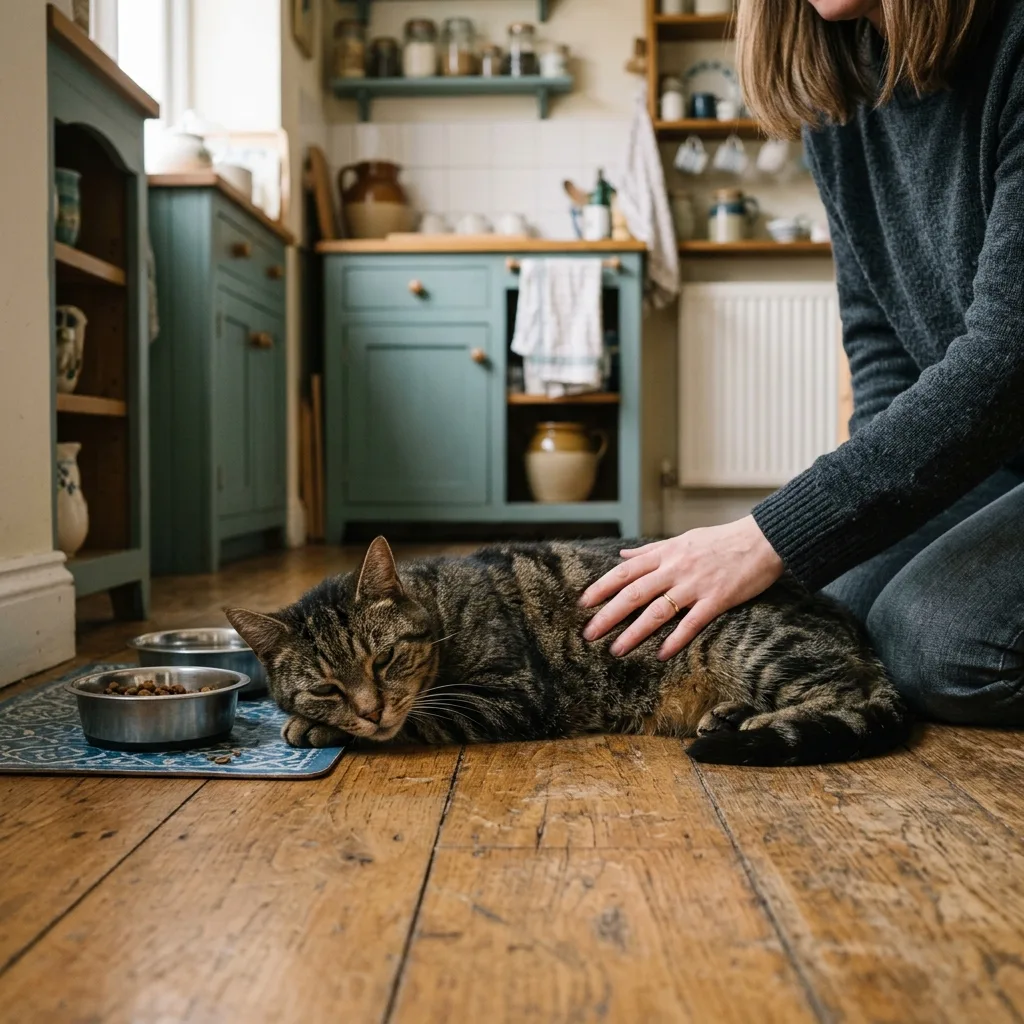
Quick answer: hairballs, scoffing dinner, a food swap done too fast. Those three cover a lot of it. Weekly vomiting? Worth a chat with your vet. Several times in one day, blood, a cat who won’t eat, a cat hiding under the bed, or a bit of string showing? Call now.
Vomiting or regurgitation?
Before anything else, it helps to know whether you’re dealing with vomiting or regurgitation. With vomiting there’s a lot of heaving and tummy-clenching before partly digested food and liquid come up. Regurgitation is much quieter, with undigested food simply sliding back out, often just after a meal, which tends to point to eating too fast or a problem in the esophagus. Telling your vet which one you saw makes their job a lot easier.
Common causes of vomiting in cats
- Hairballs. All that grooming means swallowed fur, and fluffy cats get it worst. A cat coughing them up constantly, though, might be over-grooming or have tummy trouble.
- Inhaling dinner. Very common where two or three cats are jostling at feeding time.
- New food, too fast. Or an ingredient their gut just doesn’t like.
- Snacking on stuff that isn’t food. Grass, houseplants, string, hair ties, bits of toy. Some plants are poisonous, and lilies can kill.
- Worms and other parasites, mostly in kittens and outdoor cats.
- Longer-term illness. IBD, kidney disease, an overactive thyroid, diabetes, liver disease. All pretty common once cats hit middle age.
- Infections and other bugs, which usually bring friends, like fever or a cat off their food.
What to do at home
- Whisk the food away for a couple of hours. Leave the water.
- Then a small helping of their usual food. Stays down? Back to normal meals, just smaller for a bit.
- Scribble a note: how many times, what it looked like, anything weird they might have eaten.
- Watch the litter box, the appetite and the energy levels for the next 24 hours.
One big warning, though. Don’t starve a cat for long. Skip food for more than a day or two and cats (chunky ones especially) can develop hepatic lipidosis, a nasty liver problem.
When to call the vet right away
- Throwing up several times in a single day, or vomiting that keeps coming back
- Blood in the vomit, or vomit that looks like coffee grounds
- Can’t keep water down, or hasn’t eaten anything in 24 hours
- Lethargic, hiding, or has a swollen or painful tummy
- String or thread poking out of the mouth or bottom. Please don’t pull it, because it can damage the intestines
- Possible poisoning, like contact with lilies
- A male cat straining in the litter box, which could be a urinary blockage and is an emergency
- Kittens, older cats and cats who already have health conditions
How to reduce vomiting
- Slow the speed-eaters with a puzzle feeder, a flat plate, or more meals that are smaller.
- Get the brush out, especially with long-haired cats. Less loose fur, fewer hairballs.
- Switch foods gently, bit by bit over 7 to 10 days.
- Cat-proof the place. String, ribbon and hair ties away; cat-safe plants only.
- Don’t skip checkups, particularly after age 7. Catch the slow-burn stuff early.
Feeding the right amount helps too. See our guide on how much wet food to feed a cat.
Cat vomiting FAQs
Is it normal for cats to throw up once a week? Common? Yes. Normal? Most vets say no. Get it looked at.
Why does my cat throw up right after eating? Nine times out of ten, they ate too fast. Smaller meals or a slow feeder usually fix it. If not, vet.
What does white foam vomit mean? Often an empty or irritated stomach. A one-off? Probably nothing. Keeps happening? Appointment.
For more detail, see the Cornell Feline Health Center and our cat health guides.
Leave a Reply