You glance up from your book and, yep, there it is. Two brown eyes locked on you from across the room. You wander to the kitchen. The eyes follow. You sit on the toilet, and somehow your dog is still watching. Sweet? Funny? A little intense? All three. So why does my dog stare at me so much? Mostly because you’re the most interesting, most useful and most loved thing in their whole world. But the details matter, because not every stare means the same thing.
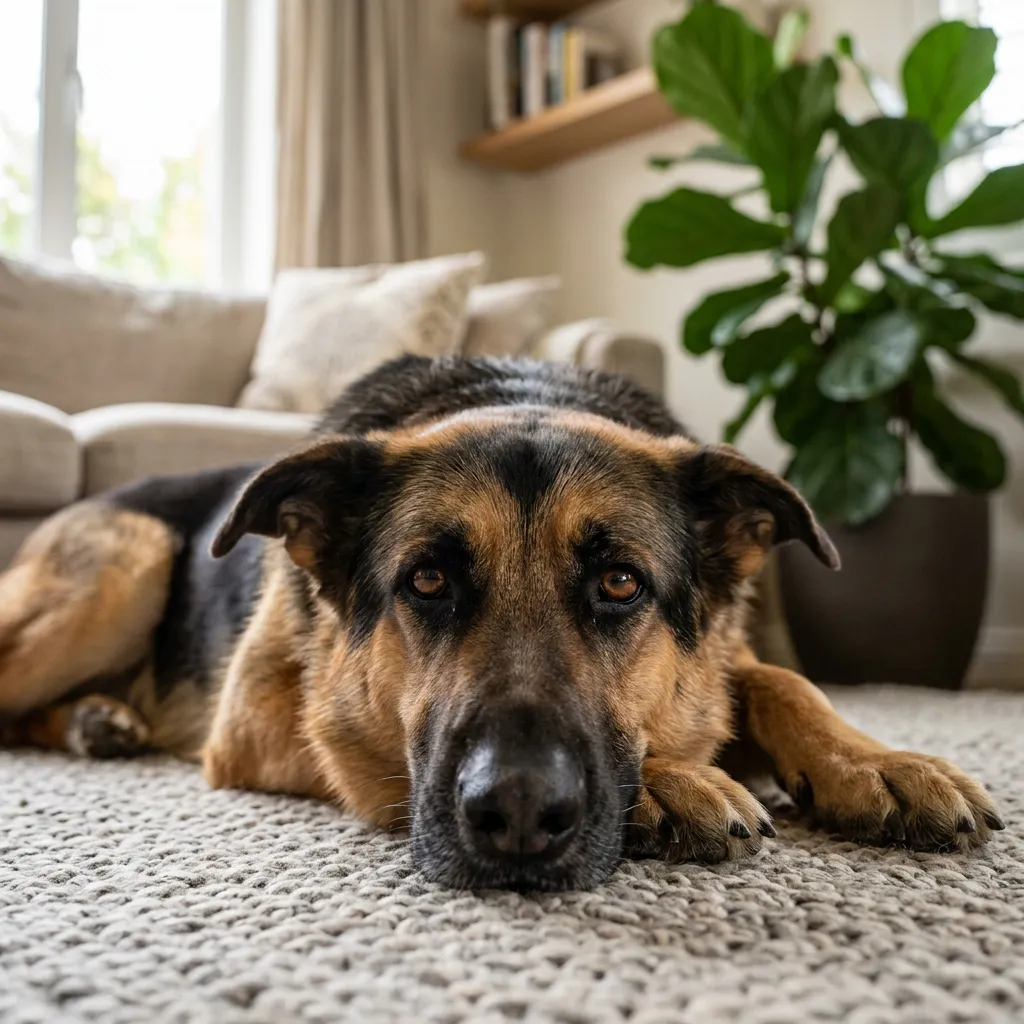
Quick answer: mostly love, and a bit of strategy. Dogs look at their people to bond, to ask for things (dinner, walkies, a scratch), to pick up clues from your body language, or because they’re waiting for your next move. Soft eyes, loose body? Trust and affection. A hard, frozen stare with a stiff body? Your dog’s uncomfortable or guarding something, so give them space. And an older dog suddenly zoning out at walls could have a medical issue.
The science of the loving stare
Here’s the study everyone quotes, and for good reason. Back in 2015, a Japanese team led by Miho Nagasawa published in Science: when dogs and owners gazed into each other’s eyes, oxytocin (the so-called bonding hormone) went up in both. Same kind of loop you see between parents and babies. The kicker? Hand-reared wolves didn’t show it. That suggests the whole eye-contact bond grew up as dogs and people shared their lives. Summary’s on Science.
So those long, gooey looks from the couch? You’re not imagining it. For a lot of dogs, looking at you is how they connect.
Why does my dog stare at me? 8 common meanings
1. Affection
Soft eyes, droopy ears, a few slow blinks, tail doing a lazy swish. That dog isn’t asking for anything. They’re just happy you’re there. It’s the bonding gaze, and you’ll usually catch it during the quiet stretches, like a Sunday evening on the sofa.
2. “Is it time yet?”
Dogs keep better time than most clocks. As dinner, walk o’clock or bedtime gets close, the staring intensifies. Plenty of dogs with a 5 p.m. dinner start the countdown stare at about 4:40. Every. Single. Day.
3. Asking for something
Can’t talk? Stare. It’s the simplest request a dog can make. Food, the ball stuck under the couch, the back door, a spot on the bed. Studies on dog communication show many dogs flick their eyes between you and whatever they want. Basically pointing, minus the finger.
4. Reading you for clues
Your dog is basically a detective with fur. They watch your face, your hands, how you’re standing, all to predict what’s next. Grabbing the leash? Shoes going on? Walking toward the treat drawer? Every stare is them gathering evidence.
5. Waiting for direction during training
Well-trained dogs often check in with a quick look up. Love to see it. Trainers actively reward that kind of eye contact, because it makes everything else easier.
6. Confusion
Head tilt, steady eyes. That’s usually a dog trying to decode you, especially after you’ve asked for something new or said something in a weird voice.
7. Protecting you (or feeling vulnerable)
The bathroom audience. So many dogs do it. In wild groups, animals keep watch over each other when someone’s vulnerable, and your dog might feel that’s their job. Thanks, buddy?
8. Warning or discomfort
Now the serious one. A hard, unblinking stare, body stiff as a board, mouth clamped shut, tail frozen, maybe the whites of the eyes showing (“whale eye”). That can mean discomfort, guarding food or a toy, or feeling threatened. Back off. Don’t loom over them, and definitely don’t stare back.
Soft stare vs. hard stare: how to tell the difference
| Soft, friendly gaze | Hard, uneasy stare |
|---|---|
| Soft face and relaxed ears | Stiff, frozen body |
| Blinking, maybe squinting a bit | Fixed eyes, no blinking |
| Loose, wiggly or softly wagging tail | Tail frozen, held high and stiff, or tucked under |
| Mouth soft or a little open | Mouth shut tight, lips pulled forward or back |
| Moves closer or leans on you | Guarding food, a toy, a bed or a spot |
If you see the hard stare a lot, especially around food or where your dog rests, talk to your vet or a qualified behavior professional before it gets worse.
Why does my dog stare at me while I eat?
Your dinner smells amazing and your dog knows it. If they’ve ever been rewarded with a scrap from the table, they’ve also learned that staring works. To dial it down, stop sharing off your plate, feed your dog at the same time you eat, or park them on their bed with a long-lasting chew. Reward them for staying there.
Why does my dog stare at me when he poops?
Pooping leaves a dog pretty exposed. Lots of experts think they look at you for backup while they’re in that position. Or maybe they’re just waiting for the “good job!” that usually follows. Either way, perfectly normal.
Should you stare back at your dog?
Gentle, brief eye contact with your own chilled-out dog is lovely. Hard staring at strange dogs, scared dogs or tense dogs is not. In dog-speak, a long, direct stare from someone they don’t know can read as a challenge. Teach kids this, and never let them put their face right up to a dog’s and stare.
When staring could be a health sign
Your dog staring at you isn’t a medical problem. But a few kinds of staring are worth mentioning to your vet:
- Staring blankly at walls or into space, especially in older dogs, can be a sign of canine cognitive dysfunction, which is a lot like dementia. You might also see confusion, waking at night or getting stuck in corners.
- Episodes of fixed staring with no response, lip smacking or twitching can sometimes be a kind of focal seizure.
- Sudden vision changes can make dogs stare, bump into things or seem hesitant.
If you see any of these, film an episode and show your vet. If you need help finding one, see our guide on how to choose a veterinarian.
How to respond to your dog’s stare
- Check the obvious stuff. Is it mealtime? Does your dog need to go out? Is the water bowl empty?
- Read the whole dog, not just the eyes. The table above helps.
- Reward calm check-ins. A quick “good” and a treat when your dog looks up at you on a walk builds great focus.
- Don’t reward demand-staring. If the stare turns into barking or pawing for food, wait for calm before you respond.
- Give your dog something to do. Puzzle feeders, sniffy walks and training games give a bored dog something more fun than watching you.
Staring often goes along with other attachment habits, like leaning on you or taking your spot the second you get up.
How to teach a helpful “watch me” cue
Your dog already loves looking at you, so why not turn it into a skill? Hold a treat up near your face and just wait. The split second they glance at your eyes, say “yes” and give the treat. Five or six reps. Then add “watch me” right before they look. One minute a day, first indoors, then the porch, then on walks. Give it two weeks, and most dogs will look up on cue. Handy when another dog’s coming, or a bike, or there’s half a sandwich on the sidewalk. And the random staring becomes a calm, paid check-in.
Frequently asked questions
Why does my dog stare at me without blinking?
A short, unblinking look can just mean focus, like when your dog’s waiting for the ball. A long, unblinking stare with a stiff body is a warning. Look at the rest of the body before deciding.
Why does my dog stare at me when I’m in bed?
Maybe they want to come up. Maybe it’s a not-so-subtle breakfast reminder. Maybe they’re just checking you’re still there. Dogs know our routines better than we do.
Is my dog trying to dominate me by staring?
Almost never. It’s about talking to you, loving you and keeping to the schedule. The old “your dog is trying to dominate you” idea has largely been dropped by behavior scientists.
Why does my dog stare at me and then look away?
Looking away is a polite, calming signal in dog language. Your dog checks in, then shows they’re not looking for trouble. Good manners, basically.
Why does my dog stare at me and whine?
That’s usually a pretty clear request: food, a walk, a potty break or attention. If it happens at odd times or with restlessness, think about whether your dog might be in pain or feeling unwell.
This article is for general information and is not a substitute for advice from your veterinarian.
Leave a Reply