A few licks after a walk? Housekeeping. That wet, slurpy, metronome sound every single evening, though? Or catching your dog gnawing the same paw over and over? You’re right to wonder. When a dog constantly licking paws becomes the soundtrack of your evenings, something’s up. Itchy feet, sore feet, or a bored or worried dog. Let’s figure out which.
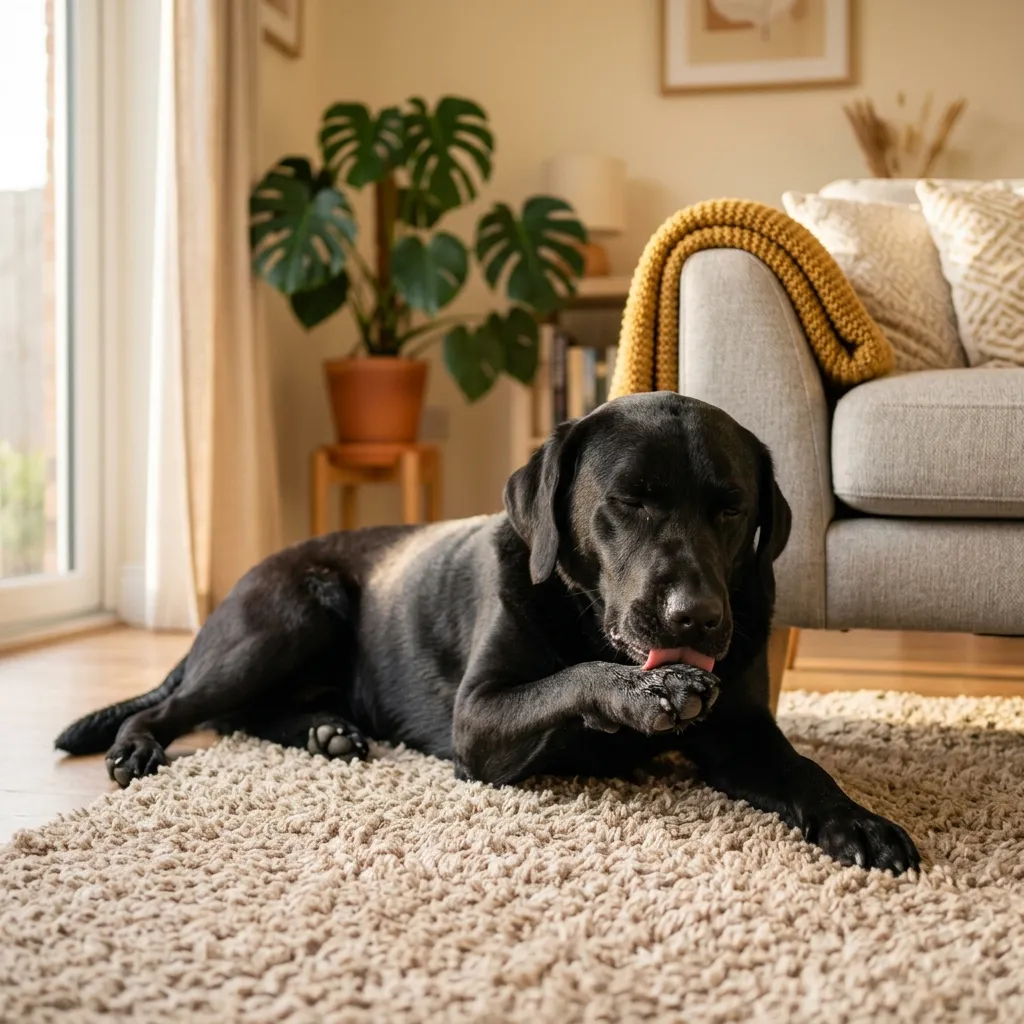
Quick answer: itch. Nine times out of ten, allergies are behind it. The rest of the list: yeast or bacteria, a cut or splinter or grass seed, achy joints, fleas and mites, dry skin, and plain old boredom or nerves. A bit of licking is just grooming. Days of it, stained fur, or licking with redness, swelling, limping or a stink? Get your vet involved.
What does it mean when a dog licks his paws?
Think of a dog’s tongue as their hands, washcloth and stress ball rolled into one. Mud? Lick. Itch? Lick. Nervous? Lick. So a quick once-over when they come in, or a tidy-up before a nap? Totally fine.
It’s when it gets frequent, intense or fixated on one spot that you should pay attention. Start with one simple question:
- Only one paw? Think local. A cut, thorn, torn nail, grass seed or a sore toe.
- All four? Especially with itchy ears, belly or armpits? Think whole-body. Usually allergies.
Why does my dog keep licking his paws? 8 common causes
1. Allergies
Allergies. The usual suspect, by a mile (our full guide to dog paw allergies covers it). Pollen, grass, mold and dust mites tend to flare with the seasons. Food allergies itch all year long. Watch for the extras: ear scratching, face-rubbing along the carpet, scooting across the floor. And that pinkish, rusty tint on pale fur? Saliva. It only shows up after a lot of licking, so this has been going on a while.
2. Yeast or bacterial infection
Here’s the vicious circle. Licking keeps the skin between the toes warm and wet. Yeast and bacteria think that’s paradise. They move in, the itch gets worse, the dog licks more. Repeat. Signs to look for: greasy skin, red paws, dark gunk round the nails, and a musty “corn chip” whiff. Our guide to dog paw yeast infections goes through it all.
3. An injury or something stuck in the paw
Sudden licking, one foot only? Something probably hurts. Spread the toes gently and have a good look at the pads. Cuts, cracks, splinters, burrs, little stones, grass seeds. Foxtails and other grass awns can drill into the skin between the toes and cause a painful lump in just a few days. Don’t forget the nails, either. Found a cut? Our paw pad injury first aid guide shows you how to clean and wrap it.
4. Joint pain
Ever rub a sore knee without thinking? Some dogs do the same with their tongue, licking over an achy wrist, ankle or toe joint. You see it most in older and bigger dogs. Stiff after a nap, slow on the stairs, not so excited about walks? Tell your vet about the licking. Arthritis could be the reason.
5. Fleas, mites and other parasites
Fleas mostly bother the tail end and back legs, but an itchy dog doesn’t fuss about where it chews. Feet included. Mites can get into paw skin too. Easy fix: keep your dog on a parasite preventive your vet recommends, and this one’s off the list.
6. Dry, cracked or irritated skin
Scorching pavement. Winter road salt. Strong floor cleaner. Lawn chemicals. Heating that dries the air out. Any of them can leave pads rough and sore. Too many baths with the wrong shampoo can strip the skin as well. Our article on how often you should bathe a dog explains how to keep skin healthy without overdoing it.
7. Boredom, anxiety or habit
Licking feels good. It releases calming chemicals. So some dogs lick when they’re bored, lonely or stressed, the same way people bite their nails. It tends to happen at the same times, like when you leave, or in the evening once the house goes quiet. And habits stick. Even after the original reason disappears, the licking can keep going and damage the skin.
8. Hormone or other medical problems
Rarely, it’s something like an underactive thyroid or an autoimmune skin condition. Vets usually start looking for these when the licking keeps bouncing back even though the common causes have been treated properly.
How to check your dog’s paws at home
Honestly, two minutes looking at the paws beats hours of guessing. Choose a quiet moment, like after a walk or at bedtime, and keep some treats handy so your dog thinks it’s a spa session and not a wrestling match.
- Stand back first. Front feet side by side, back feet side by side. One puffier, redder, or held up more?
- Part the toes. Look at the skin in between. Red? Damp? Bumps, scabs, something tangled in the fur?
- Feel the pads. Healthy ones are a bit rough but even. Cracks, cuts, blisters, peeling? Note it.
- Nails next. Splits, breaks, dark gunk, puffy nail beds.
- Sniff test. A faint corn-chip smell is normal on lots of dogs. Strong, sour or rotten isn’t.
- Watch their face. A yank, a yelp or a growl when you touch one spot means it hurts. That’s a vet job.
Snap a quick photo of anything odd. A few days of pictures makes it easy to see if it’s getting better or worse, and your vet will find them really useful.
Dog chews paw instead of licking? Why that matters
Chewing is licking turned up a notch. It usually means the itch or discomfort is stronger. Dogs chew at burrs and tangles, at nails that feel off, and at skin that’s driving them crazy. Teeth break the skin more easily than tongues, so infection can follow quicker. Redness, bald patches or little wounds from chewing? Book that vet visit sooner, not later.
When to see a vet
Pick up the phone if you spot any of these:
- It’s been going on for more than a few days
- The skin is red, swollen, bleeding or broken
- Your dog limps or won’t stand on the foot
- There’s a bad smell, pus or discharge
- You feel a lump between the toes
- Fur is thinning, stained dark, or the skin’s getting thick
- Your dog seems off, tired or isn’t eating
Expect your vet to look closely at the paws, maybe take a quick skin sample for yeast and bacteria, and quiz you about timing and food to see whether allergies fit. As the American Kennel Club puts it, you have to find the root cause to stop the licking for good. Need a practice? Our guide on how to choose a veterinarian can help.
Home remedies to stop a dog from chewing paws
While you wait for answers (or alongside your vet’s plan), these easy steps can help:
- Rinse and dry after walks. Plain lukewarm water washes off pollen, salt and grime. Then dry properly, between the toes too.
- Trim the paw fluff so it can’t trap damp, burrs and bits.
- Cover up. Booties for hot sidewalks, salty roads and rough trails. A breathable sock or a soft cone can give irritated skin a break from the tongue.
- Tire them out. Longer walks, sniff games, puzzle feeders, a good long chew. Bored mouths need a job.
- Keep notes. When does it happen? What did they eat? Where did you walk? Patterns jump out, and your vet will thank you.
- Ask about omega-3s. Fish oil helps some dogs’ skin, but get the product and dose from your vet.
Leave out anything that stings or is dangerous if licked: tea tree oil, straight vinegar on broken skin, human creams. And no bitter sprays on raw or open skin. They burn.
How to prevent paw licking from coming back
- Look at your dog’s feet once a week as part of your grooming routine.
- Keep flea and parasite prevention going year-round.
- Plan ahead with your vet for allergy season instead of waiting for the itch.
- Wipe and dry paws after rain, snow, swimming and grassy walks.
- Daily exercise and brain games. Every day.
Frequently asked questions
Is it normal for dogs to lick their paws every day?
A little daily grooming is fine. Marathon licking sessions, licking that wakes you at 2 a.m., or red, stained paws are not. On the fence? Watch for a week and note how often it happens and for how long.
Why does my dog lick his paws at night?
Itches feel louder when there’s nothing else going on. That’s why allergic dogs often lick most in the evening and overnight. Some dogs also lick themselves to sleep. VCA Animal Hospitals says itchiness is the most common driver of paw licking.
Can paw licking cause an infection?
It can. Skin that never dries out, plus tiny breaks from the tongue, gives yeast and bacteria an easy way in. So even if it started as a harmless habit, long-term licking deserves a check.
Should I put a cone on my dog to stop paw licking?
Short term, a cone is great for letting sore skin heal, especially overnight. It won’t fix what’s causing the itch, though. Pair it with a plan from your vet.
Why is my puppy licking his paws so much?
Puppies put everything in their mouths, including their own feet, especially when teething or overtired. Most grow out of it. Red paws, nonstop licking, or lots of scratching too? Have your vet rule out parasites, skin infections or early allergies.
This article is for general information and is not a substitute for advice from your veterinarian.
Leave a Reply