You’re toweling off your dog’s feet after a walk and there it is. The skin between the toes is pink. Maybe properly red. And the fur around it has gone a rusty sort of color. Your dog might be licking more than usual, or might not seem to care at all. If you’ve been wondering why are my dog’s paws red, you’re far from the only one. Red paws are one of the most common reasons people call the vet. Good news, though: most causes are very manageable once you know what you’re dealing with.
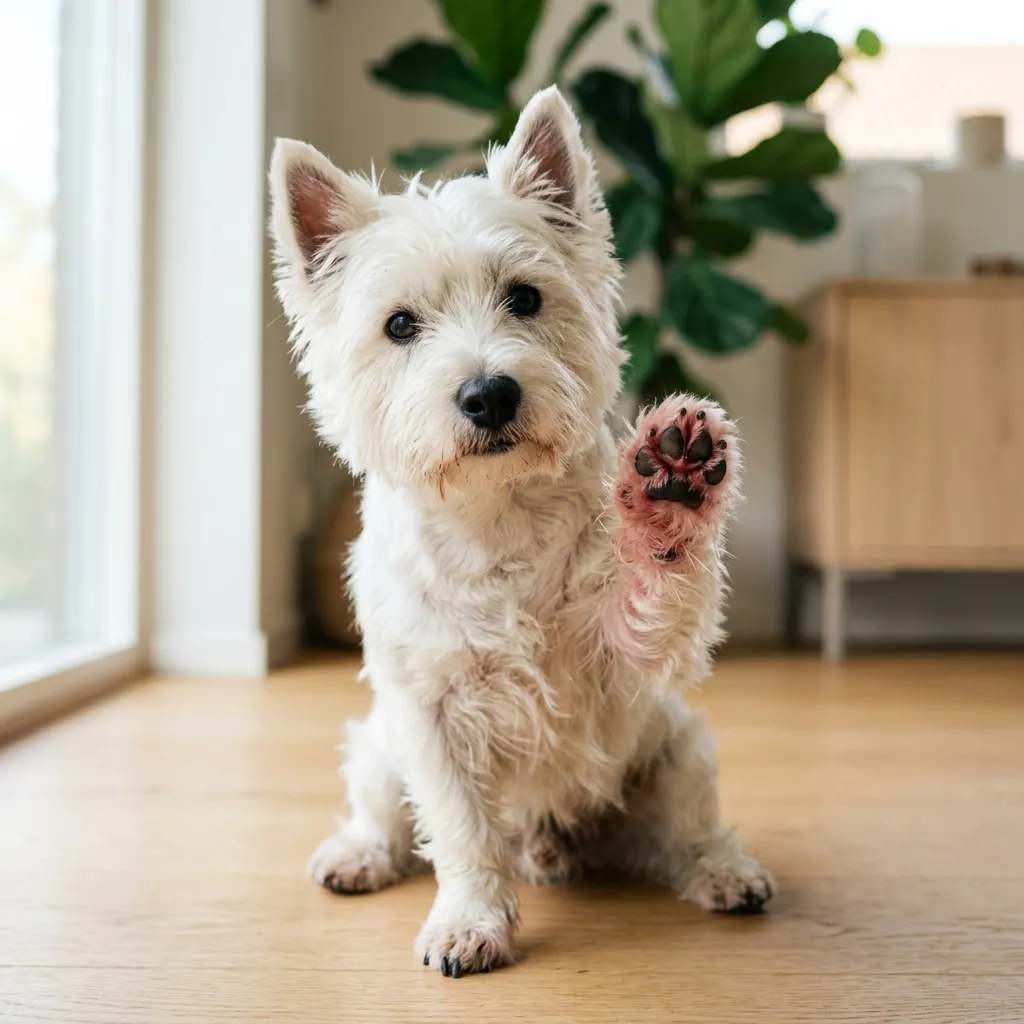
Quick answer: the big three are allergies, contact with something irritating (lawn chemicals, road salt, cleaners, hot pavement) and yeast or bacterial infection. If it’s the fur that’s red-brown rather than the skin, that’s usually saliva staining from licking. Mild redness that fades within a day or two after a rinse is rarely serious. Redness plus swelling, bumps, a bad smell, limping or open sores? Time for a vet check.
Red skin or red fur? Start here
Before you panic, look closely at what exactly is red. It matters a lot.
- Red or rusty fur on healthy-looking skin is usually saliva staining. Dog spit contains natural pigments called porphyrins that slowly tint light fur pink, red or brown. The stain itself is harmless. What it tells you is that your dog has been licking that paw a lot, and there’s a reason for that licking.
- Red, pink or angry-looking skin means the skin itself is irritated. That’s the bit to dig into, because irritated skin can pick up an infection fast.
Often you’ll see both. Itchy feet get licked, the fur stains, the skin stays damp, and the redness gets worse. Breaking that loop is a huge part of fixing it.
Why are my dog’s paws red? 9 common causes
1. Environmental allergies
Pollen, grass, weeds, mold and dust mites are the classic triggers. Our guide to dog paw allergies goes deep on diagnosis and treatment. Allergic dogs usually don’t just have red, itchy paws. You’ll often see itchy ears, a pink belly or armpits they can’t stop scratching. It tends to follow the seasons too, worse in spring and summer and calmer in winter, though dust mite allergies can drag on all year.
2. Food allergies
Food allergies are rarer than the environmental kind, but they still cause plenty of red feet. The itch usually sticks around all year and can come with ear infections or tummy trouble. The only reliable way to confirm it is a strict elimination diet with your vet, usually for eight weeks or more.
3. Contact irritation
Paws touch everything. Fertilizer, weed killer, strong floor cleaners, carpet powders, de-icing salt, even some scratchy plants can irritate the skin between the toes. The redness shows up underneath and between the toes, on the parts that actually touch the ground, and often within hours. Red paws right after a new cleaning product or a stroll across a freshly treated lawn? You might have your answer.
4. Yeast infection
Yeast loves warm, damp skin. When it overgrows, paws go red and greasy, often with a musty, “corn chip” smell and dark gunk around the nail beds. It’s especially common in dogs who already have allergies. Our full guide on dog paw yeast infections covers signs, treatment and prevention.
5. Bacterial infection (pododermatitis)
“Pododermatitis” just means inflamed skin on the feet. When bacteria get involved (see our guide to dog paw infections), you might see redness along with swelling, little pimples, crusts or discharge. According to VCA Animal Hospitals, pododermatitis nearly always has something behind it, like allergies, parasites or something stuck in the paw, so your vet will look for that cause as well as treating the infection.
6. Red bumps between the toes
A raised, red, sometimes shiny lump between the toes is often an interdigital furuncle, also called an interdigital cyst. These are deep, sore skin infections, often linked to short, bristly hairs getting pushed back into the skin. Short-coated, wide-footed breeds like Bulldogs, Labs and Shar-Peis are prone to them. The Merck Veterinary Manual explains they often need several weeks of treatment, so get them checked early.
7. Foreign bodies and small injuries
Only one paw red? Think local. A splinter, thorn, burr or grass seed like a foxtail can work into the skin between the toes and cause a red, puffy patch your dog won’t leave alone. Small cuts on the pads, a torn nail or a bee sting can look similar. Check carefully in good light, and if you find a cut, follow our paw pad injury first aid steps.
8. Burns from hot or icy surfaces
In summer, asphalt and sand can get hot enough to burn paw pads in minutes. Burned pads look red, blistered or peeling, and your dog may limp or refuse to walk. In winter, ice, snow and road salt can leave pads cracked and raw. Easy summer test: if you can’t keep the back of your hand on the pavement for seven seconds, it’s too hot for paws.
9. Mites and other less common causes
Demodex mites can target the feet and cause redness, hair loss and swelling, sometimes even in healthy adult dogs. Hormone problems and autoimmune diseases can show up on the paws too, but they’re much rarer and usually only considered once the common causes are ruled out.
Clues that help you narrow it down
You don’t need to diagnose your dog yourself, but a few observations will help your vet a ton:
- One paw or all four? One paw points to an injury, something stuck or a local infection. Several paws point to allergies, irritation or a whole-body issue.
- When did it start? Sudden redness after a walk suggests irritation or injury. Redness that crept in over weeks suggests allergies or infection.
- Is it seasonal? Flare-ups in spring and summer lean toward environmental allergies.
- What does it smell like? A strong, sour or yeasty smell points toward infection.
- Anywhere else itchy? Ears, belly, armpits or face rubbing all suggest allergies. So does a dog who keeps scooting across the floor.
If your dog is licking a lot too, our guide on why a dog keeps licking his paws covers that side of things in more detail.
Dog paws red between the toes: home remedies that help
For mild redness with no swelling, open wounds or bad smell, these gentle steps are safe to try for a day or two while you keep watch:
- Rinse with plain, lukewarm water. It washes away pollen, chemicals and salt. A shallow bowl or the bathtub works fine. Skip soap unless your vet recommended a specific pet product.
- Dry completely. Pat each paw with a soft towel, then gently dry between the toes. Leftover damp feeds yeast and bacteria.
- Stop the licking. A soft cone or a clean, breathable dog sock for a few days gives the skin a real chance to settle.
- Wipe paws after every walk. Especially in pollen season, or after treated lawns and salted roads.
- Protect sore pads. Booties help on hot pavement, snow, salt or rough trails while things heal.
- Get rid of likely triggers. Switch to a gentler, pet-safe floor cleaner, and stay off freshly treated lawns for a while.
What to skip: tea tree oil (toxic to dogs), straight vinegar or hydrogen peroxide on irritated skin, human creams your dog could lick off, and thick oils like coconut oil that keep skin damp. And don’t overdo the washing. Too many baths with regular shampoo can dry the skin and make it worse. Our guide on how often you should bathe a dog explains the right balance.
When red paws need a vet
Home care is fine for a mild, short-lived problem. Call your vet if you see any of these:
- Redness that isn’t better after two or three days of gentle care
- Swelling, a lump or a pus-filled bump between the toes
- Limping, or your dog won’t let you touch the paw
- Open sores, bleeding, blisters or peeling pads
- A strong, nasty smell or discharge
- Hair loss or darker, thicker skin
- Redness that keeps coming back every few weeks or every season
Your vet will usually look at all four feet, take a quick tape or swab sample to check for yeast and bacteria under the microscope, and sometimes do a skin scraping for mites. Treatment might include medicated washes or wipes, antibiotics or antifungals if there’s infection, and an allergy plan if that’s the root cause. Looking for a practice you trust? See our tips on how to choose a veterinarian.
How to keep your dog’s paws healthy
- Check paws once a week, spreading the toes and looking at pads and nails. Work it into your regular dog care routine so it never feels like a big deal.
- Keep the fur between the toes neatly trimmed.
- Wipe and dry paws after walks, especially when it’s wet, pollen-heavy or salty out.
- Walk early or late on hot days, and use booties or paw balm in winter.
- Stay on parasite prevention all year.
- Sort out an allergy plan with your vet before peak season, not after the itching starts.
Frequently asked questions
Why are my white dog’s paws red?
On white and cream dogs, reddish-brown fur on the feet is usually saliva staining from licking. It just shows up much more on light coats. The stain isn’t harmful, but it means your dog is licking a lot, so look for the reason behind it. Most often that’s allergies or a mild yeast problem.
Can red paws go away on their own?
Mild redness from a one-off irritation often settles within a day or two once you rinse the paw and remove the trigger. Redness from allergies or infection usually won’t clear up by itself, and tends to get worse with licking.
Are red paws painful for dogs?
They’re often more itchy than painful. But burns, deep infections, things stuck in the paw and bumps between the toes can be really sore. Limping, flinching when you touch the paw, or refusing walks are signs of pain and deserve a vet visit.
Should I change my dog’s food if the paws are red?
Not on your own. Switching foods at random rarely fixes it and can make a real food allergy harder to diagnose. If your vet suspects food, they’ll walk you through a proper elimination diet.
This article is for general information and is not a substitute for advice from your veterinarian.
Leave a Reply