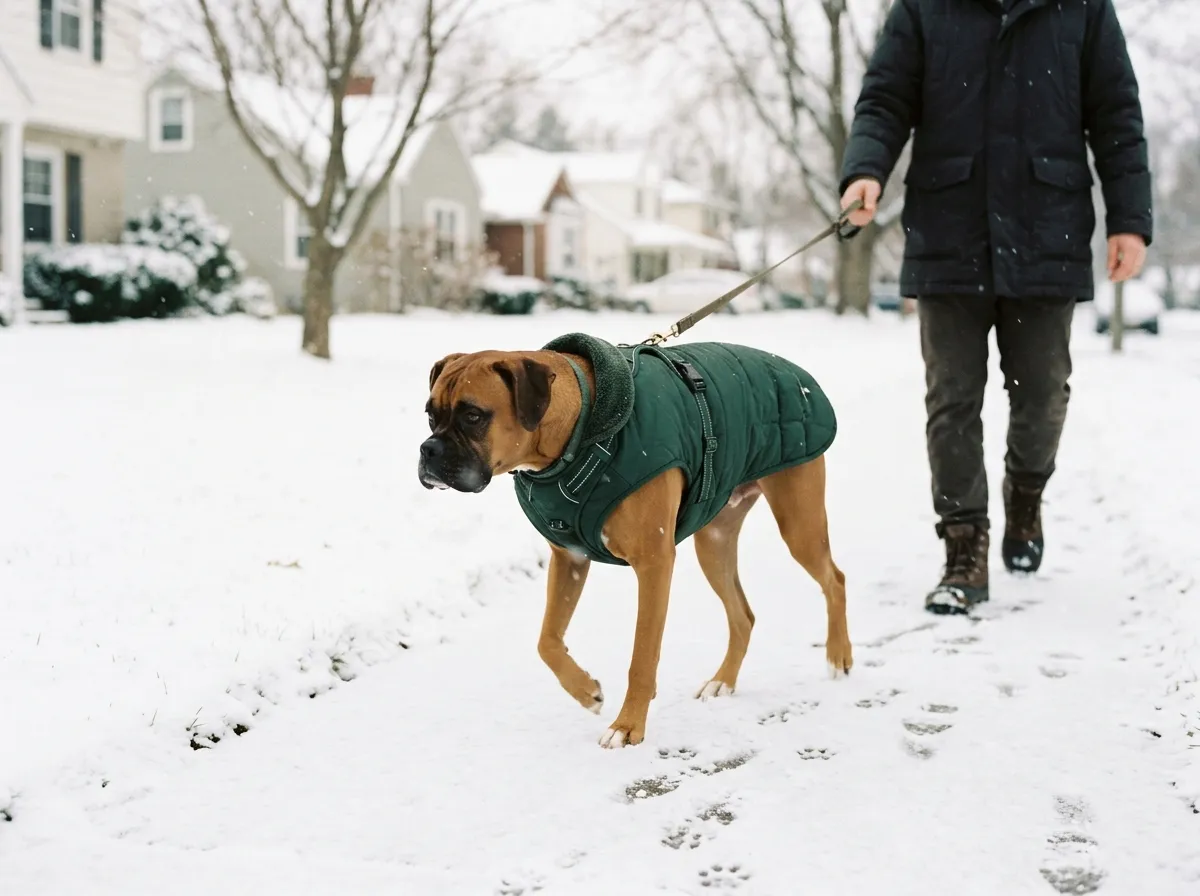
The first really cold morning of the year, my short-haired dog stepped onto the porch, lifted one paw, looked at me like I’d betrayed him and turned right back around. Fair enough. Message received, buddy. So how cold is too cold for dogs? Roughly: the little guys, the skinny short-coated ones, puppies, old dogs and sick dogs start feeling it around 45°F. Somewhere near freezing, 32°F, most dogs are at some risk. Once you’re under 20°F, even a big fluffy snow dog can get hypothermia or frostbite way faster than you’d guess.
Here’s the quick version:
| Temperature | What it means for most dogs | What to do |
|---|---|---|
| Above 45°F (7°C) | Comfortable for nearly all dogs | Normal walks |
| 45–32°F (7 to 0°C) | Small, thin-coated, old or sick dogs may feel the cold | Coat for vulnerable dogs, watch for shivering |
| 32–20°F (0 to -7°C) | Most dogs are at some risk | Shorter walks, coat and booties for many dogs |
| Below 20°F (-7°C) | Risky for all dogs | Quick potty breaks, about 10 minutes max |
Jump to:
How Cold Is Too Cold for Dogs? The Temperature Guide
I wish there was one number. There isn’t, sorry. Put a husky and a Chihuahua outside at 25°F and you basically have two different weather reports, one dog thrilled, one dog vibrating. Still, vets lean on a few rough cutoffs, and they help.
In a cold-weather guide reviewed by veterinarians, Chewy’s vet team breaks it down like this: at 45°F, vulnerable dogs can feel uncomfortably chilled. At 32°F, most dogs start to face cold-related risks. At 20°F, even the hardiest dogs can develop hypothermia and frostbite quickly.
I think of those three numbers like traffic lights. Above 45°F is green, 45 to 32 is yellow, and below 20 is red for everybody, no matter how fluffy.
Why Some Dogs Handle Cold Better Than Others
My neighbor’s Malamute lies in the snow on purpose. My dog acts like the floor is lava when it’s 40°F. Same weather, very different dogs. A few things make the biggest difference:
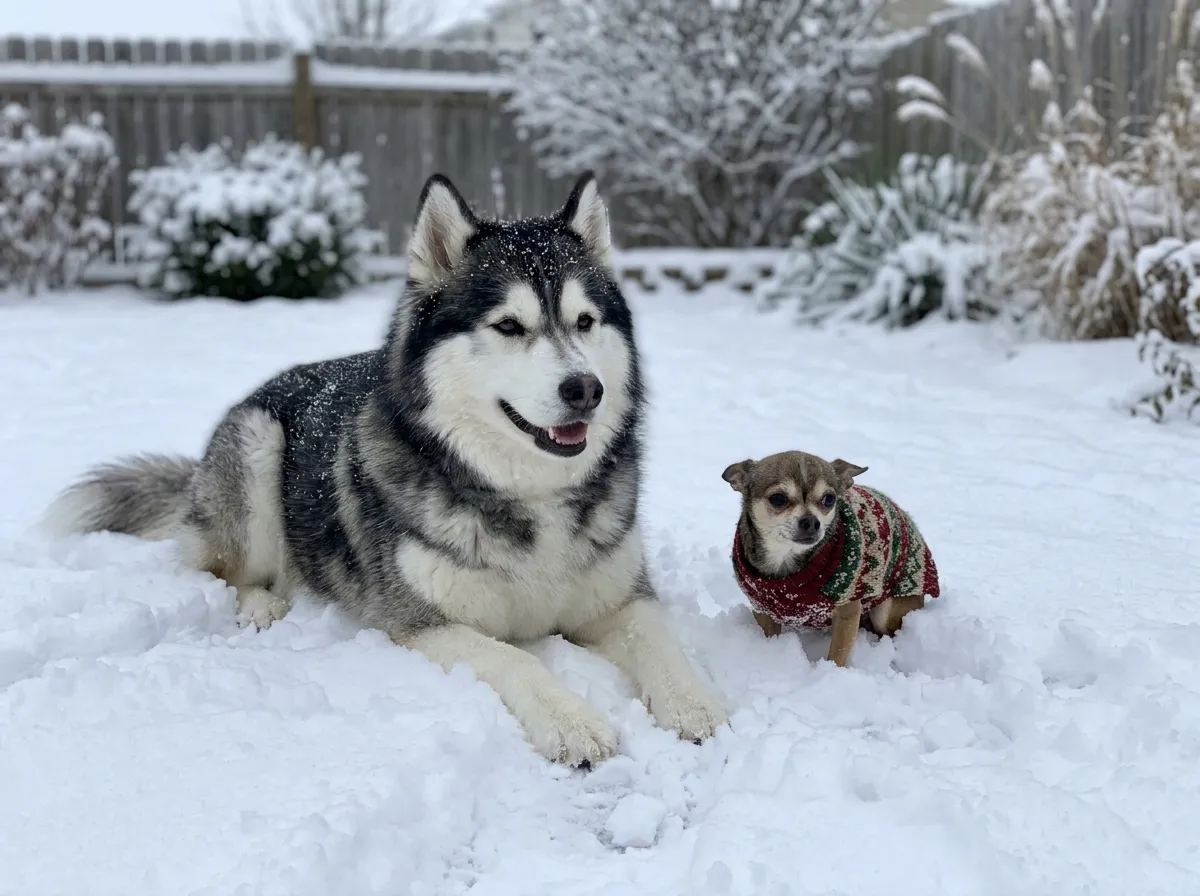
- Coat type: double-coated breeds like Huskies, Malamutes, Bernese Mountain Dogs and Newfoundlands have a dense undercoat that traps heat. Single-coated, short-haired dogs like Greyhounds, Whippets, Boxers and Chihuahuas don’t.
- Size: small dogs lose body heat faster, partly because they’re closer to the cold ground.
- Body fat: lean dogs have less natural insulation.
- Age: puppies and senior dogs can’t regulate their body temperature as well.
- Health: dogs with arthritis, heart disease, diabetes, kidney problems or hormonal conditions often struggle more in the cold.
- Getting used to it: a dog who lives in Minnesota and spends time outdoors adjusts better than a dog who just moved from Arizona.
If your dog has any health issues, ask your vet what’s safe for them specifically. The AVMA’s cold weather safety tips point out that some medical conditions make it harder for pets to handle cold.
Wind Chill, Wet Fur and Other Things That Matter
The number on your phone isn’t the whole story. A sunny, still 30°F day can feel fine, while a windy, rainy 38°F day can chill a dog to the bone.
| Factor | Effect | Tip |
|---|---|---|
| Wind | Pulls heat away from the body fast | Check the “feels like” or wind chill, not just the temperature |
| Wet fur | Loses most of its insulating power | Towel dry right after walks in rain or snow |
| Sunshine | Adds noticeable warmth | Walk at midday when you can |
| Cloud cover | Makes it feel colder | Shorten walks on gray, windy days |
| Activity | Moving dogs make more body heat | A brisk walk is warmer than standing around |
The National Weather Service wind chill chart is made for people, but it’s a good reality check. If it says frostbite can happen on exposed skin in 30 minutes, think about your dog’s ears, tail and paw pads, which are exposed too.
Signs Your Dog Is Too Cold
Dogs are usually pretty clear about it if you know what to look for. Mine does the lifted paw thing first, every single time.
- Shivering or trembling (here’s more on why dogs shake, since it’s not always the cold)
- Lifting paws off the ground or limping
- Hunching up with the tail tucked
- Whining, or stopping and refusing to keep walking
- Looking for shelter, like trying to get back inside or under a car
- Slowing down, seeming anxious or tired
If you notice any of these, head home. Don’t push through “just one more block.”
Hypothermia and Frostbite in Dogs
Okay, the scary part, but it’s worth knowing. Little dogs, wet dogs, old dogs and sick dogs are the most likely to get into trouble here, though honestly any dog can if it’s brutal enough out.
Hypothermia
Hypothermia just means the body’s gotten colder than it should be. You’ll usually notice hard shivering first. Here’s the sneaky bit, though: if it keeps going, the shivering can stop, and that’s worse, not better. A dog who’s suddenly dopey, stiff, wobbly or weak after being out in the cold needs a vet. I’d bundle them in a warm (not hot) blanket, get them in the car and call ahead.
Frostbite
Frostbite goes after the bits that stick out, so ear tips, tail, toes and, for boy dogs, the scrotum. At first the skin can look pale or grayish and feel hard and icy. Later on it might get red, puffy, blistered or even dark. My vet’s advice was: don’t rub it, don’t blast it with a hair dryer or a heating pad, just warm it slowly with lukewarm water and come in.
How Long Can Dogs Be Outside in the Cold?
Every dog’s different, so take this as my personal cheat sheet for a regular, healthy, medium-size short-haired dog like mine. Fluffy breeds can usually push it a bit, and the tiny or older ones should do less.
| Temperature (feels like) | Average short-coated dog | Thick double-coated dog |
|---|---|---|
| 45°F and up | Normal walks | Normal walks |
| 32–45°F | 30–45 minutes, coat for small dogs | Normal walks |
| 20–32°F | 15–30 minutes with a coat | 30–60 minutes, watch paws |
| Below 20°F | About 10 minutes, potty breaks only | Short walks, watch closely |
| Below 0°F | Quick potty trips only | Quick trips only |
When it’s nasty out, we skip the big walk. Instead I hide treats around the living room, break out the snuffle mat, or do ten minutes of trick practice. He’s just as wiped out afterward, honestly, sniffing and thinking burn a lot of energy.
Also, please don’t leave your dog sitting in the car while you run errands in winter. We all know cars turn into ovens in July, and in January they turn into fridges.
Do Dogs Need Coats and Boots?
Depends who you ask. My dog? Absolutely, he’d wear a coat to bed if I let him. Little dogs, short coats, puppies, seniors and dogs dealing with health stuff tend to do better with a layer once it dips under 45°F or so. A Husky in a puffer jacket, on the other hand, is mostly for Instagram.
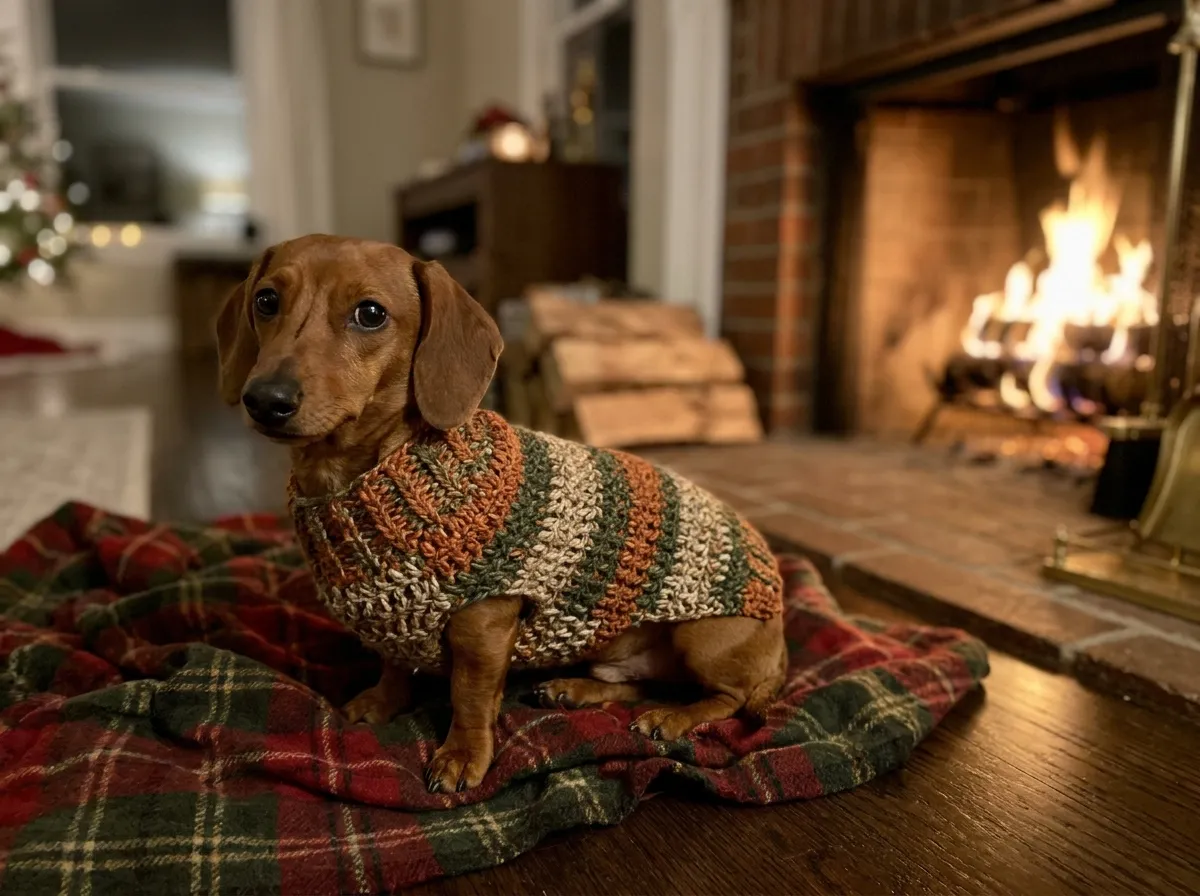
When I shop for one, I want it to cover the belly, not just the back, and I check that it doesn’t rub his armpits when he walks. Water-resistant is a big plus. Funny enough, knitted sweaters are blowing up right now: Pinterest Trends showed “crochet dog sweater” searches up something like 70% over the past month. Adorable, sure. But on slushy days, wool gets soggy fast, so I save the sweater for dry cold.
Boots! Super useful on salted sidewalks. Also hilarious, because the first time you put them on, your dog will high-step around the kitchen like a baby giraffe. Practice inside with plenty of treats before you try them outdoors.
Protecting Your Dog’s Paws in Winter
Winter is rough on feet. Sharp ice can slice a pad, snow balls up between the toes (you’ve seen those little ice marbles), and road salt plus de-icer chemicals can dry and burn the skin. Then they lick it all off at home, which isn’t great either.
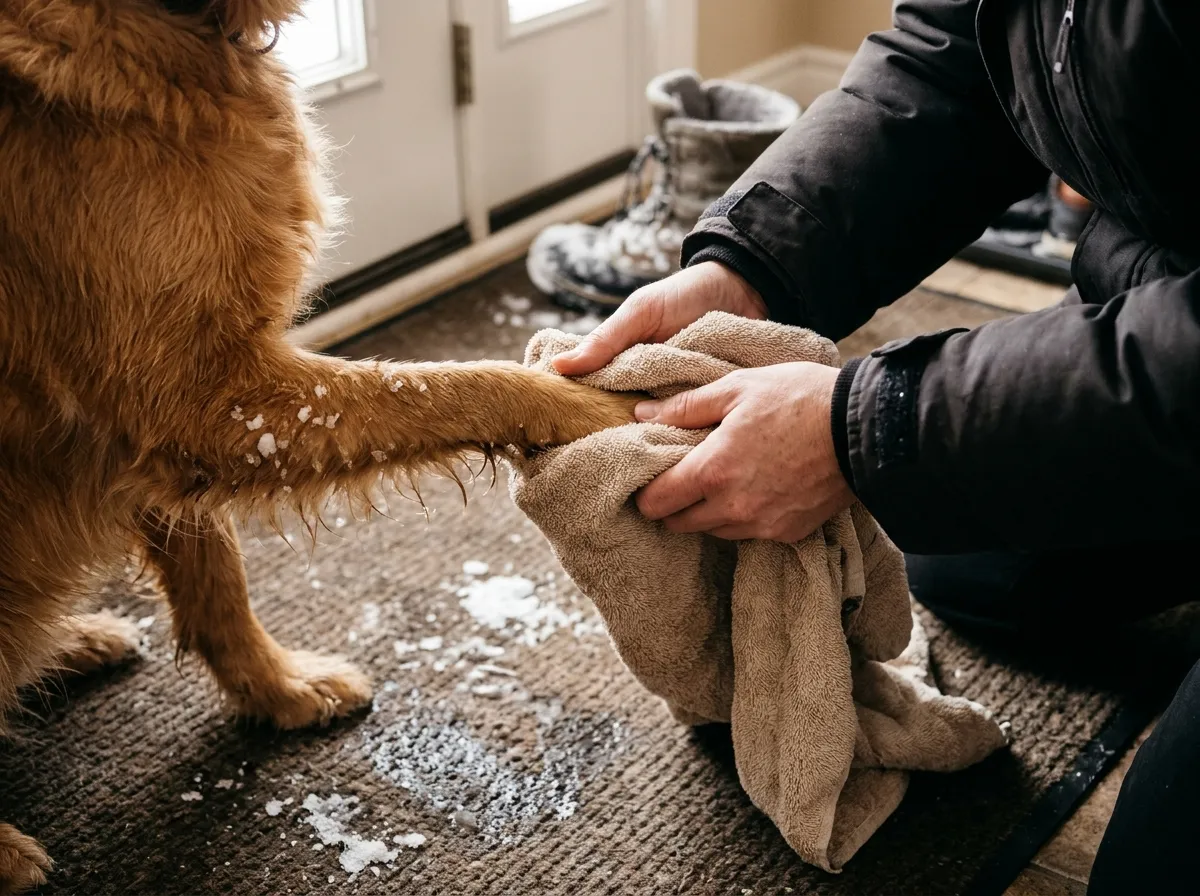
- Wipe or rinse your dog’s paws after every walk, especially between the toes.
- Trim the fur between the pads so ice balls don’t build up.
- Use a paw balm or wax before walks for a protective layer.
- Check for cracks, cuts or redness. Our guide to dog paw pad injuries covers what to do if you find one.
- Choose pet-safe de-icers at home, and wipe up antifreeze right away. The AVMA warns that even small amounts can be deadly.
Winter 2026-27: What the Forecast Means for Dog Owners
Some good news if you hate winter like my dog does. NOAA’s seasonal outlook, which OpenSnow wrote up on October 15, 2026, is calling for a very strong El Niño, and that tilts the odds toward a warmer-than-normal winter across a lot of the northern U.S. and pretty much the whole East.
Don’t put the coat in the donation bin yet, though. Mild winters still throw random cold snaps at us, and that’s honestly when dogs get caught out, since nobody’s in winter mode. Plus El Niño usually means more rain in spots like California and the Southeast, and a soaked dog in the wind can get colder than a dry dog on a freezing, still day.
So I’m still dusting off my dog’s coat and buying paw balm this week. Better to have it ready.
How Cold Is Too Cold for Dogs? FAQ
What temperature is too cold to walk a dog?
Once it’s below freezing I start shortening walks for most dogs, and under 20°F it’s mostly quick potty runs, around 10 minutes. For the small, skinny, older or not-so-healthy dogs, I’d already start cutting back around 45°F.
Can dogs sleep outside in 40-degree weather?
I wouldn’t, for most pet dogs. Small, short-haired, very young or older dogs can already be uncomfortable at 45°F. If a sturdy outdoor breed does stay out, they need a dry, insulated shelter that blocks the wind, real bedding, and water that isn’t frozen solid.
How do I know if my dog is cold at night?
Mine curls into a tight little donut, burrows under any blanket he can find, and suddenly wants to sleep in my bed. Shivering and cold ears are other clues. A raised bed away from drafty doors and an extra blanket usually fix it.
Do dogs feel cold like humans?
They sure do. How much depends on coat, size, age and health. A thick double coat buys a dog a lot more time than a short single coat does, but every dog has a breaking point, especially when it’s windy or wet.
Is 30 degrees too cold for a dog?
Not for a short walk, usually. Most healthy dogs are okay at 30°F for a bit, though a lot of small or short-coated dogs will want a coat and maybe 15 to 30 minutes max. The second the paw-lifting or shivering starts, turn around.
Can dogs get frostbite on their paws?
They can. Pads, ears and the end of the tail are where it shows up most. Shorter walks on bitter days, booties or a layer of paw balm, and a good towel-dry when you get home go a long way.
My last tip: keep an old towel by the door all winter. Drying your dog off right away, especially their belly and paws, makes a bigger difference than you’d think.
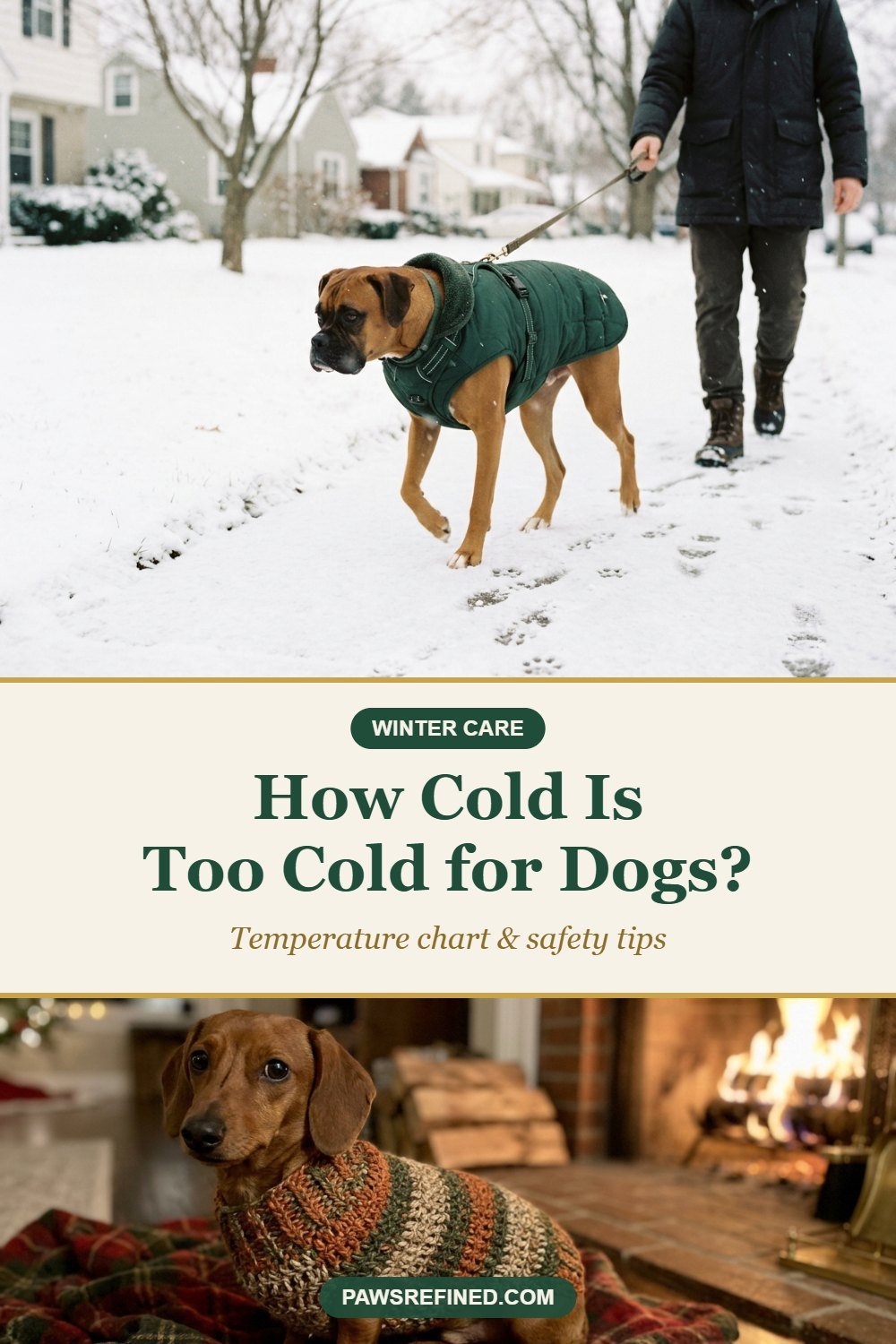
If this helped, save it to your Pinterest board for the next cold snap, and tell me in the comments: is your dog a snow lover or a “nope, back inside” type?
Leave a Reply