You stand up to top off your coffee. So does your dog. You head to the laundry room. Guess who’s two steps behind? You shut the bathroom door and, sure enough, a nose appears in the gap at the bottom. Some people call them shadows. Others say velcro dogs. If you’ve caught yourself wondering why does my dog follow me everywhere, the simple answer is that you mean the world to them. The longer answer helps you spot the difference between a devoted sidekick and a dog who really can’t cope without you.
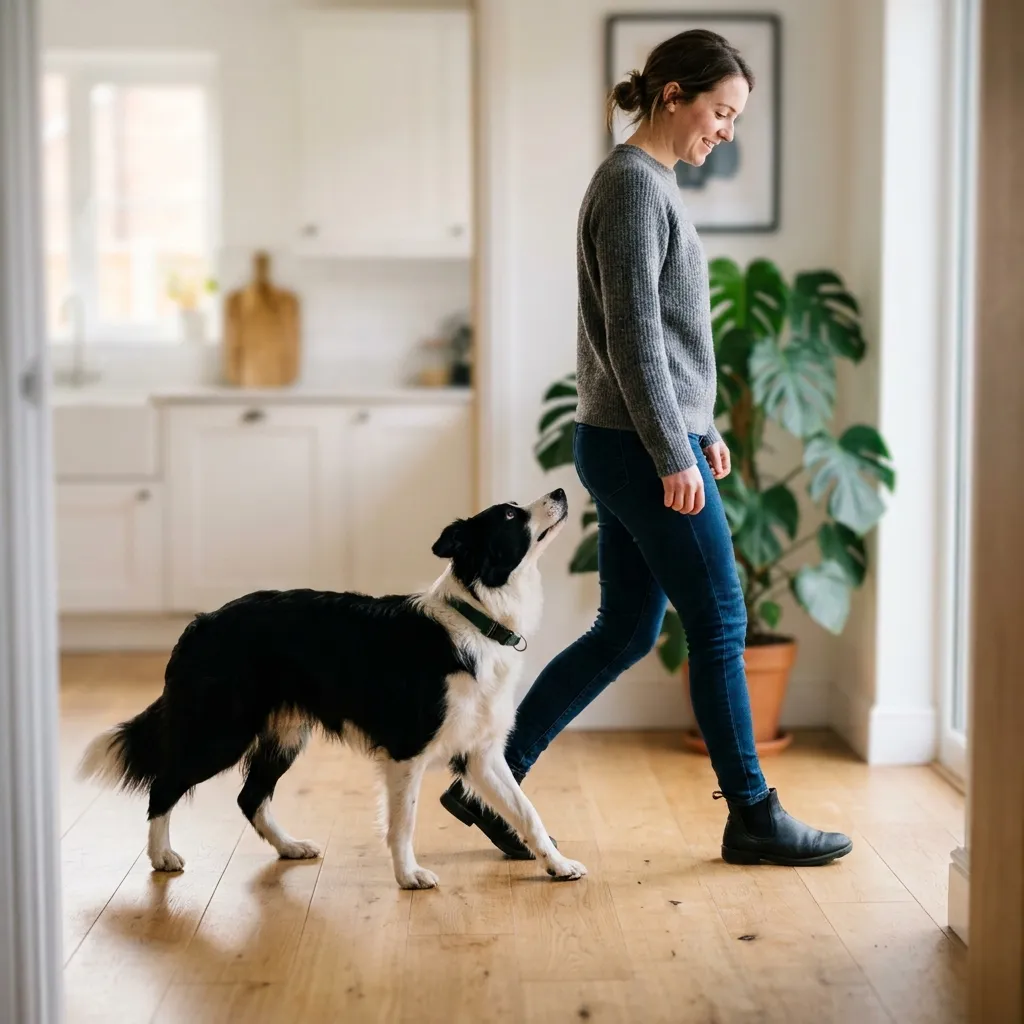
Quick answer: you’re their person. Dogs are social creatures who bond hard, you’re the one with the food bowl and the leash, and being near you feels safe. Throw in breed, age, their past and plain habit. Most of the time, it’s a good thing. It only becomes a problem when your dog panics if they can’t reach you, can’t settle without you, or comes apart when you leave (chewed doors, howling, accidents).
What attachment research tells us
Believe it or not, scientists have tested the dog-human bond using methods originally designed for studying toddlers and their parents. In a well-known 2013 study in PLOS ONE, a team at the University of Veterinary Medicine Vienna gave dogs a puzzle toy. The dogs tried much harder to crack it when their owner was in the room than when the owner was gone or swapped for a stranger (read the study). Researchers call this the secure base effect. You basically give your dog the courage to explore and try new stuff.
Then in 2022, another study, again in PLOS ONE, found the same thing in ex-shelter dogs who’d been adopted. A stranger didn’t make them feel secure. Their new owners did. If you’ve taken in an adult dog, that’s lovely news. Deep bonds can form at any age.
So when your dog trails you from room to room, you’re watching that secure base in action. You’re home base. And home base is worth keeping tabs on.
Why does my dog follow me everywhere? 8 common reasons
1. Strong attachment
Dogs evolved to live in groups. Guess who their group is now? Wanting to be near you is normal, and usually means your relationship is in good shape. Plenty of dogs pick a favorite human to shadow, and it’s typically the one who’s around the most.
2. You’re where the good stuff happens
Look at it from your dog’s side of things. Dinner? You. Walks? You. Toys, treats, car rides, belly rubs? You, you, you. Keeping you in sight isn’t neediness. It’s strategy.
3. Habit and reinforcement
Your dog follows you into the kitchen. A crumb falls. Jackpot. They follow you to the bedroom. Cuddle. Jackpot again. Repeat that a few hundred times and following just becomes what they do, crumb or no crumb.
4. Breed tendencies
Some breeds were built to work right alongside people, all day, every day. Border Collies, Aussies and Shelties in the herding corner. Labs and Goldens from the sporting side. Vizslas, Cavaliers, Chihuahuas and Pugs among the companions. All famous for sticking close. The Vizsla is so bad (or good?) at it that people call it the original velcro dog.
5. Curiosity and boredom
Nothing going on today? Then you’re the entertainment. Energetic dogs who aren’t getting enough exercise or brain games tend to be the worst shadows of all.
6. Protectiveness
Some dogs seem to stand guard, especially when you’re, well, a bit exposed. In the shower. On the toilet. They’ll plant themselves by the door or lie where they can keep you in view.
7. Anxiety or insecurity
New house. Rough start in life. Routine turned upside down. New baby. Losing a furry housemate. Any of these can turn a dog into a limpet. Staying glued to you is how they cope while the ground feels like it’s moving.
8. Age or health changes
An older dog who’s losing sight or hearing might stick close because you’re their seeing-eye human now. Pain or feeling off can make dogs clingy too. If the shadowing comes on suddenly, and especially if other things have changed, it’s worth a vet visit.
Healthy shadowing vs. separation anxiety
| Healthy velcro dog | Possible separation anxiety |
|---|---|
| Follows you around but settles once you sit down | Paces, pants or can’t settle when you’re out of sight |
| Handles it fine when you leave the house | Howls, barks or whines when left alone |
| Chills out when you’re behind a closed door | Scratches or chews at doors, windows or the crate |
| Eats and plays like normal when home alone | Won’t touch food or toys until you’re back |
| Greets you happily, then settles | Over-the-top, frantic greetings every single time |
| No accidents indoors | Has accidents only when left alone |
If most of what you see is in the right column, take it seriously. Separation problems are common and very treatable, and getting help early really does make a difference. Your vet is a great first stop. If you need one, our guide on how to choose a veterinarian can help.
Why does my dog follow me to the bathroom?
Think about it from your dog’s side. You walk into a room, the door shuts, and you’re just gone. Can’t see you, can barely smell you. So in they come, because that’s what they do everywhere else. Some seem to be keeping watch. It’s rarely a problem, and loads of people just shrug and accept the audience. Rather pee in peace? Teach your dog to wait on a mat outside, and throw a little party when you come back out.
How to build a confident, independent dog
You don’t have to stop your dog wanting to be near you. The goal is making sure they can also relax when you’re not right there. These habits help:
- Teach a “place” or “settle” cue. Reward your dog for lying on a mat or bed while you move around the room, then slowly add distance and time.
- Practice little separations. Step behind a baby gate or into the next room for a few seconds, come back calmly, and build up bit by bit.
- Make alone time a treat. Hand over a long-lasting chew or stuffed food toy only when you step away, so you leaving means something good happens.
- Keep comings and goings boring. Big, emotional goodbyes and hellos make your absences feel like a bigger deal.
- Cover their exercise needs. A dog who’s had plenty of sniffing, play and training is more likely to nap than tail you.
- Give their brain a workout. Puzzle feeders, scent games and short training sessions tire dogs out mentally.
- Don’t punish the clinginess. Telling off an anxious dog makes them feel less safe, not more.
Rescue dogs, puppies and seniors
Newly adopted dogs often stick to their new people like glue for weeks or months while they work out their new life. Totally normal. Predictable routines, patience and slowly building independence help them settle. Puppies stay close by nature. It’s the perfect time to start short, positive practice at being alone, along with the tips in our puppy’s first night home guide. Senior dogs may follow more as their senses fade. Night lights, keeping the furniture where it is and gentle guidance help them feel secure.
It often comes with other signs of devotion
Dogs who follow you everywhere often lay on you, lean against you or take your spot the second you get up, too. It all comes from the same place: wanting to be close to the person who makes them feel safe.
A simple week-one plan for more independence
Start tiny and keep it fun. Days one and two: ask your dog to settle on a mat while you stand two steps away, and slip them a treat every few seconds for staying calm. Days three and four: walk to the far side of the room and come back before they get up. Days five and six: step out of sight behind a doorway for five to ten seconds, come back calmly, reward. By day seven, lots of dogs can relax for a minute or two while you potter around the house. Keep sessions to a few minutes, stop before your dog gets worried, and go back a step if you need to. Progress is rarely a straight line. That’s fine.
Frequently asked questions
Is it bad if my dog follows me everywhere?
Nope, not by itself. Most dogs who follow their people are simply attached and curious. It only becomes a concern if your dog can’t cope when they can’t get to you.
Why does my dog follow me and not my partner?
Dogs usually bond hardest with whoever feeds them, walks them, trains them or spends the most calm time with them. It’s not a judgment on anyone. It’s just daily routine.
Why did my dog suddenly start following me everywhere?
Something may have shifted. Stress, changes at home, not feeling well, or eyes and ears that aren’t what they used to be. If other new habits have popped up too, check in with your vet.
Do dogs follow you because they love you?
Often, yes, in the way dogs do love: attachment, trust, wanting to be close. Following you is one of the clearest signs you’re at the center of your dog’s world.
Will getting a second dog stop my dog from following me?
Not necessarily. Plenty of dogs still prefer their human. A second dog can help some dogs feel less lonely, but it won’t cure separation anxiety.
This article is for general information and is not a substitute for advice from your veterinarian.
Leave a Reply