Sometimes it’s 5 a.m. and a soft, slightly chilly paw lands on your cheek. Sometimes you’re on the couch, halfway through a sentence, and your cat reaches over and presses a paw right onto your mouth. Shush, human. It’s sweet. It’s funny. And it’s a little baffling. If you’ve ever wondered why does my cat put his paw on my face, the short answer is: he’s talking to you. What he’s saying depends on the moment, his body language and what happens next.
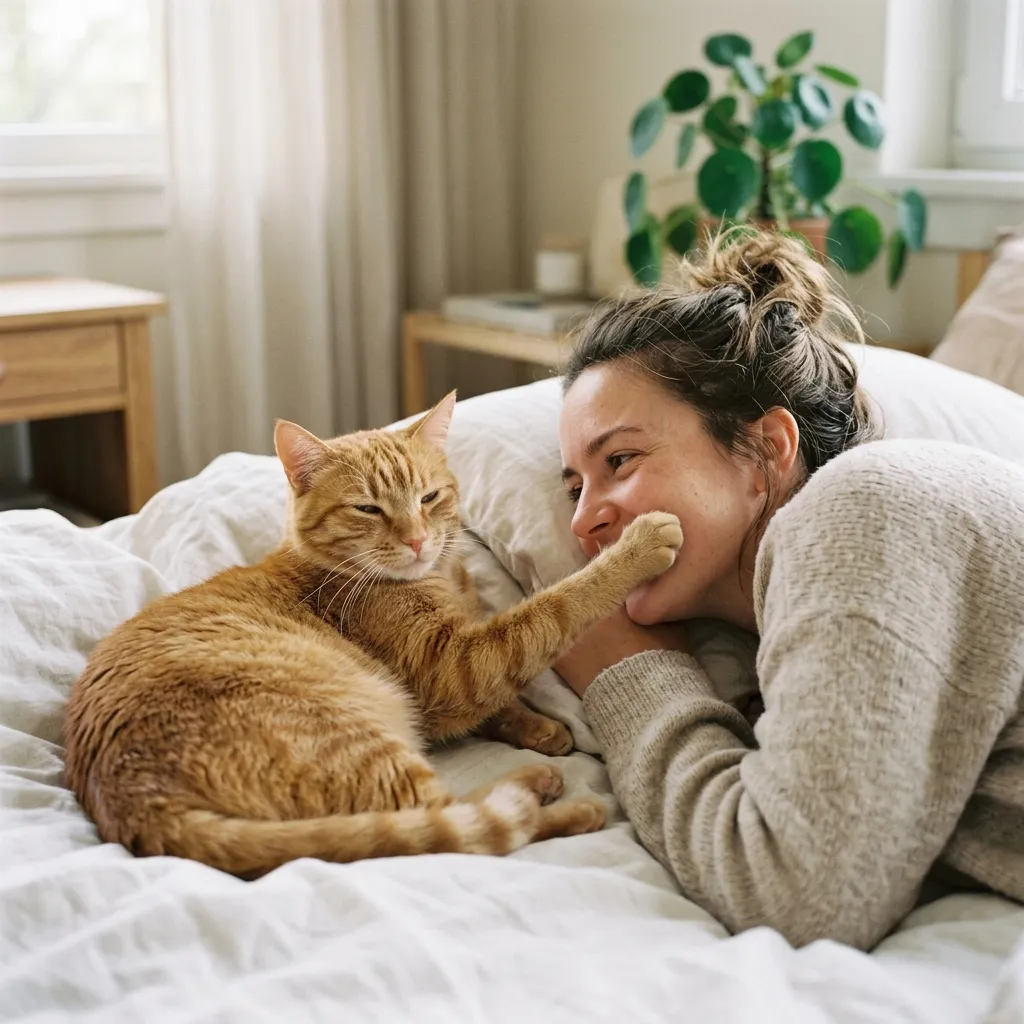
Quick answer: usually it’s affection, scent marking, a bid for attention (often breakfast-related), or plain curiosity. Sometimes it’s a polite “okay, that’s enough petting.” Soft paw, claws tucked in? Almost always friendly. Claws out, tail twitching, ears flattening? Your cat wants some space.
How cats use their paws to communicate
Cats don’t have words, so they talk with everything else: tail, ears, eyes, voice, smell. Paws matter more than most people think. They’re packed with nerve endings and have scent glands tucked between the pads. So one little paw on your face does three jobs at once. Your cat is feeling you, marking you and sending you a message.
International Cat Care explains that smell and touch are at the heart of how cats build relationships, with other cats and with the people they trust. So a paw on your face? That usually means you’re very much in the inner circle.
Why does my cat put his paw on my face? 7 common reasons
1. He is showing affection
For lots of cats, a gentle paw on your face is just love. You’ll often get purring, slow blinks, head bumps and sleepy half-closed eyes along with it. Cats are picky about who they touch like this, so take the compliment. It’s the cat version of reaching out to hold your hand.
2. He is marking you with his scent
Cats have scent glands between their toes (their paws are built pretty differently from a dog’s, as our guide to cat vs dog paw prints shows) and on their cheeks. When your cat presses a paw to your face, he’s leaving a note that says “mine.” Same reason cats rub their cheeks on you, scratch their favorite spots and sniff your face so carefully. A house that smells like the whole family feels safe to them.
3. He wants your attention
Cats figure out what works, fast. If a paw on the face once got you to wake up, look over or start petting, you’d better believe he’ll try it again. It happens a lot when you’re glued to your phone, reading, or asleep, and your cat feels ignored.
4. It is breakfast time (at least in his opinion)
The dawn face tap. A classic. Lots of cats are at their most lively around sunrise, and they learn in no time that “human wakes up” means “food shows up.” First a gentle paw. Then a firmer one. Then maybe a meow for good measure. That’s your cat’s alarm clock. Sound familiar? The tips further down can help you get some sleep back.
5. He is curious or checking on you
Cats explore with their paws, the same way some of them test water before they drink, as we explain in our guide on why cats drink water with their paw. Your breathing, your moving mouth, your closed eyes can all be fascinating. A light pat might be your cat investigating, or just checking you’re awake and okay.
6. He is saying “that’s enough”
Not every paw is a love note. If your cat plants a paw on your face or hand while you’re petting him, especially with a stiff body, a twitchy tail or ears swiveling sideways, he may be asking you to take a break. Cats can get overstimulated by petting, and that paw is a polite first warning before a nip. Our article on why cats wag their tail when you pet them explains these signals in more detail.
7. He is feeling cozy and kneading
Some cats slide into a relaxed, kitten-like mood when they’re snuggled up with you, and the paws start kneading. If your face happens to be in the way, it gets a few gentle presses. That’s deep contentment. More on that in our guide on why cats knead.
Reading the rest of your cat’s body language
The paw alone doesn’t tell you everything. Look at what the rest of your cat is doing:
- Happy and loving: soft paw, claws in, purring, slow blinks, relaxed whiskers, tail up or softly curled.
- Wants attention: tap after tap, meowing, walking all over you, staring at you or toward the kitchen.
- Feeling playful: quick swats, big pupils, a wiggling bum, pouncing on your hair or hands.
- “Please stop”: paw pressed firmly, tail twitching or thumping, ears turning sideways or back, skin rippling along the back.
- Stressed or unwell: hiding more than usual, a hunched posture, changes in eating or litter box habits. These deserve a closer look.
If you want to dig deeper, the Cornell Feline Health Center has helpful guidance on normal and problem behaviors in cats.
How to respond when your cat touches your face
If you love it, there’s nothing to change. A few tips keep it a safe, happy habit:
- Give a little love back. A slow blink, a soft chin scratch or a quiet word lets your cat know you got the message.
- Respect the “stop” signals. If the paw comes with a twitchy tail or flat ears, stop petting and let your cat decide what happens next.
- Protect your eyes. Even the sweetest cat can flex a claw by accident. Close your eyes or turn your face a little.
- Keep nails short. Trimmed nails make face taps a lot more comfortable. Our step-by-step guide on how to trim cat nails makes it easier.
How to stop early-morning face pawing
Love it or not, a paw in the face at 4:30 a.m. gets old fast. These tricks help most cats adjust:
- Don’t reward it. Hopping up to feed your cat right after a face tap teaches them it works. Stay still, keep your eyes shut and wait until the pawing stops before getting up.
- Split waking up from breakfast. Get up, get dressed and make your coffee before feeding your cat, so waking you isn’t tied directly to food.
- Try an automatic feeder. A timed feeder that drops a small meal early in the morning moves your cat’s focus from you to the bowl.
- Play hard before bed. Ten to fifteen minutes with a wand toy in the evening, then a small meal, copies the natural hunt, eat, sleep rhythm and helps cats sleep longer.
- Add daytime fun. Window perches, puzzle feeders and rotating toys help bored indoor cats burn off energy. Our guide to keeping indoor cats happy has more ideas.
- Stick with it. New habits can take a week or two to settle. Caving “just once” resets the whole lesson.
When face pawing might signal a problem
Face pawing by itself is normal. Mention it to your vet if it shows up suddenly along with other changes, like more yowling at night, restlessness, weight loss, a big jump in appetite or thirst, or clinginess that’s new for your cat. In older cats especially, these can be early signs of problems like an overactive thyroid or age-related confusion. A quick checkup can rule them out.
Frequently asked questions
Why does my cat put his paw on my mouth when I talk?
Your moving mouth and your voice are fascinating to a curious cat. Some cats also seem to do it when they want your attention for themselves, especially when you’re on the phone. Usually harmless, and a bit comical.
Is it a sign of dominance when my cat puts his paw on me?
Not really. Cats don’t organize their relationships with people around dominance, whatever older ideas said. A paw on your face is far more likely to be affection, scent marking, a request or curiosity.
Why does my cat touch my face while I sleep?
Usually to wake you up, often because they want food, play or company. Some cats also check on sleeping owners out of curiosity. The early-morning tips above help if it’s wrecking your sleep.
Why does my kitten keep pawing at my face?
Kittens explore everything with their paws and mouths, and your face is fascinating. It’s also how they play. Gently steer play toward toys so they learn hands and faces aren’t targets. Our new kitten checklist covers the toys and routines that help.
Why does my cat only put his paw on my face and not on other people?
For a cat, touching someone’s face is a close, trusting gesture. Most save it for the person they feel safest with, often the one who feeds them, plays with them or spends the most quiet time with them. If your cat picks you, take it as a sign of a strong bond.
Should I let my cat put his paw on my face?
If you’re comfortable with it and your cat’s nails are trimmed, it’s a lovely bonding moment. If you’d rather not, gently move the paw away, switch to petting or a toy, and don’t reward the behavior with a big fuss.
Leave a Reply