Puffy. Warm. And your dog flinches the second you touch it. A paw like that is hard to ignore. Maybe the limping started yesterday. Maybe you caught a funky smell and a bit of goo between the toes. A dog paw infection is really common, especially in busy, outdoorsy dogs and dogs with allergies, and most clear up well with treatment. The trick? Catch it early, and deal with whatever set it off, not just the infection.
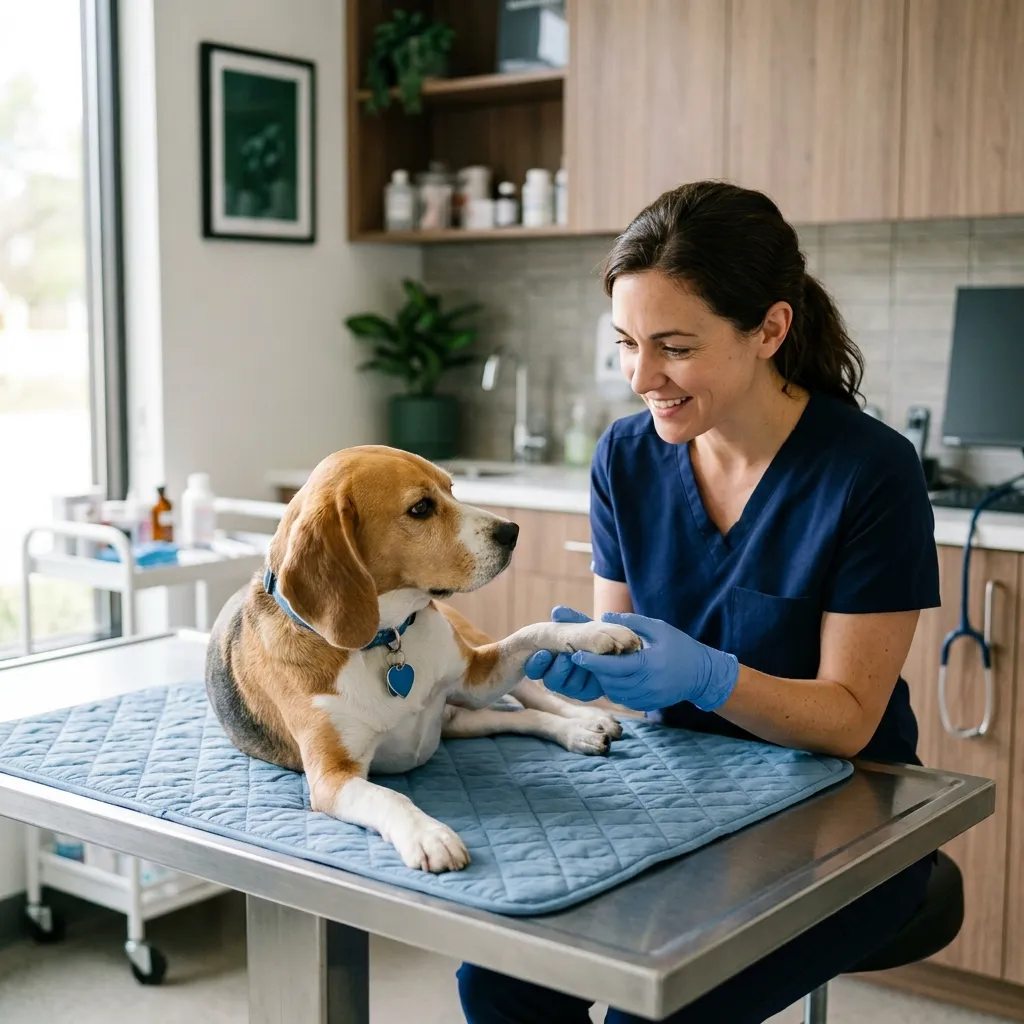
Quick answer: nine times out of ten it’s bacteria or yeast moving in after something else opened the door. Allergies. Endless licking. A tiny cut. A seed wedged between the toes. You’ll see redness, puffiness, heat, a sore foot, limping, gunk and a smell you won’t forget. Vets usually clean it up and send you home with medicated soaks or wipes, plus antibiotics or antifungals. Swollen, sore paw? Get it seen. Swelling that came on fast and hard? Today.
How paw infections start
Healthy paw skin is surprisingly good at keeping germs out. Infections usually start when that barrier gets broken. The usual ways in:
- Allergies, which leave the skin itchy and inflamed. Then all the licking keeps it damp and damaged. More in our guide to dog paw allergies.
- Small wounds like cuts, cracks and scrapes on the pads. Our paw pad injury first aid guide shows how to clean them properly.
- Foreign bodies like grass seeds, splinters and thorns that drag bacteria deep into the paw.
- Moisture from wet grass, swimming, or paws that never get properly dried.
- Ingrown hairs between the toes, especially in short-coated breeds.
- Cracked, thickened pads from conditions like hyperkeratosis.
- Other health issues, including hormone problems and parasites like Demodex mites, which weaken the skin’s defenses.
Signs of a dog paw infection
An infected paw usually shows a few of these at once:
- Red skin between the toes or on the pads
- Swollen toes, or a swollen whole paw
- Heat when you hold the foot
- Pain, flinching or yanking the paw away
- Limping, or keeping weight off that foot
- Pus, bloody or yellow discharge, or crusts
- A strong, nasty or sour smell
- Pimples, bumps or a lump between the toes
- Dark, greasy gunk around the nails
- Licking or chewing at one or more paws that just won’t stop
Red doesn’t automatically mean infected. Our guide on why a dog’s paws turn red explains how to tell simple irritation from something more serious.
Common types of paw infections in dogs
Bacterial infection (pyoderma)
Bacteria are the number one culprit, and vets call the infection pyoderma. Two flavors. Shallow: redness, pimples, crusts. Deep: swelling, real pain, little holes that drain. Deep ones drag on. And here’s the catch the Merck Veterinary Manual points out: pyoderma almost never shows up on its own. Something’s usually behind it, like allergies or parasites, and you have to tackle that as well.
Yeast infection
Yeast gives you greasy, red, itchy skin, a musty smell and brownish staining. It often tags along with bacteria in allergic dogs. Our full guide to dog paw yeast infections covers the signs and treatment.
Interdigital furuncles (“cysts”)
These are sore, red, raised lumps between the toes that can burst and ooze. They’re deep infections of the hair follicles, and they’re common in Bulldogs, Labs, Shar-Peis and other short-coated breeds. Expect several weeks of treatment, and don’t be shocked if they come back.
Nail bed infection
Sometimes it’s the nail bed that gets infected. Vets call that paronychia. Picture a puffy, red, weepy spot right where the nail meets the toe. The nail itself may go a funny color, wobble, or crack at the slightest bump. Just one nail? Probably an injury. A few of them? Allergies or an immune issue could be in play.
Abscess
Abscesses are pockets of pus, and they usually start with a puncture, a bite or a buried grass seed. The whole paw balloons, gets hot, and hurts a lot. Your dog may mope and skip meals. Don’t try to squeeze it. Most need a vet to lance and drain them.
Swollen dog paw: infection or something else?
Infection is a common reason for a swollen paw. It’s not the only one, though. Other possibilities:
- A sting or bite. Swelling shows up fast, sometimes within minutes.
- Sprains, broken toes or dislocations after a fall or rough play
- Something stuck in there, like a thorn, glass or a grass seed
- A tight collar, bandage or a hair wrapped around a toe
- Growths or tumors, less common but worth ruling out in older dogs
PetMD‘s advice is simple: look closely for anything stuck in the paw, and if the swelling isn’t going down fast, see your vet. A swollen face, trouble breathing, vomiting or collapse after a sting? Emergency. Drive to the closest clinic.
How vets diagnose paw infections
Nail the diagnosis and your dog gets the right medicine on the first try. Here’s what your vet might do:
- Look at all four paws, the nails, and the skin everywhere else.
- Take a skin sample with tape or a swab and check it under the microscope for bacteria and yeast.
- Send off a culture for deep or repeat infections, to find exactly which antibiotic will work.
- Do a skin scraping to look for mites.
- Take X-rays if there might be something stuck, a bone injury or a nail bed problem.
- Hunt for the root cause, like allergies or hormone problems, especially if infections keep coming back.
Dog paw infection treatment
How it’s treated depends on what kind of infection it is and how deep it’s gone. Most plans pick from this menu:
- Stuff that goes on the paw. Medicated soaks, wipes, sprays or foams, often with chlorhexidine or an antifungal. Shallow infections? These can do the whole job. Deep ones? They speed things up.
- Oral antibiotics. For deeper or widespread bacterial infections. Deep ones often need several weeks, and vets usually keep going for a while after the paw looks normal so the infection doesn’t bounce back.
- Oral antifungals. For stubborn or severe yeast.
- Draining and cleaning. Abscesses and some cysts need to be opened, flushed and sometimes packed.
- Getting foreign material out. Grass seeds and splinters sometimes have to come out under sedation.
- Pain relief. Anti-inflammatories made for dogs, from your vet. Keep your own medicine cabinet shut. Ibuprofen, naproxen and acetaminophen can seriously poison a dog.
- A cone. To stop the licking while the paw heals.
- Fixing the root cause. Allergy treatment, parasite control or hormone therapy so it doesn’t keep happening.
Finish every last dose, even if the paw looks fine after a few days. Stopping early is one of the top reasons paw infections come back, and it helps breed antibiotic resistance.
How to care for an infected paw at home
Once your vet has a plan, a few easy habits help your dog heal faster:
- Stick to the soak or wipe routine. Set a phone reminder so nothing gets missed.
- Dry really well after soaks, walks and baths, especially between the toes.
- Keep the cone on, especially overnight and whenever you can’t watch.
- Go easy on exercise. Short, clean leash walks only, with a boot or bag over any bandage.
- Keep bedding clean. Wash it hot while the infection is active.
- Keep an eye out. Swelling getting bigger? Redness spreading? Fever, low energy, no appetite? Call the vet.
When to see a vet
Paw infections don’t reward patience. Swelling, gunk, a bad smell, a lump between the toes, limping, or a dog who’s been licking one paw for days? Book in. Go today if it swelled up suddenly and badly, it’s red-hot and sore, your dog won’t use the leg at all, or they just seem sick. No vet yet? Here are our tips on how to choose a veterinarian.
How to prevent paw infections
- Check paws once a week and after hikes, as part of a regular dog care routine.
- Clean and cover small cuts quickly.
- Dry paws after walks, swims and baths.
- Keep the fur between the toes trimmed and nails at a healthy length.
- Stay on parasite prevention all year round.
- Get on top of allergies early, before the licking becomes a full-time job. Our guide on why dogs keep licking their paws can help you spot the warning signs.
- Avoid areas full of foxtails and grass awns in late spring and summer.
Frequently asked questions
Can a dog paw infection go away on its own?
A bit of mild surface redness might calm down with good hygiene. A real infection almost never goes away by itself. Leave it and it tends to burrow deeper, and the deeper it goes, the longer and pricier the fix.
How long does it take for a paw infection to heal?
Shallow infections? Often better in a week or two. Deep bacterial infections and those nasty lumps between the toes (interdigital furuncles)? Four to six weeks, sometimes more. Most vets will want to recheck the paw before you stop treatment.
Is a swollen paw an emergency?
Not always, but get it looked at soon. Treat it as urgent if the swelling is sudden and severe, your dog can’t put weight on it, the paw is very hot, there’s a wound that won’t stop bleeding, or your dog has a swollen face or trouble breathing.
Can I soak my dog’s infected paw at home?
Soaks can help, but ask your vet which one to use and how often. Plain lukewarm water, a vet-recommended antiseptic soak or a gentle Epsom salt paw soak is much safer than homemade mixes with vinegar, bleach or essential oils, which can irritate or hurt your dog.
This article is for general information and is not a substitute for advice from your veterinarian.
Leave a Reply