Run your fingers over your dog’s paw pads and you’d expect a bit of roughness. Leathery, sure. But hard, thick and crusty? Or weird little hair-like spikes poking out of the edges? That’s something else. Very often it’s a condition called hyperkeratosis, and the paw pads are one of its favorite spots. The name sounds scary. In a lot of dogs, though, it’s pretty manageable with a simple routine once you know what’s behind it.
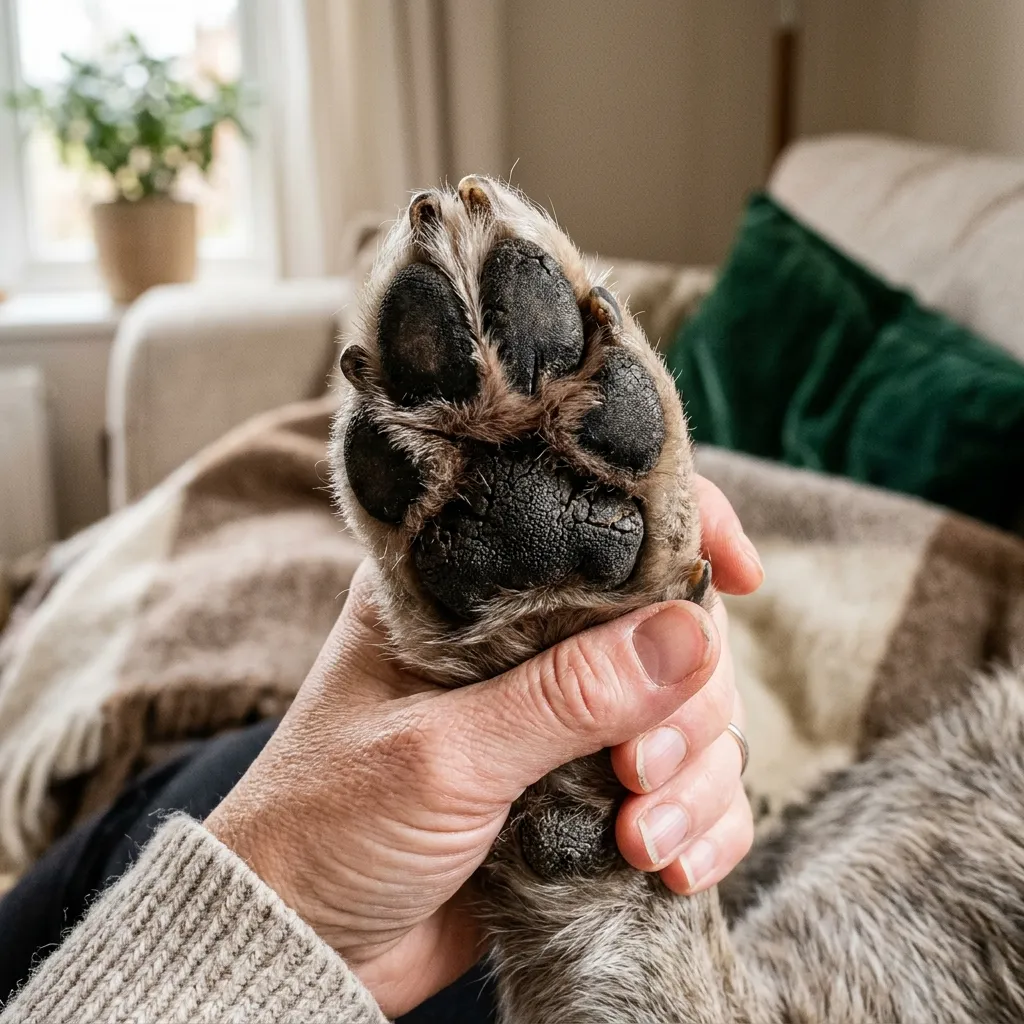
Quick answer: too much keratin. That’s the whole thing in two words. Keratin is the tough protein in skin, and when the body overproduces it, the pads go thick, hard and crusty, sometimes “hairy,” sometimes cracked. Most of the time it’s age or genes. Less often it’s distemper, low zinc, an autoimmune disease or the liver. Can’t cure the age-related kind? True, but soaks, a good balm and careful trims keep most dogs happy. Any cracks, limping or sudden change: vet.
What is hyperkeratosis in dog paws?
Look at your fingernails. That’s keratin. Same stuff forms the outer layer of your skin, and on a dog it toughens the pads for sidewalks, gravel and hiking trails. With hyperkeratosis the factory’s stuck on overdrive. Keratin gets made faster than it wears off, and it stacks up, layer on layer.
So the pads change. Thicker. Harder. Drier. Crusty round the edges. In some dogs you get odd feathery or spiky bits that honestly look like wiry hair growing out of the paw. Hence the nickname “hairy paws.” The nose can go the same way too, and then it’s called nasal hyperkeratosis.
Signs of hyperkeratosis in dogs
- Pads that feel hard, thick or rough, like a dry callus
- Crusty, flaky or scaly edges on the pads
- Hair-like or spiky bits sticking out of the pads
- Cracks or splits in the pads, sometimes deep ones
- A clicking or tapping sound on hard floors
- Limping, tenderness or not wanting to walk on rough ground
- Licking or chewing at the feet
- A dry, crusty or thickened nose in some dogs
A mild case? Your dog may not even notice. The problem is cracking. Cracks sting, and they’re an open door for bacteria. That’s how you end up dealing with a paw infection on top.
What causes paw pad hyperkeratosis?
Hyperkeratosis is a symptom, not one single disease, so working out the cause matters. According to the American Kennel Club, the usual suspects include:
1. Age
This is the big one. Plenty of dogs just start making extra keratin on their pads and nose as the years go by. Vets call it idiopathic, which is a fancy way of saying nothing else is causing it. It sneaks up slowly, and you manage it rather than fix it.
2. Genetics
Some breeds are born with a tendency, and it shows up young, often before their first birthday. Irish Terriers and Dogues de Bordeaux have a known inherited footpad form, and Labs can inherit one that affects the nose. Got a young pup from one of those breeds with oddly hard, split pads? Tell your vet.
3. Canine distemper
Old-timers used to call distemper “hard pad disease,” and now you know why. It’s a nasty virus that can thicken the pads, but you’ll almost always see other things first: runny eyes and nose, a cough, fever, and later on, nervous system trouble. The fix here is prevention. Keep up with vaccines. The AKC has a good rundown on distemper in dogs.
4. Zinc-responsive dermatosis
Some dogs can eat a great diet and still not soak up enough zinc. Huskies and Malamutes are the poster children, and occasionally it shows up in fast-growing puppies on a poorly balanced diet. Crusts and scales pop up around the eyes, lips and ears, and on the pads. The upside: VCA Animal Hospitals says most of these dogs improve nicely on zinc supplements prescribed by their vet.
5. Autoimmune disease
Pemphigus foliaceus is an autoimmune condition. In plain English, the immune system goes after the dog’s own skin. Crusts show up on the face, ears and pads, and the pads can thicken and split. You’ll need a vet diagnosis, usually with a biopsy, and long-term meds to keep it in check.
6. Liver disease and other conditions
Rarely, liver disease triggers a condition called hepatocutaneous syndrome, with painful crusting and cracking of the pads, mostly in older dogs. And in some parts of the world, infections like leishmaniasis can hit the pads and nose. Unlikely? Yes. But this is exactly why new pad changes should get a vet’s eyes on them, not just a home remedy.
How vets diagnose hyperkeratosis
Expect your vet to take a good close look at the pads, nose and skin, and to ask about age, breed, food and vaccines. With classic age-related changes in a healthy senior, that may be all they need. If anything doesn’t add up (a young dog, a sudden change, crusts elsewhere, a dog who’s off color), they may suggest:
- Blood tests to check organ function, including the liver
- Skin samples to look for infection or mites
- A skin biopsy to confirm hyperkeratosis and rule out autoimmune disease
- Tests for infectious diseases where it makes sense
Treatment and home care for hyperkeratosis dog paws
If there’s a root cause, that comes first: zinc for the zinc-responsive kind, immune meds for pemphigus, liver care for liver disease. For plain old age-related hyperkeratosis, you’re aiming for pads that are soft, comfy and not cracking. Most owners settle into something like this:
- Soften with a warm soak. Soak the paws in lukewarm water (or a mild Epsom salt soak) for five to ten minutes, a few times a week or as your vet suggests. It softens the hard keratin and helps balms sink in.
- Pat dry. Dry each paw gently, between the toes too, so no moisture gets trapped.
- Rub in a paw balm. Use a dog-safe balm or a softening product your vet recommends. Some prescription products contain ingredients that break down extra keratin. Massage it in well.
- Distract for a few minutes. Hand over a chew or play a quick game so the balm soaks in instead of getting licked off.
- Trim overgrowth carefully. Extra keratin can be gently trimmed, but living tissue sits right underneath. Have your vet or an experienced groomer show you how, or let them do it.
- Protect the pads. Booties help on rough, hot or icy ground, especially if there are cracks.
Leave the human foot cream in the bathroom unless your vet says otherwise. A lot of it isn’t meant to be swallowed, and your dog will lick. If a crack splits open and bleeds, handle it like any wound and follow our paw pad injury first aid steps.
When to see a vet
Make an appointment if:
- You notice hard or crusty pads for the first time, especially in a young dog
- The pads crack, bleed or look infected
- Your dog is limping or avoiding walks
- There are crusts on the face, ears or anywhere else too
- Your dog seems unwell, is eating less or losing weight
- Your dog isn’t vaccinated or is behind, and has pad changes along with discharge or coughing
Need help finding a good practice? See our guide on how to choose a veterinarian.
Can you prevent hyperkeratosis?
Age and genes? Can’t do much about those. But you can head off complications and cross the preventable causes off the list:
- Keep your dog current on core vaccines, distemper included.
- Feed a complete, balanced diet that suits their age and breed.
- Check paws every week as part of your dog care routine so changes get caught early.
- Use a paw balm regularly in dry, cold or hot weather.
- Keep nails short so your dog walks evenly on the pads.
- Watch for redness, licking and itching, which can mean other paw problems. Our guide on why a dog’s paws turn red can help.
Frequently asked questions
Is hyperkeratosis in dogs painful?
Mild ones usually don’t. It starts to hurt when the thick layer cracks, when overgrowth throws off how your dog walks, or when infection moves in. Limping or licking is your dog telling you it’s uncomfortable.
Can hyperkeratosis be cured?
Depends what’s causing it. The zinc kind often improves massively once treated. The age-related and inherited kinds stick around, but regular softening and trims keep most dogs comfy for the rest of their lives.
Is coconut oil good for hyperkeratosis on dog paws?
Some people do, as a basic moisturizer. Trouble is, it won’t break down thick keratin, and most dogs lick it straight off. A proper dog paw balm, or whatever your vet suggests, usually does a better job. And if your dog’s paws are itchy or yeasty, skip oils completely.
Can I trim the hard skin on my dog’s paw pads myself?
Only once your vet or groomer has shown you, and only the dry, dead bits. Go too deep and you’ll hit living tissue, which bleeds and hurts. Not confident? Have a pro do it every few weeks.
Which dogs are most likely to get hyperkeratosis?
Older dogs of any breed are the biggest group. Among younger dogs, Irish Terriers, Dogues de Bordeaux and Labradors can inherit forms of it, while Huskies and Malamutes are prone to zinc-related crusting. Unvaccinated dogs are at risk too, because of distemper.
This article is for general information and is not a substitute for advice from your veterinarian.
Leave a Reply