One second your dog’s tearing across the park like a rocket. The next, they’re hopping on three legs with one paw held up in the air. Or you spot a little trail of red dots across the kitchen floor. A dog paw pad injury can look alarming, but most are minor and heal nicely with calm, simple first aid at home. What matters is knowing how to clean and protect the paw, and spotting the handful of cases where your dog really needs a vet.
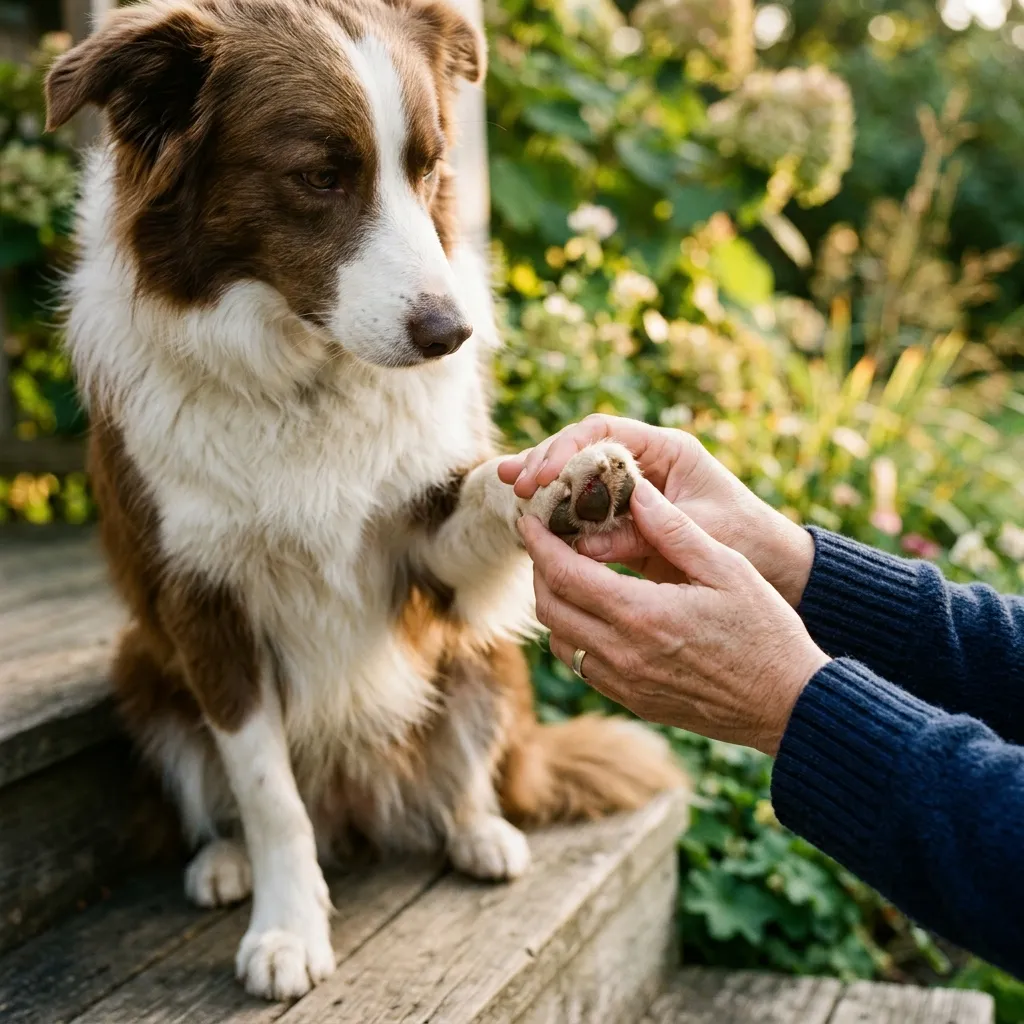
Quick answer: small cut or scrape? Rinse it with clean lukewarm water, press on it with clean gauze for a few minutes if it’s bleeding, wrap it lightly and stop the licking. Head to the vet if the cut is deep or longer than about half an inch, it’s still bleeding after 10 minutes of pressure, there’s glass or metal in it, or your dog is still limping the next day.
Why paw pad injuries need extra care
Pads are tough. Like, hiking-boot tough. But that toughness has a flip side. Every step puts your dog’s full weight on them, they’re always in the dirt, and they’re loaded with blood vessels. Put that together and even a small nick bleeds like crazy, gets grubby in seconds, and pops back open every time your dog walks. No wonder pad wounds heal slower than cuts elsewhere. Protecting the paw while it mends? Half the battle.
Common types of dog paw pad injuries
- Cuts from glass, sharp rocks, metal, shells or ice.
- Scrapes from rough ground, especially after a lot of running on concrete or sand.
- Torn or peeling pads, where a flap of the tough outer layer lifts off. Really common in super active dogs.
- Punctures from thorns, splinters or sharp sticks. They look tiny but can push dirt deep into the paw.
- Burns from hot pavement, hot sand or chemicals, causing redness, blisters and peeling.
- Cracks from dry weather, snow and road salt, or from thick, hard pads caused by hyperkeratosis.
- Stuff stuck in there, like grass seeds (see our guide to foxtails in dog paws) or glass wedged in or between the pads.
Signs your dog has injured a paw
Paw injuries aren’t always obvious. Keep an eye out for:
- Limping, or holding one paw up
- Blood on the floor, the bed or your dog’s fur
- Sudden, intense licking of one foot (our guide on why dogs keep licking their paws covers other possible causes)
- Swelling, heat or a visible flap of skin on the pad
- Pulling the paw away when you touch it
- Not wanting to walk, jump or take the usual route
First aid for a dog paw cut on the pad: step by step
Deep breath before you start. Your dog reads your mood, so a calm, low voice helps more than you’d think. Is your dog in a lot of pain? Go carefully. Even the gentlest dog can snap when someone grabs a sore foot.
- Grab a helper and good light. Have someone hold and comfort your dog while you work. Sit on the floor somewhere bright, or use your phone’s flashlight.
- Take a proper look. Gently spread the toes and check the whole pad. Scrape, clean cut, puncture or flap? Anything stuck in it?
- Only remove loose stuff. Brush or rinse off dirt, grit and little stones. Don’t pull out glass, metal or anything stuck in deep. Leave that for your vet, because pulling it can make the bleeding worse.
- Rinse it. Flush the wound with clean, lukewarm water or sterile saline for a minute or two. A squeeze bottle or clean syringe works great. Skip hydrogen peroxide and alcohol. They sting and damage healing tissue.
- Stop the bleeding. Press a clean gauze pad or cloth firmly on the cut and hold it for 5 to 10 minutes. No peeking. Most pad cuts stop within that time.
- Cover it. Put a non-stick pad over the cut, add a layer of soft padding or gauze, then wrap with self-adhesive vet wrap from the toes up past the wrist or ankle. Snug, but never tight.
- Stop the licking. Use a cone or a clean dog boot so your dog can’t rip the bandage off or lick the wound.
For clear, illustrated steps, VCA Animal Hospitals has an excellent first aid guide for torn and injured foot pads.
Bandaging tips that make a real difference
- Check the toes. Swollen, cold or splayed toes mean the wrap is too tight. Loosen it right away.
- Keep it dry. Slip a plastic bag or waterproof boot over the bandage for potty trips, then take it off inside.
- Change it daily, or sooner if it gets wet, dirty or smelly.
- Watch for trouble. A bad smell, discharge, more swelling or a dog who seems off are all reasons to call the vet.
When a paw pad injury needs a vet
Home care is fine for shallow scrapes and small cuts. Go to your vet, or an emergency clinic after hours, if:
- The cut is deep, gaping, or longer than about half an inch
- It’s still bleeding after 10 minutes of firm pressure
- A big flap of pad is hanging loose
- There’s glass, metal or anything else stuck in the paw
- It’s a puncture, especially from a bite
- Your dog is still limping badly after 24 hours
- You see swelling, heat, pus or a bad smell a day or two later (signs of a paw infection)
- The pads are burned, blistered or peeling
Some deeper pad wounds need stitches, a thick padded bandage or antibiotics. Stitching pads is tricky, since they take a pounding with every step, so vets usually pair the repair with strict rest. Haven’t picked a vet yet? Do it now, before you need one in a panic. Our guide on how to choose a veterinarian can help.
Dog paw pad injury treatment and healing time
How long it takes depends on how deep it goes and how well you protect the paw:
- Minor scrapes and shallow cuts: usually a few days to a week.
- Deeper cuts and torn pads: often two to three weeks, sometimes longer.
- Burns and bad injuries: can take several weeks, with regular vet rechecks.
While it heals: short leash walks only, on clean, soft stuff like grass. No running, no fetch, no dog park until the pad has fully closed. Doing too much, too soon is the number one reason these wounds split open again. The American Kennel Club also says keep wounds clean and covered, and don’t let your dog lick. Saliva brings bacteria, and all that licking slows everything down.
Injured puppy paw: what’s different
Puppy pads are softer and thinner than adult pads. Add in the fact that puppies have zero fear, and you get a lot of scrapes, stubbed toes and ripped nails. A few things to keep in mind:
- Tiny bodies, less wiggle room. Blood loss that’s no big deal for a large dog matters more for a small puppy, so call your vet sooner if the bleeding is steady.
- A limp might not be the paw. Growing bones and joints can get hurt jumping off the sofa or tumbling down stairs. If you can’t find a cut, or the limp lasts more than a day, get it checked.
- Keep bandages light. Puppies shred bandages fast. A cone is usually a must.
- Puppy-proof the house. Cover sharp edges, keep stair gates closed and watch for dropped glass or staples. Our guide to your puppy’s first night home has more tips for setting up safely.
Build a simple paw first aid kit
Keep a small kit at home and in the car so you’re not scrambling for supplies with a bleeding dog. Pack:
- Sterile saline or a clean squeeze bottle for rinsing
- Sterile gauze pads and non-stick wound pads
- Soft cast padding or rolled gauze
- Self-adhesive vet wrap
- Blunt-tipped scissors and tweezers
- A soft cone and a protective dog boot
- Your vet’s number and the closest emergency clinic’s number
How to prevent paw pad injuries
- Check paws after hikes, beach days and park trips, as part of a regular dog care routine.
- Walk early or late when it’s hot, and test the pavement with the back of your hand.
- Use booties on hot pavement, rough trails, snow and salted roads.
- Keep nails trimmed so they don’t snag and tear.
- Moisturize dry, cracked pads with a pet-safe paw balm.
- Build up activity slowly. Sudden long runs on hard ground are a classic cause of worn, torn pads.
- Watch for red, irritated skin that can weaken the paw. Our guide on why a dog’s paws turn red covers what to look for.
Frequently asked questions
Can a dog’s paw pad heal on its own?
Tiny, shallow scrapes? Often fine on their own in a few days, if you keep them clean and your dog doesn’t lick them raw. Deeper cuts and torn pads are another story. They heal much better with proper cleaning, a bandage, and sometimes a trip to the vet.
Should I let my dog lick his injured paw?
Nope. That one’s an old wives’ tale. A licking tongue can rip the wound back open and drag bacteria in with it. A cone or a boot is the kinder choice, even if your dog gives you the sad eyes.
Can I put human antibiotic ointment on my dog’s paw?
Check with your vet first. Some are okay with a thin smear on a minor scrape. The trouble is, dogs lick it right off, and some ointments have ingredients that shouldn’t be swallowed. Your vet can point you to something safe.
Can I walk my dog with a cut paw pad?
Short, gentle potty trips on clean ground, with the paw bandaged and a boot or bag over the top. That’s it for now. Proper walks can wait until the pad has fully closed, since every step presses on the wound.
This article is for general information and is not a substitute for advice from your veterinarian. If your dog is bleeding heavily or in severe pain, contact a vet or emergency clinic right away.
Leave a Reply