Some dogs snore like a kitten purring. Others sound like someone’s running a leaf blower in the bedroom. If you’ve spent a night staring at the ceiling while a chainsaw revs from the dog bed, asking yourself why does my dog snore so loud, you’ve got plenty of company. It’s one of those questions more and more owners are typing into Google. Most snoring is harmless. But really loud snoring can be the first hint of an airway problem, and that affects your dog when they’re awake too, not just when they’re asleep.
Quick answer: air has to squeeze through the nose and throat while your dog sleeps, and when it can’t flow freely, the loose tissue in there rattles. That’s a snore. Usually it’s down to how they’re lying, a few extra pounds, allergies or something irritating in the air, or a squashed-in face (brachycephalic, if you want the vet word). Have it checked if it’s brand new, keeps getting louder, or comes with noisy breathing during the day, gagging, running out of puff on walks, pauses in breathing or a bark that’s changed.
What actually causes the sound
Think of the throat like a tent that’s been half-collapsed. Awake, the muscles hold it up. Asleep, everything sags, including the soft palate. If there’s a tight spot anywhere from nose to throat, the air rushing through sets that saggy tissue flapping. Tighter space, floppier tissue, bigger noise. So yes, how your dog lies, what they weigh, the shape of their face and any swelling all feed into it.
Why does my dog snore so loud? Common, mostly harmless causes
1. Sleeping position
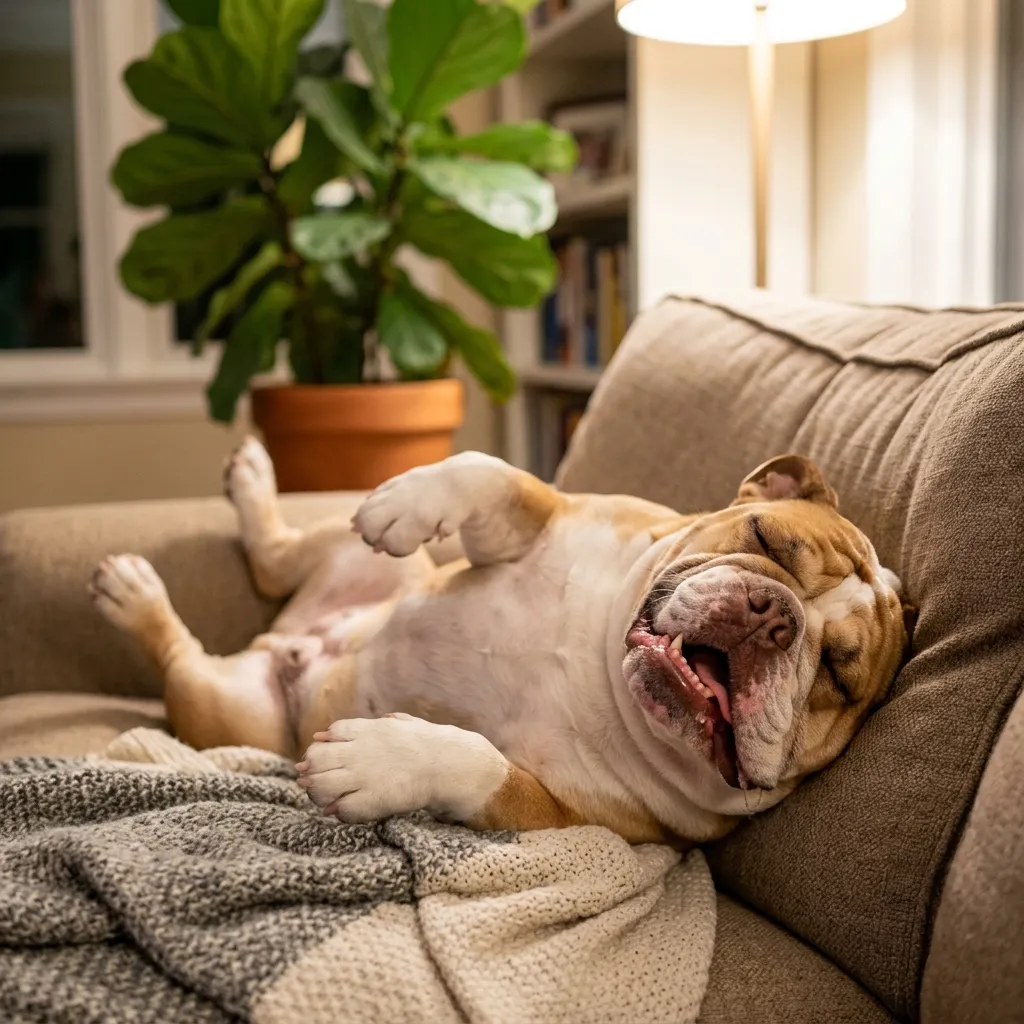
Is your dog a belly-up sleeper, all four legs pointing at the ceiling? Those dogs snore more. Gravity pulls the tongue and soft bits back toward the throat. Try this: next time the snoring starts, see if it changes when they roll onto their side. If it does, you’ve found a big part of the answer. A donut bed or one with raised edges can encourage the curled-up position.
2. Extra weight
Weight doesn’t just go to the waistline. It collects around the neck and throat as well, and that pinches the airway. Chubbier dogs snore more, full stop. We hear from a lot of owners who say the nightly racket calmed down once their dog slimmed down on a vet’s plan. Few fixes are easier, and your dog gets healthier in the bargain.
3. Allergies and irritants
Dust, pollen, cigarette smoke, plug-in air fresheners, bone-dry winter heating. Any of it can make the inside of the nose and throat puffy and sore. Puffy tissue leaves less room for air, so the snoring cranks up. Worse every spring? Worse right after you’ve gone wild with the cleaning spray? That’s your clue.
4. A cold or infection
A stuffy nose from a cold does the same thing to dogs as it does to us. You’ll usually hear sneezing, see a drippy nose or catch a cough as well, and the snoring eases as they recover. Our guide on why dogs keep sneezing runs through what’s normally behind it.
5. Deep, relaxed sleep
And some dogs? They just snore a little when they’re completely zonked, especially after a long hike or a day at the beach. A healthy dog who’s quiet when awake and snores now and then is fine.
Breeds that snore the most
If there were an Olympic snoring event, flat-faced breeds would take every medal. English and French Bulldogs, Pugs, Boston Terriers, Boxers, Shih Tzus, Pekingese, Cavaliers, Lhasa Apsos. Breeding shortened their skulls, but nobody told the soft tissue inside to shrink too. So it’s all jammed into a smaller box.
The American College of Veterinary Surgeons calls it brachycephalic obstructive airway syndrome, and it’s really a pile-up of problems. Pinched nostrils. A soft palate that’s too long and hangs over the airway. Little pouches in the voice box turned the wrong way. A skinny windpipe. Loud snoring is one of the giveaways. So is noisy breathing while awake, snorting, gagging, getting pooped fast on walks and wilting in the heat.
Nobody likes hearing this part, but it matters. In these breeds, loud snoring is common. That doesn’t make it healthy. Plenty of Pugs and Frenchies are working way harder to breathe than the people who love them realize.
Can dogs have sleep apnea?
Yes, they can. English Bulldogs have even been used by scientists as a natural stand-in for studying human obstructive sleep apnea, since so many snore loudly, stop breathing for short spells and sleep badly. So listen out. Does the snoring suddenly go quiet for several seconds, then end with a gasp or a snort? Does your dog toss and turn, wake up a lot, then nod off all day? Grab your phone, film it at night, and take it to your vet.
When loud snoring can be a sign of something more
- Laryngeal paralysis mostly shows up in older, bigger dogs like Labradors. Breathing gets noisy, loudest during panting or exercise, the bark goes hoarse or changes, and hot weather becomes a real struggle. It can turn into an emergency.
- Something blocking the nose, like a grass seed, a polyp or a growth. Be suspicious if the snoring is new and there’s discharge or blood from just one nostril.
- Dental disease in the upper teeth, which can inflame the nasal passages sitting right above them.
- Hypothyroidism, which can lead to weight gain and puffy throat tissue.
- Airway narrowing from extra weight, which also makes exercise harder.
Harmless snoring vs. snoring to check
| Usually harmless | Talk to your vet |
|---|---|
| Occasional, soft snoring | Very loud snoring that’s getting worse |
| Stops when your dog changes position | Snoring that started suddenly in an adult dog |
| Quiet, easy breathing when awake | Noisy breathing, snorting or rasping when awake |
| Normal energy on walks | Tires quickly, struggles in the heat |
| No other symptoms | Gagging, pauses in breathing, fainting, blue gums or a changed bark |
Blue or grey gums, collapse or serious trouble breathing are emergencies. If you need a practice you can trust, our guide on how to choose a veterinarian can help.
How to help a snoring dog
- Get to a healthy weight. Ask your vet what your dog should weigh and how much to feed. Even losing a little can quiet the snoring and make breathing easier.
- Swap the bed. A round bed or a bolster pillow nudges your dog to sleep on their side and props the head up a bit.
- Clean up the air. Don’t smoke indoors, go easy on scented stuff, wash the bedding every week, and try a humidifier or air purifier if your home is dry or dusty.
- Switch to a harness instead of a collar, particularly for flat-faced dogs, so there’s no extra pressure on the throat.
- Keep flat-faced dogs cool, and skip hard exercise on warm days.
- Ask about surgery if it’s needed. For flat-faced dogs with serious airway problems, widening the nostrils or trimming the soft palate can make life a lot more comfortable.
- Film your dog sleeping. A short clip lets your vet hear exactly what you’re hearing.
Should you wake a snoring dog?
Mostly, let them snooze. A snoring dog is usually a dog who’s sleeping well. The exception: if the snore stops dead and they gasp, or look like they’re struggling for air, wake them gently, check that they’re breathing okay and their gums are pink, and call the vet if you’re uneasy. Our guide on how much sleep dogs need covers what healthy sleep should look like.
How to record your dog’s snoring for the vet
Snoring has a way of going silent the second you’re in the vet’s office. Annoying, right? So bring proof. Set your phone near the dog bed (not on it) and record a few minutes of sleep, ideally on a loud night. Then film your dog breathing while they’re awake and relaxed, and once more after a short walk. Note the date, how warm the room was, and whether they’d had a big day. Your vet can use those clips to tell ordinary snoring from airway noise that needs sorting out.
Buying a flat-faced puppy? Questions worth asking
Thinking about a Pug, a Frenchie, an English Bulldog or something similar? Make breathing part of the conversation from the very start. Ask the breeder or rescue:
- Do the parents snore loudly, or breathe noisily when they’re awake?
- Have the parents been checked for airway problems, for example through a recognized breathing grading scheme if there’s one where you live?
- Do the puppy’s nostrils look open, or narrow and slit-like?
- Has any dog in the family line needed airway surgery?
A puppy with wider nostrils, from parents who breathe easily, has a real head start: more comfort, more play, often a longer life. And if you’ve already got a snoring flat-faced dog curled up next to you, don’t wait for things to get bad. Chat to your vet now.
Frequently asked questions
Why did my dog suddenly start snoring?
Adult dog, brand-new snore? Could be weight gain, allergies, a cold, a new favorite sleeping position, or something narrowing the airway. Give it a week. If it’s still there, or anything else pops up, book a check.
Is it normal for puppies to snore?
Some puppies snore softly, especially flat-faced ones. Loud snoring or noisy breathing in a young puppy of any breed is worth bringing up at that first vet appointment.
Why does my dog snore when awake?
If your dog snorts or makes snoring noises while wide awake, the airway is narrow even without sleep loosening things up. Very common in flat-faced breeds, and definitely one for the vet.
Can snoring hurt my dog?
The odd snore? No. Loud, every-night snoring is another story, because the causes behind it (airway syndrome, obesity, sleep apnea) can drag down your dog’s health, their sleep, and how well they cope with exercise and hot weather.
Do anti-snoring products for people work for dogs?
No, please don’t. Human nasal strips, sprays and decongestants aren’t made for dogs, and some of the ingredients can make them seriously ill. Talk to your vet.
This article is for general information and is not a substitute for advice from your veterinarian.
Leave a Reply