Some days it looks like napping is your dog’s actual job. A snooze on the rug after breakfast. Another in the sunny patch at noon. The sofa shift in the afternoon. Then a full night on the bed. Work from home? You’ve probably noticed it more than ever. So why does my dog sleep so much, and when is it too much? Short version: dogs are built to sleep way more than we are. But a sudden change in how much they sleep is one of the earliest clues that something’s off.
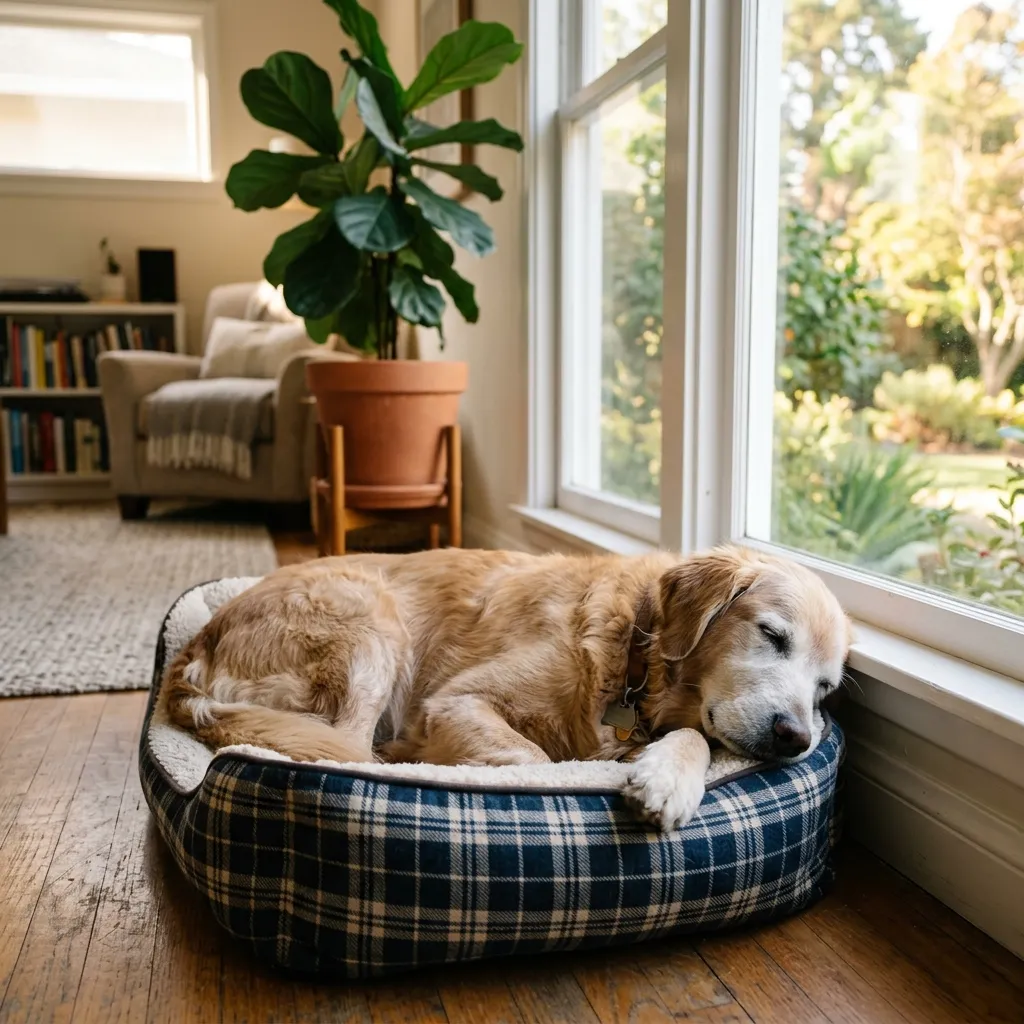
Quick answer: 12 to 14 hours a day is pretty typical for a healthy grown dog. Puppies can hit 18 to 20. Old-timers creep back up again. Add a big breed, a dull day or a heatwave and the numbers climb. When should you worry? If your dog is suddenly sleeping way more, is tough to rouse, seems wobbly or muddled when awake, or you’re also seeing changes in appetite, weight or thirst. That’s a vet call.
How much sleep is normal for a dog?
| Life stage | Typical daily sleep | What to expect |
|---|---|---|
| Puppies (under 1 year) | 18 to 20 hours | Short bursts of wild play followed by deep crashes |
| Adult dogs | 12 to 14 hours | Night sleep plus several daytime naps |
| Senior dogs | 14 to 18 hours | Longer, deeper naps and earlier bedtimes |
| Large and giant breeds | Toward the higher end | Mastiffs, Newfoundlands and Saint Bernards are famous nappers |
| Working and herding breeds | Often slightly less | Border Collies and similar breeds may rest but stay alert |
Think of these as ballpark figures, not rules. The American Kennel Club points out that puppies need tons of sleep to fuel fast growth and a developing brain, and it’s totally normal for them to conk out halfway through a game.
Why dogs sleep more than people
You and I sleep in one big block, hopefully. Dogs sleep in bits and pieces, lots of short naps scattered around the clock. Scientists call it polyphasic sleep. Their sleep is also lighter. Less deep, restoring sleep, more waking up to every car door and squirrel. So they make up for quality with quantity. And let’s be real, most pet dogs aren’t herding sheep all day. When there’s nothing to do, sleeping wins.
Sleep helps dogs learn
This part surprised us. Researchers in Hungary have hooked sleeping dogs up to EEG, the same brain-wave kit they use in human sleep labs. Dogs who napped after learning a new command remembered it better later on. Even the little bursts of brain activity during sleep, called sleep spindles, lined up with how much stuck. Translation: a nap after training might help your dog hang on to what they learned. Worth remembering next time you finish a session and feel tempted to go straight to the park.
Why does my dog sleep so much? Common everyday reasons
1. Age
Puppies and old dogs sleep the most. Puppies are busy growing. Older dogs have less energy and less muscle, so they need more downtime.
2. Breed and size
Big dogs often out-sleep little ones, and some breeds are famous couch potatoes. Bulldogs, Basset Hounds, Great Danes, and yes, Greyhounds, despite the racetrack image. Most retired racers would happily sleep 18 hours if you let them.
3. Boredom
Nothing to do? A dog will sleep through it. Have you noticed your dog dozes all day when you’re buried in emails, then turns into a rocket the second you grab the car keys? Some of that sleep is just boredom. Extra walks, sniffing time and a puzzle toy or two tend to balance it out.
4. A busy day
A long hike, the dog park, a day at daycare, a vet trip, even a house full of visitors can leave a dog wiped out for the rest of the day, sometimes the next one too.
5. Weather
Plenty of dogs go limp and sleepy on hot days. Dark, cold winter days can do it too. Rainy stretches with fewer walks? Expect more naps.
6. Diet and weight
Extra weight makes everything more tiring, and food that doesn’t agree with a dog can leave them flat. Helping your dog slim down is one of the easiest ways to get some bounce back in their step.
Medical reasons a dog may sleep too much
Now the serious bit. Sleeping more than normal can be one of the first things you notice when a dog is getting sick, particularly if it’s out of the blue. Here’s what vets tend to consider:
- Hypothyroidism, or a sluggish thyroid, which can bring tiredness, weight gain, a dull coat and a dog who’s always cold.
- Anemia, where less oxygen gets around the body, so dogs feel weak and tired, and gums often look pale.
- Diabetes, which often comes with more thirst, more peeing and weight loss.
- Heart disease, which can mean tiredness, coughing and running out of steam on walks.
- Infection and fever, which make dogs drowsy and less interested in food.
- Pain, especially arthritis. When moving hurts, dogs just rest more.
- Age-related cognitive changes, which can flip the body clock so dogs sleep all day and wander at night.
- Low mood after a loss, a big change at home or long hours alone.
- Medications, including some pain and anxiety drugs, which can make dogs drowsy.
Normal sleepiness vs. worrying lethargy
| Normal sleepiness | Worrying lethargy |
|---|---|
| Wakes easily and is alert | Hard to wake, groggy or confused |
| Excited for walks, food and play | Uninterested in favorite things |
| Normal appetite and thirst | Eating or drinking less, or drinking much more |
| Moves normally | Stiff, weak, wobbly or reluctant to move |
| Sleep increased gradually with age | Sudden change over days or weeks |
Sound like the right-hand column? Ring your vet. Weakness that comes on suddenly, collapse, pale gums, a swollen belly or struggling to breathe are emergencies. Haven’t found a practice yet? Our guide on how to choose a veterinarian can help.
How to help your dog sleep well (and be awake well)
- Give them a comfy bed somewhere quiet, with orthopedic support for older and bigger dogs.
- Stick to a routine. Regular meals, walks and bedtimes help dogs settle.
- Cover their exercise needs with daily walks, play and sniff time that suits their age and breed.
- Feed their brain. Puzzle feeders, scent games and quick training sessions give them a reason to be awake.
- Keep an eye on weight. Lean dogs usually have more get-up-and-go.
- Book regular checkups, especially once your dog is past seven, so energy changes get caught early. Our dog care basics guide covers what a solid routine looks like.
Where your dog sleeps and how they sleep
Sleeping position gives you a small window into how your dog feels. On their back, paws up, belly out? That dog feels completely safe, and is probably a bit warm. Tucked into a tight little ball? Keeping warm, maybe feeling slightly on guard. And all that twitching, the muffled woofs, the running legs? Dreams, almost always. Many dogs also love sleeping squashed up against their humans, which we get into in our guide on why dogs lay on their owners.
A closer look at the sleep and learning research
Those studies come out of the Family Dog Project at Eötvös Loránd University in Budapest. The team there records brain waves from sleeping pet dogs using soft, non-invasive electrodes. In a 2017 PLOS ONE study, Anna Kis and her colleagues taught dogs new commands in English (a language the dogs had never heard) and then let them nap while their brains were monitored. Performance and sleep patterns were linked, not unlike what researchers find in people. The takeaway for the rest of us? Keep training short, then let your dog chill. That may work better than an hour of drilling.
Track it for a week
Can’t tell if your dog really is sleeping more, or if it just feels that way? Write it down for a week. Rough times asleep and awake, plus walks, meals, visitors and the weather. Most of us are terrible at guessing this stuff, and a quick record gives you something solid to look back on. It’s gold for your vet if you do go in. Plenty of dog activity trackers log rest now too, which can reveal slow changes that are impossible to see day to day.
Frequently asked questions
Is it normal for my dog to sleep all day while I’m at work?
Yes. Plenty of dogs spend most of their alone time snoozing. What counts is that they’re alert and happy to hang out when you get home, and that they’re getting enough exercise and company.
Why is my puppy sleeping so much?
Puppies need a huge amount of sleep for growing and brain development. If your pup is eating well, playful when awake and putting on weight, all that sleep is a good thing. Our guide to your puppy’s first night home has tips on setting up good sleep habits.
Why is my old dog sleeping more than before?
Older dogs normally sleep more. A sudden jump, though, or confusion or restlessness at night, can point to pain or cognitive changes that can be helped. Bring it up at the next vet visit.
Should I wake my dog up?
Usually best to let sleeping dogs lie, like the saying goes. Startle a sleeping dog and you might get a fright, or even a defensive snap. If you have to wake them, say their name softly first.
Can dogs sleep too little?
Yep. Dogs in loud, busy homes, anxious dogs and dogs in pain may not get enough rest, and it can make them grumpy. A quiet, comfy spot of their own helps.
This article is for general information and is not a substitute for advice from your veterinarian.
Leave a Reply