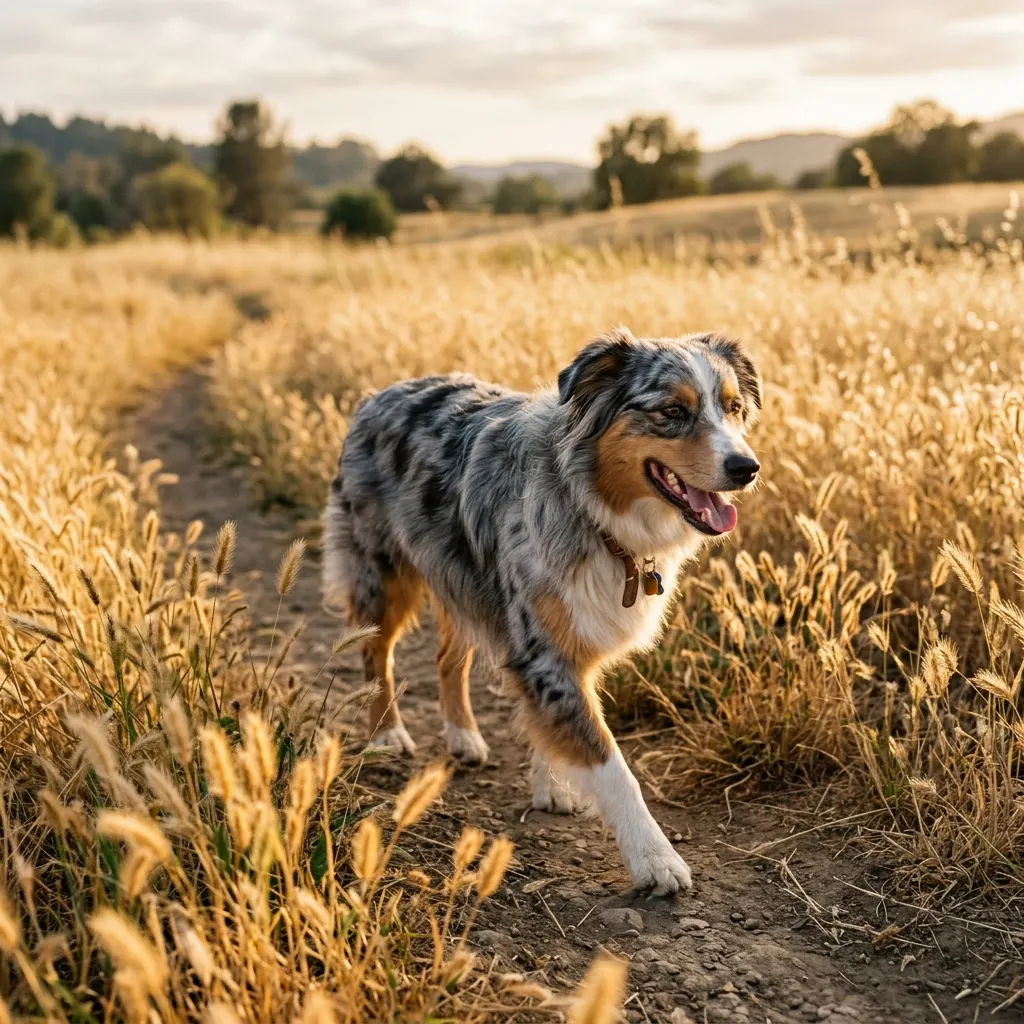
Summer walks through golden fields look like something off a postcard. But those fuzzy, dried-out grass heads brushing your dog’s legs? Trouble. Foxtails are grass seeds shaped like tiny arrowheads, and a foxtail in a dog’s paw is one of the top reasons for sudden limping and nonstop paw licking in late spring and summer. Good news: once you know what you’re looking for, most foxtail problems are easy to prevent. Catch one early and it’s usually a simple fix.
Quick answer: foxtails are barbed grass seeds that can work into the skin between a dog’s toes and keep drilling deeper. Watch for sudden limping, licking one paw, a red, swollen lump between the toes, or a tiny hole that oozes. If you can see the foxtail sitting on the fur or on top of the skin, you can gently pull it out with tweezers. If it’s gone into the skin, or you can’t see it but suspect one, get to the vet soon. Foxtails don’t work their way out on their own.
What are foxtails and why are they dangerous?
“Foxtail” is a catch-all name for the seed heads of several wild grasses, including wild barley and cheatgrass. In spring they’re green and soft. By summer they’ve dried out, turned golden and started breaking apart into small, sharp seeds called awns. Each awn has a pointy tip and tiny barbs that face backward. Nature designed them to drill into soil.
And that design is exactly the problem. Once the tip snags in fur or skin, every step your dog takes pushes it forward. Never backward. Your dog’s body can’t break it down, so a foxtail can keep traveling under the skin. The American Kennel Club warns that in rare cases, foxtails travel a long way from where they went in and cause serious infections in the chest or other organs.
Where and when foxtails are a risk
Foxtail grasses grow across much of the US and are especially common out West, California included. You’ll spot them along trails, in empty lots, at the edges of parks, even in scruffy backyards. Risk peaks from late spring through late summer and into fall, when the grass dries out and seeds fall off at the slightest touch.
Paws are the most common way in, especially the soft skin between the toes. Foxtails also end up in ears, noses, eyes and under the fur on the body. Dogs with long, feathery hair on their feet, like Spaniels, Goldens and Aussies, tend to pick up more of them.
Signs of a foxtail in a dog’s paw
- Suddenly limping, often right after a walk through grass
- Licking or chewing hard at one paw, usually between the toes
- A red, puffy or sore lump between the toes
- A tiny hole or pimple-like spot that might ooze or bleed
- Pulling the paw away when you touch it
- Swelling that seems to come and go, or keeps coming back after treatment
Because the early signs look like plenty of other paw problems, foxtails are easy to miss. If your dog is suddenly obsessed with one foot, our guide on why dogs keep licking their paws covers other causes worth ruling out.
Foxtails in other places
- Ears: sudden head shaking, head tilting, pawing at the ear.
- Nose: violent sneezing fits, sometimes with a nosebleed.
- Eyes: squinting, watering, redness or pawing at the eye.
- Body: a painful lump or a draining spot anywhere on the skin.
A foxtail in the nose, ear or eye means a vet visit the same day. They can move quickly and do lasting damage.
How to check your dog’s paws for foxtails
During foxtail season, do this after every walk. It takes two minutes, tops:
- Brush off the loose stuff. Run your hands down each leg and over each foot to knock off seeds stuck in the fur.
- Spread the toes. Gently open each paw and look between every toe and around the pads. Good light helps.
- Feel for it. Slide a finger between each toe. A foxtail often feels like a small, stiff splinter.
- Comb furry feet. A fine-toothed comb catches seeds hiding in feathery fur.
- Check everywhere else. Inside the ears, around the eyes, in the armpits and under the tail.
How to remove a foxtail from a dog’s paw
What you do depends on where the foxtail is:
If it is sitting in the fur or just on the surface
- Get someone to hold and soothe your dog.
- Grab the foxtail with clean tweezers, as close to the skin as you can.
- Pull it out slowly and gently, in the same direction it went in.
- Make sure you got the whole seed. The tip should still be there.
- Clean the spot with lukewarm water or a mild saline rinse and dry it well.
- Keep an eye on it for a few days for redness, swelling or licking.
If it has gone into the skin, or you can’t find it
Don’t dig, squeeze or cut. Once a foxtail is under the skin, bits can snap off, and poking around at home often just pushes it deeper. Book a vet visit as soon as you can. Your vet may need to sedate your dog to explore and remove the seed, and sometimes uses ultrasound or other imaging to find it. The sooner it’s out, the less likely your dog will need surgery or a long fight with an abscess or paw infection.
What happens if a foxtail isn’t removed?
Leave a foxtail in there and you’ll usually get a painful abscess between the toes within a few days. Antibiotics might calm the swelling for a while, but it keeps coming back, again and again, because the seed is still in there. In some dogs the foxtail keeps moving up the leg, leaving draining tracts that are much harder to treat and may need surgery. That’s why vets take a suspected foxtail seriously even when the paw only looks a little puffy. Acting early nearly always means a quicker, cheaper, less stressful fix for your dog.
Aftercare following foxtail removal
- Give any medication exactly as your vet says, and finish the whole course.
- Keep the paw clean and dry. A warm soak, like the one in our Epsom salt paw soak guide, may help if your vet okays it.
- Use a cone or a boot to stop the licking while it heals.
- Keep walks short and away from grassy fields for a while.
- Call your vet if the swelling comes back, a lump pops up again or your dog starts limping. Part of the foxtail may still be in there.
If the spot was cut or opened up, our paw pad injury first aid guide covers how to bandage and protect it.
How to prevent foxtail problems
Preventing foxtails is so much easier than getting them out. VCA Animal Hospitals lists grass seeds among the most common summer paw problems, and a few simple habits slash the risk:
- Learn what foxtail grass looks like and avoid fields and roadside verges where it grows, especially once it’s dry and golden.
- Stick to clear trails and keep your dog leashed in grassy spots during peak season.
- Trim the fur between the toes and around the feet so seeds have less to grab. A groomer can do a tidy summer “paw trim.”
- Check paws after every walk, using the steps above.
- Think about dog booties for hikes through grassy ground.
- Clear your own yard. Pull or mow foxtail grass before it goes to seed, and bag the clippings.
- Make paw checks a habit. Our dog care basics guide shows how to fit quick checks into everyday life.
When to see a vet
See your vet if you think a foxtail has gone into the skin, if your dog is limping or licking one paw after a walk through grass, if a lump or draining hole shows up between the toes, or if a swelling keeps coming back. Go the same day for foxtails in the nose, ears or eyes. No regular vet? Our guide on how to choose a veterinarian can help.
Frequently asked questions
Can a foxtail come out on its own?
Rarely. Now and then one works its way out through an abscess, but thanks to those backward-facing barbs, most just keep pushing forward. Having a vet take it out is much safer than waiting.
Are foxtails an emergency?
One in the nose, eye or ear is urgent. One in the paw is a little less urgent, but should still be seen within a day or two, before it can travel deeper or cause an abscess.
What does a foxtail look like?
Foxtail grass has bushy, bristly seed heads that look a bit like a fox’s tail, hence the name. Once dry, the individual seeds are small, pointy and golden brown, usually less than an inch long, with a sharp tip and stiff bristles.
Can cats get foxtails too?
Yes, though it’s less common. Outdoor cats can pick up grass seeds in their paws, ears and noses too. The signs and treatment are much the same, so check outdoor cats after they’ve been in long grass.
This article is for general information and is not a substitute for advice from your veterinarian.
Leave a Reply