Your dog won’t leave one paw alone. The fur between the toes has gone rusty brown. And the feet? They smell like a bag of stale corn chips. When you’ve got that combo, a dog paw yeast infection jumps to the top of the list. It’s common, it’s itchy, and there’s almost always something else behind it. Deal with that, plus the yeast, and most paws bounce back nicely.
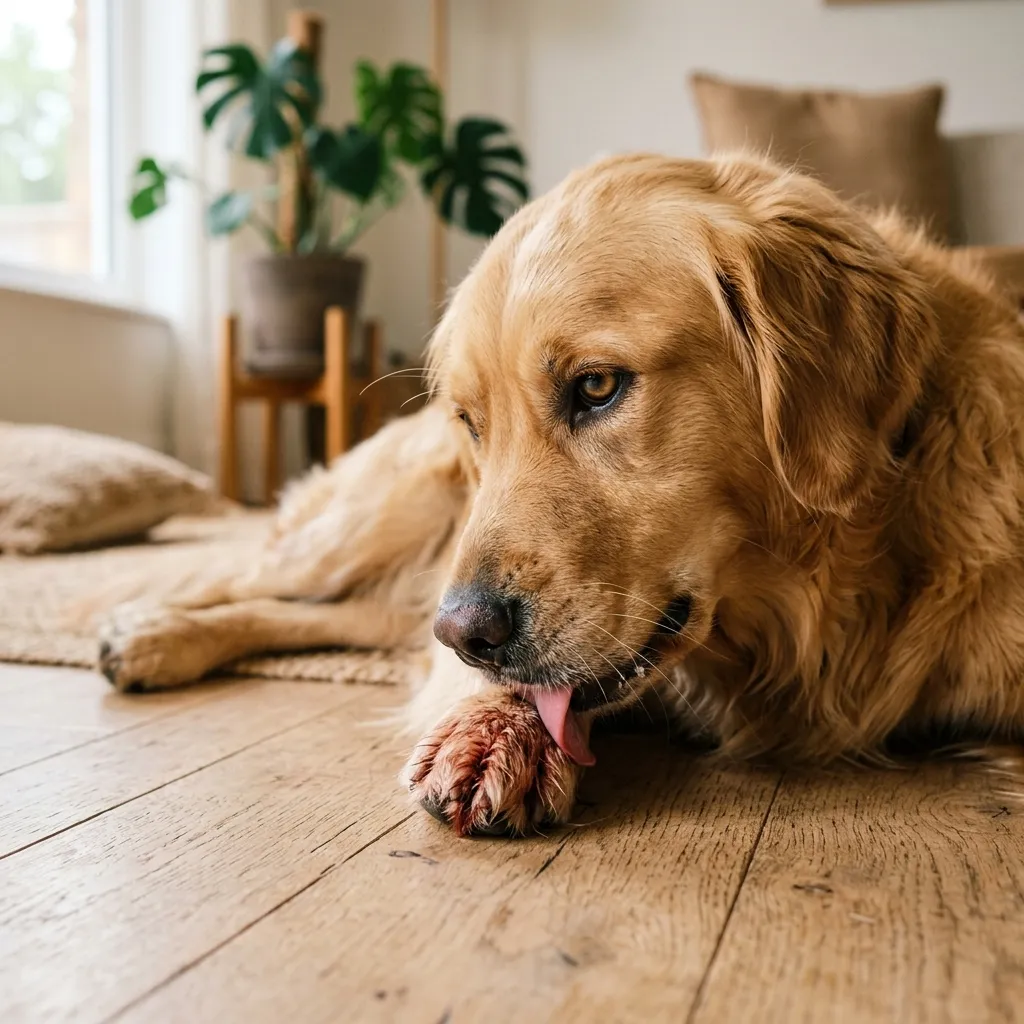
Quick answer: meet Malassezia. It’s a yeast that lives on every dog’s skin, minding its own business in small numbers. Then something (usually an allergy) weakens the skin, the space between the toes stays warm and damp, and boom, it multiplies. Licking, redness, brown stains, greasy skin, a musty whiff. That’s the picture. Your vet can confirm it in minutes, and treatment is mostly medicated washes or wipes, sometimes pills as well.
What a yeast infection on dog paws looks like
Paw yeast creeps in slowly, so the early signs slip by. Get down close and look between the toes and around the pads for:
- Licking or chewing that won’t quit, often worse in the evening or after walks
- Red or pink skin between the toes and around the nail beds (our guide on why a dog’s paws turn red covers the other causes)
- Rusty-brown staining on light fur, from saliva after lots of licking
- Greasy or waxy-feeling skin, sometimes with brown gunk around the nails
- A musty, sour or “corn chip” smell that’s stronger than usual
- Thick, darker skin if it’s been going on for a long time
- Hair loss between the toes
A little “Frito feet” smell is perfectly normal for plenty of dogs. What you’re looking for is change. A smell that’s getting stronger. Paws that look different from last month. A dog who suddenly can’t stop working on their feet. If your whole dog smells worse than usual, our guide on why a dog smells bad even after a bath covers the other places yeast likes to hang out, like ears and skin folds.
What causes yeast in dogs’ paws?
Here’s the thing about yeast: it’s an opportunist. It doesn’t start the trouble. It just moves in once the skin’s defenses are already down. The most common reasons that happens:
1. Allergies
Allergies. This is the big one. Dog paw allergies come in two main flavors. Environmental allergies (pollen, dust mites, grass) and food allergies both leave paws itchy and inflamed. Your dog licks, the skin stays damp and sore, and yeast sees an open door. That’s why paw yeast often flares in spring and summer, or keeps coming back until the allergy itself gets managed.
2. Moisture that never fully dries
Wet grass, daily swims, muddy walks, paws that get wiped but never properly dried. All of it creates the warm, steamy little pocket yeast adores. Dogs with lots of fur between their toes hold on to moisture even longer.
3. Breed and skin type
Some breeds get yeasty skin more easily, including Westies, Basset Hounds, Cocker Spaniels, Shih Tzus, Dachshunds and German Shepherds. Dogs with naturally oily skin tend to have more repeat flare-ups too.
4. Other health problems and medications
Sometimes the trigger is hormonal. An underactive thyroid or Cushing’s disease can change the skin enough for yeast to take over. Long runs of antibiotics or steroids can also knock things off balance. Keeps coming back no matter what you do? Your vet may want bloodwork to check.
Yeast or bacteria? Why a vet check matters
Careful, though. A red, licked, smelly paw can be lots of things: a bacterial paw infection, an interdigital cyst, a grass seed, or a combo platter. They look the same and need different treatment. So your vet will press a bit of clear tape or a glass slide on the skin, stain it and pop it under the microscope. That’s cytology. Takes minutes. Shows yeast, bacteria or both. Guess wrong at home and buy the wrong stuff, and you’ve just added weeks of itching.
What to expect at the vet visit
Never taken your dog in for itchy feet before? Here’s what usually happens. Most visits are quick and pretty low-stress for the dog:
- Some questions. How long has the licking been going on? Is it seasonal? What does your dog eat? Are the ears or anywhere else itchy too?
- A close look. Every paw, the nail beds, ears, armpits and belly. When allergies are behind it, yeast rarely sticks to just one spot.
- A quick skin test. A bit of tape or a cotton swab gets pressed on the skin and checked under the microscope, often while you wait.
- A plan. You’ll usually leave with a medicated wash or wipes, instructions on how often to use them, and a date for a recheck.
Bring a few photos of the paws on bad days, plus a list of anything you’ve already tried. It saves time and helps your vet get the treatment right the first time.
How vets treat a dog paw yeast infection
How it’s treated depends on how far it’s spread and how deep it goes. VCA Animal Hospitals says most cases get one or more of these:
- Medicated shampoos or foot soaks with antifungal ingredients like chlorhexidine and miconazole. They usually need to sit on the skin for several minutes before you rinse to work.
- Antifungal wipes, sprays or mousses for daily use between baths, handy when only the feet are affected.
- Oral antifungal medication for stubborn, severe or widespread infections, prescribed and monitored by your vet.
- Treating the root cause, like allergy medication, a food trial or managing a hormone condition. Skip this, and the yeast usually comes right back.
Most dogs feel a bit better within a week. The whole course, though, often runs several weeks. Don’t stop just because the paws look fine. Wait until your vet rechecks the skin and gives the all-clear.
How to help cure a dog paw yeast infection at home
Home care is the sidekick, not the hero. Use it with your vet’s plan, not instead of it. These habits help things heal faster and keep yeast from coming back:
- Dry the paws completely after walks, baths and swims, between every toe. A soft towel and then a hair dryer on cool works well for fluffy feet.
- Keep the fur between the toes short so air can get to the skin.
- Keep baths sensible. Medicated baths help, but too much ordinary shampoo can dry out and irritate skin. Our guide on how often you should bathe a dog explains how to find the right rhythm.
- Break the licking cycle. Not sure why it started? Our guide on why a dog keeps licking his paws walks through every common cause. A soft cone, a clean breathable dog sock or extra chew toys can give the skin a chance to heal.
- Wash bedding weekly in hot water while the infection is active.
Go easy on the internet cures. If you want a gentle soak, our guide to Epsom salt for dog paws shows how to do it safely. Straight apple cider vinegar on raw, cracked skin? Ouch. Tea tree oil? Can be toxic, especially when your dog licks it off. Coconut oil? Keeps skin damp and greasy, basically a welcome mat for yeast. Want to try something at home? Run it by your vet.
When to see a vet
Book an appointment if the licking lasts more than a few days, the paw is swollen or bleeding, your dog limps, you see pus or open sores, or it keeps coming back. Paw yeast that keeps returning is a big hint there’s an allergy that needs a proper plan. Still looking for a practice you trust? Here’s how to choose a veterinarian.
How to prevent paw yeast from coming back
- Dry feet well every single time they get wet.
- Check between the toes once a week during grooming. Our dog care basics guide shows how to fit it into a simple routine.
- Work with your vet to keep allergies in check, especially when pollen’s high.
- Feed a complete, balanced diet, and only switch foods as part of a planned trial.
- Start early. A quick wipe routine at the first hint of redness is way easier than clearing a deep infection.
Frequently asked questions
Is a paw yeast infection contagious to other pets or people?
Nope. Malassezia is already on healthy skin. The infection happens because of your dog’s own skin, not because someone gave it to them. Wash your hands after putting on treatment and you’re good.
How long does a dog paw yeast infection take to heal?
Mild ones often clear in a week or two. Deep or long-standing ones can take a month or longer, and allergic dogs may need ongoing maintenance so it doesn’t flare up again.
Can food cause yeast on dogs’ paws?
Food doesn’t feed yeast directly. But a food allergy can inflame the skin and roll out the red carpet for an infection. If your vet thinks food is involved, expect a strict elimination diet for several weeks. The American Kennel Club explains more about how allergies and yeast connect.
Can I use human antifungal cream on my dog’s paw?
Check with your vet first. Dogs lick creams off, some human products have ingredients that aren’t safe to swallow, and an antifungal won’t touch a bacterial problem. Your vet can suggest something pet-safe, and how much to use.
Can a paw yeast infection spread to other parts of the body?
Whatever lets yeast grow on the feet usually affects other warm, folded spots too. So yeast in the ears, armpits, groin or around the lips at the same time is common. It’s not spreading, exactly. It’s the same cause popping up in different places. Red or smelly ears as well? Mention it so your vet can treat the lot together.
This article is for general information and is not a substitute for advice from your veterinarian.
Leave a Reply