A kitten is basically a tiny ball of chaos with whiskers, and you’ll love every minute. Your wallet, maybe a bit less. We put this new kitten checklist together so you can get the shopping, the kitten-proofing and the first vet visit sorted before your new housemate starts climbing the curtains.
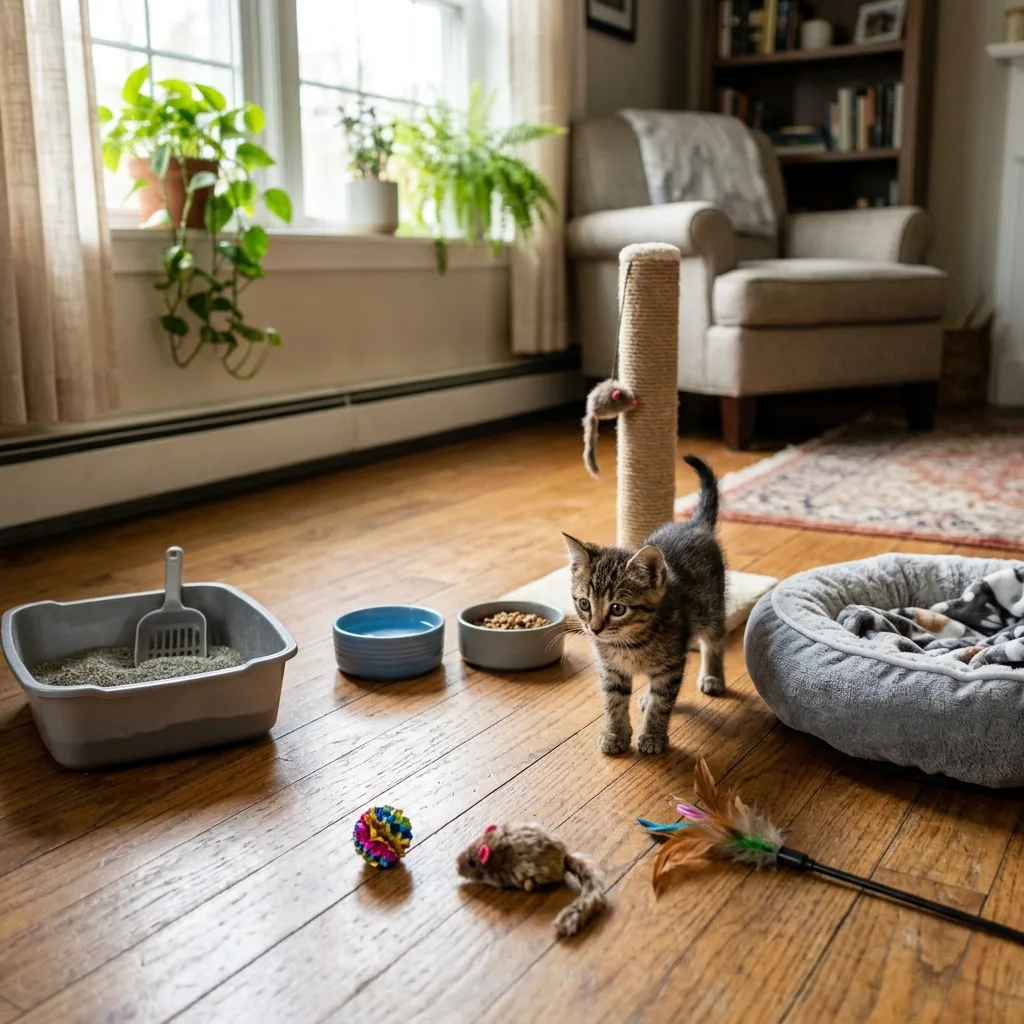
Quick answer: food, bowls, a litter box and litter, a carrier, something to scratch, a bed and a few safe toys. Get those in before pickup day. Then pick one quiet room to be your kitten’s starter apartment, hide anything stringy or chewable, and put a vet appointment in the calendar for week one.
Kitten supplies checklist
Food and water
- Kitten food, wet or dry or both, that says “complete and balanced for growth” somewhere on the bag
- Ask the breeder or shelter what they’ve been feeding and buy the same, at least to begin with. Tiny tummies hate surprises
- Shallow bowls for food and water (ceramic or stainless steel wash up easily)
- A water fountain, which is optional, but plenty of cats drink more from running water
Litter
- A litter box with low sides so tiny legs can get in and out
- Unscented clumping litter (unless your vet suggests avoiding clumping litter for a very young kitten)
- A scoop and a small bin or some bags
- The usual rule of thumb: one box per cat, plus one spare
Comfort and safety
- A sturdy carrier for vet trips and travel
- A soft bed or blanket, plus somewhere to hide, even just a cardboard box on its side
- Scratching posts, some upright and some flat
- A breakaway collar with an ID tag, and a microchip at the first vet visit
Play and grooming
- Wand toys and little balls for playing together (tuck wand toys away when you’re done)
- A soft brush and cat nail clippers (see how to trim cat nails)
- Enzyme cleaner for the inevitable accidents
How to kitten-proof your home
- Cords and chargers. Tuck them behind furniture or cover them, because to a teething kitten a phone cable looks like licorice.
- String, yarn, ribbon, hair ties, rubber bands. All of it goes in a drawer. Swallowed string can knot up the gut, and that often means surgery.
- Plants. Some are toxic, and lilies are genuinely deadly to cats. Even licking a bit of pollen off their fur, or drinking the vase water, can wreck their kidneys.
- Meds, cleaning sprays, essential oils. Up high, or behind a cupboard door that closes properly.
- Windows and balconies. Screens need to be secure, not just resting in the frame.
- Washer, dryer, dishwasher, recliner. Peek inside (or underneath) every single time. Kittens adore warm, dark hidey-holes.
- Toilet lid. Down. Always.
The first vet visit
Even if your kitten looks totally fine, book a checkup for the first week. Here’s what usually happens:
- Give them a full physical exam
- First or follow-up vaccines: FVRCP and rabies, plus FeLV for a lot of kittens
- A check for worms and fleas, and treatment if needed
- A chat about testing for feline leukemia (FeLV) and FIV
- The spay or neuter conversation, including when’s best for your kitten
- Recommend a microchip
The first week at home
- One room first. Food, water, litter tray, bed, done. Open up the rest of the house a bit at a time over the next week or two.
- Low and slow. Short visits, gentle games, and let the kitten come to you. Chasing a scared kitten under the sofa never ends well.
- Other pets can wait a little. Swap bedding first so they get used to each other’s smell, then try short meetings with you right there.
- Same time, every day. Meals, play, bedtime. Kittens relax faster when life’s predictable.
- Handle those paws. Touch toes, ears and mouth for a few seconds at a time, with treats. Future you, holding the nail clippers, will be very grateful.
How much should a kitten eat?
Pound for pound, a kitten eats way more than a grown cat, so expect three or four little meals a day until around six months. Go by the label and your vet’s advice, and have a look at our guide on how much wet food to feed a cat for more.
New kitten FAQs
How old should a kitten be to come home? Eight weeks is the absolute minimum. Lots of good breeders and shelters hold on until 10 to 12 weeks, so the kittens get extra time learning manners from mom and their siblings.
Should I get two kittens? Honestly, often yes. Two kittens entertain each other, tire each other out, and won’t be bouncing off your walls quite as much, which is a big plus if you work long days.
When should my kitten see a vet? In the first week, then every few weeks until the vaccine series is done.
Want a reliable place for kitten health questions? Bookmark the Cornell Feline Health Center. Once your little one has settled, learn how to trim cat nails without a wrestling match.
Leave a Reply