Scoop up a Ragdoll cat and, more often than not, it’ll flop over your arm like a warm bag of laundry, which is literally where the breed’s name comes from. Once you’ve seen the huge blue eyes and felt that coat, which is closer to rabbit fur than anything else, it’s easy to understand why Ragdolls sit near the top of the popular-breed charts pretty much every year.
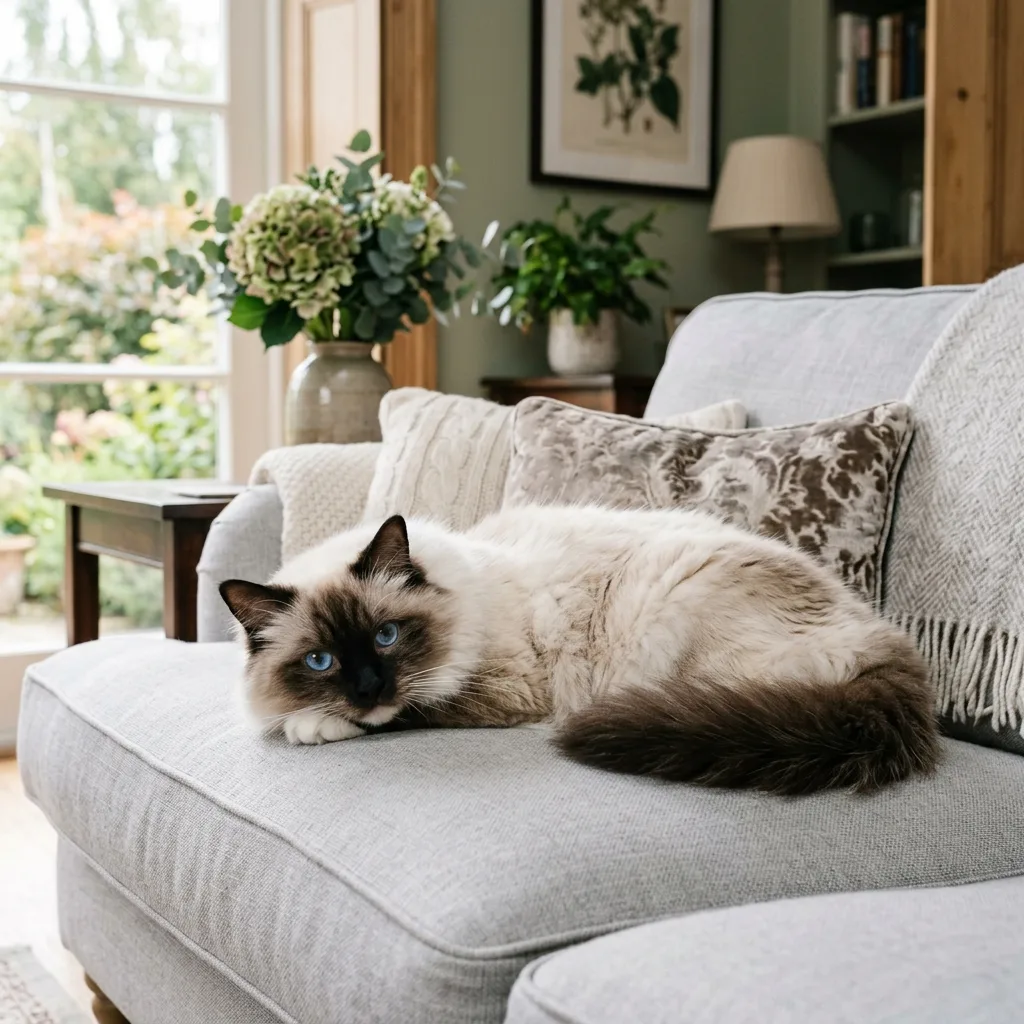
At a glance: think of a large, soft-natured cat who would honestly rather be wherever you are. Grown males often end up somewhere between 15 and 20 pounds and females usually settle around 10 to 15, the coat is semi-long, the eyes are blue without exception, and with decent care most live to somewhere between 12 and 17.
Ragdoll personality
If you’re after a cat who wants to be involved in your day, this is your breed. A lot of Ragdolls will follow you from the kitchen to the bathroom and back again, and they’re famous for meeting people at the front door, which is how they picked up the “puppy-like” label. They usually rub along nicely with gentle children and other friendly animals, they’re not big on climbing the curtains or yelling for breakfast at dawn, and most of them are perfectly happy never setting foot outside.
That trusting, easygoing nature is lovely at home but a real weakness outside, where traffic, dogs and territorial neighborhood cats can be a problem. They’re far better off indoors, with a secure catio if you want to give them some fresh air.
Size and growth
These are seriously big cats, among the largest domestic breeds out there, and they’re slow to finish growing. Don’t be surprised if yours is still filling out at three or even four. Most of the bulk is long bones and length rather than padding, but it’s easy for a lazy Ragdoll to get chubby, so keep an eye on the waistline.
Coat, colors and grooming
They’re what breeders call “pointed,” meaning the ears, face, legs and tail come out darker than the rest. There are three main patterns, colorpoint, mitted (think white socks) and bicolor, in shades with lovely names like seal, blue, chocolate and lilac. Fun fact: the kittens arrive almost pure white, and the color creeps in over the following months.
The coat is silky and has less of the woolly undercoat you’d find on many long-haired breeds, so it tangles less easily, but that doesn’t mean you can ignore it altogether. In practice that means:
- A brush two or three times a week, stepping it up when the coat sheds in spring and fall
- Extra care on the fluffy “pants” on the back legs and the fine fur behind the ears, where knots love to hide
- A nail trim every two to three weeks (here’s our nail trimming guide)
- Teeth brushing, or dental treats your vet recommends
Ragdoll health
On the whole, Ragdolls are a pretty healthy bunch, though there are a handful of things any owner should have on their radar:
- Hypertrophic cardiomyopathy (HCM): this is the heart disease vets see most often in cats, and researchers have tracked down a particular gene mutation tied to it in Ragdolls. The good news is there’s a DNA test, so responsible breeders can screen for it.
- Bladder stones and urinary trouble: getting enough water into your cat makes a real difference, and wet food is one of the simplest ways to do that. We explain portions in how much wet food to feed a cat.
- Weight gain: because Ragdolls are happy to snooze most of the day, extra pounds can sneak up without you really noticing, so it’s worth weighing out meals and getting a wand toy out every evening.
- Hairballs: the more loose fur you brush out, the less your cat swallows while grooming, so a few quick sessions a week really do help.
Questions to ask a breeder
- Have both parents had the DNA test for the Ragdoll HCM mutation, and would they mind showing you the results?
- Has a veterinary cardiologist scanned the parents’ hearts with an echocardiogram?
- Which registry are the kittens registered with?
- How old will the kittens be when they leave? (A good breeder will normally keep them until they’re at least 12 weeks old.)
- Would they let you visit to see where the kittens are raised and say hello to their mom?
Is a Ragdoll right for you?
- Perfect if: you’ve got a family, live in an apartment, you’re new to cats, or you’ve always dreamed of a big fluffy lap warmer
- Probably not the one if: you want a cat who does their own thing, you know you won’t keep up with brushing, or you’d like your cat to come and go outdoors
Ragdoll cat FAQs
Are Ragdolls hypoallergenic? Unfortunately not, and you should be a little wary of anyone who tells you otherwise, because no cat breed is truly hypoallergenic.
Do Ragdolls like to be held? A lot of them absolutely love it and go completely limp as soon as you lift them, but they’re heavy cats, so always keep one hand under their back legs.
Do Ragdolls shed a lot? A fair bit, and more in spring and fall when the coat changes over. Keep up with brushing and it stays manageable.
For general cat health information, the Cornell Feline Health Center is a great place to start. And since Ragdolls are such social cats, you might also enjoy why cats sniff your face.
Leave a Reply