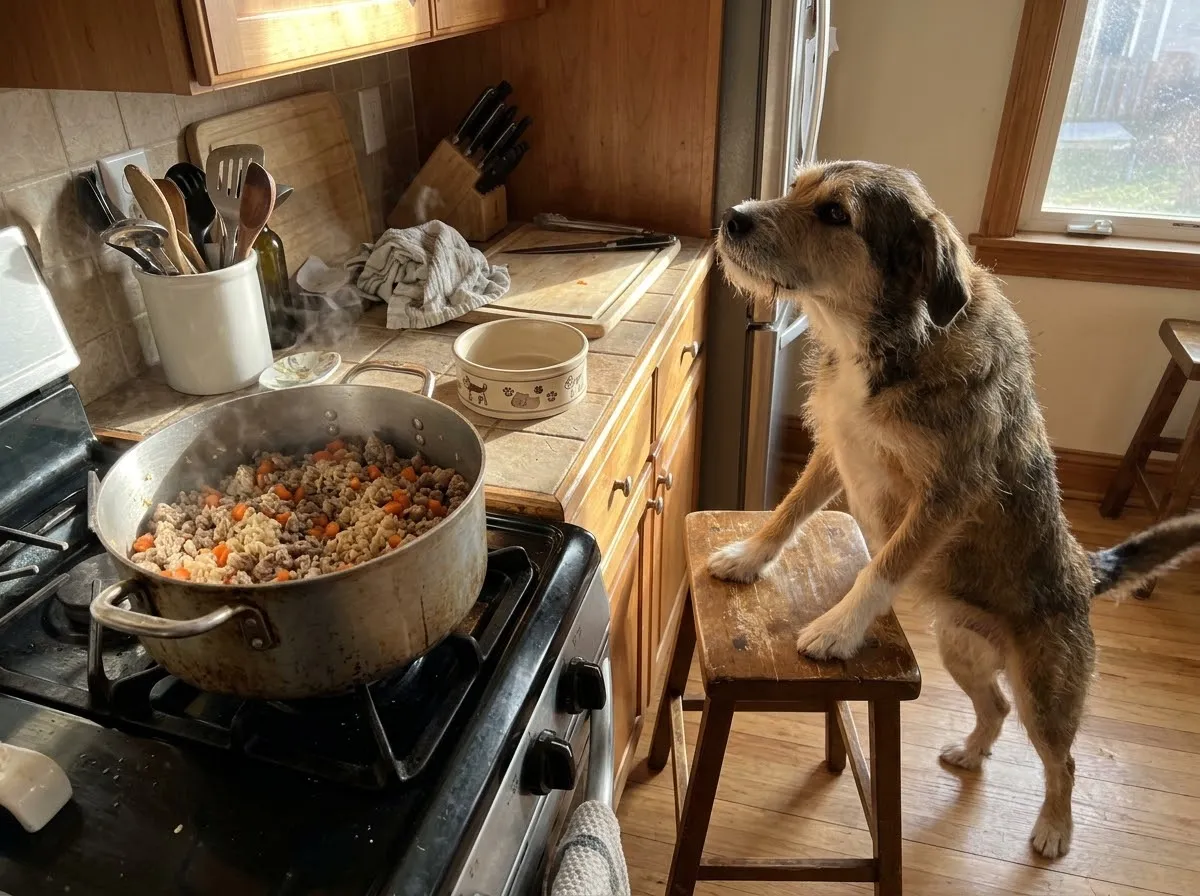
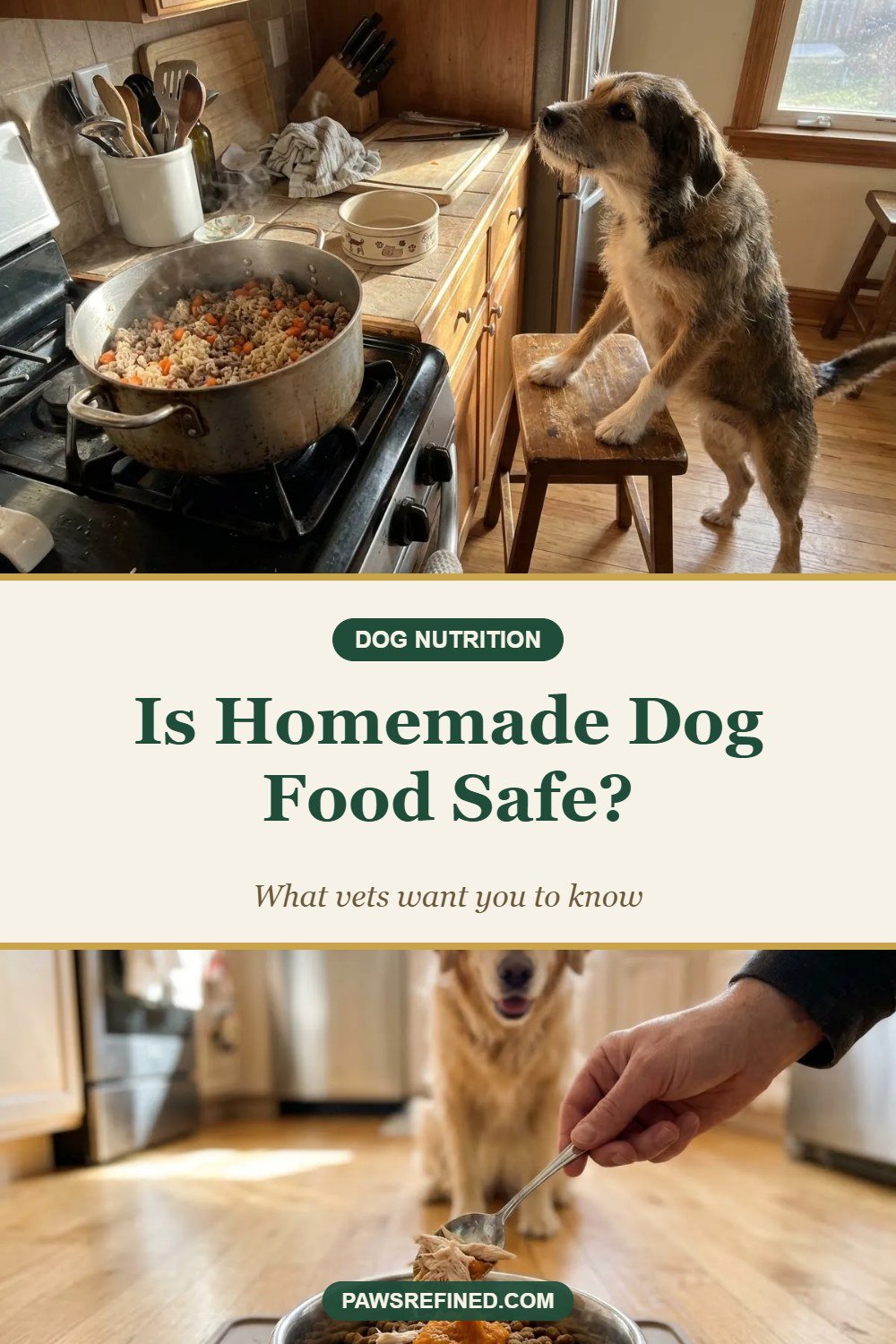
Two winters ago I went full chef mode for my dog. Every Sunday, one giant pot: ground turkey, brown rice, carrots. He went nuts for it. Then at his checkup my vet glanced at my recipe and said, “Okay, and where’s the calcium?” Uh. Nowhere. So, can you safely feed your dog homemade food? Yeah, you can, but the recipe most people grab online is usually short on something. Studies keep finding that the vast majority of home-cooked dog diets are not nutritionally complete, and vets are warning about it again this fall as the trend keeps growing.
Here’s the quick version:
| Question | Short answer |
|---|---|
| Is homemade dog food bad? | Not automatically, but most recipes are unbalanced |
| How many recipes are incomplete? | About 95% in a UC Davis study, about 94% in a Texas A&M study |
| Most common gaps | Calcium, choline, vitamin D, zinc, vitamin E |
| Biggest risk group | Puppies and dogs with health problems |
| Safest approach | A recipe from a board-certified veterinary nutritionist, followed exactly |
| Easy middle ground | Commercial complete food plus a little plain home-cooked topper |
Jump to:
Why Vets Are Warning About Homemade Dog Food
You’ve probably seen the TikToks. Pretty bowls of chicken, sweet potato and spinach with captions like “what my dog eats in a day.” I get the appeal. It looks like love you can scoop. Plus a lot of us squint at kibble labels these days and don’t love what we read.
Thing is, dogs aren’t little people. A bowl that looks super healthy to us can still leave out minerals they need daily. This past week (late October 2026) a bunch of articles went around about a vet advising against cooking dog meals at home without a pro’s help, and Google searches like “vet opinion on cooking dog food” spiked across the U.S. and Canada.
Vets aren’t saying you can never cook for your dog. They’re saying a random internet recipe is a gamble.
What the Studies Found
Two big studies come up again and again, and the numbers are honestly kind of shocking.
First one’s from UC Davis. The team pulled 200 recipes from 34 places, websites, pet books, even vet textbooks, and ran the numbers. Their results: 95% came up short on at least one nutrient, and over 83% were short on several. Nine passed the AAFCO adult dog minimums. The four written by board-certified vet nutritionists? All fine.
The second is newer. Texas A&M’s Dog Aging Project looked at 1,726 home-made diets that real owners were actually feeding. As Newsweek reported, only about 6% even had the potential to be complete. The rest were missing something.
What got me was this detail: even small changes, like swapping one oil for another or skipping the supplement because you ran out, can knock a good recipe out of balance.
Nutrients Homemade Dog Food Usually Misses
These are the ones that keep showing up on the “missing” list.
| Nutrient | Why dogs need it | Where it hides |
|---|---|---|
| Calcium | Bones, teeth, muscles, nerves | Not in plain meat. Needs a supplement or bone meal made for dogs |
| Choline | Liver and brain health | Eggs, liver |
| Vitamin D | Calcium absorption | Hard to get right without a supplement |
| Zinc | Skin, coat, immune system | Red meat, but often still too low |
| Vitamin E | Protects cells, especially with fish oil | Usually needs supplementing |
| Copper and iron | Blood and energy | Liver, though too much is also a problem |
Calcium’s the headline. Meat is loaded with phosphorus and has almost no calcium, so even fancy organic chicken with rice ends up way out of whack. Dr. Katie Tolbert, a veterinary nutritionist at Texas A&M, told Newsweek that calcium and phosphorus imbalances worry vets the most.
The Calcium Problem Nobody Sees Coming
Okay, if you only remember one thing from this whole post, make it calcium. It’s the mistake I see over and over in homemade recipes people share online, and honestly most of them have no clue.
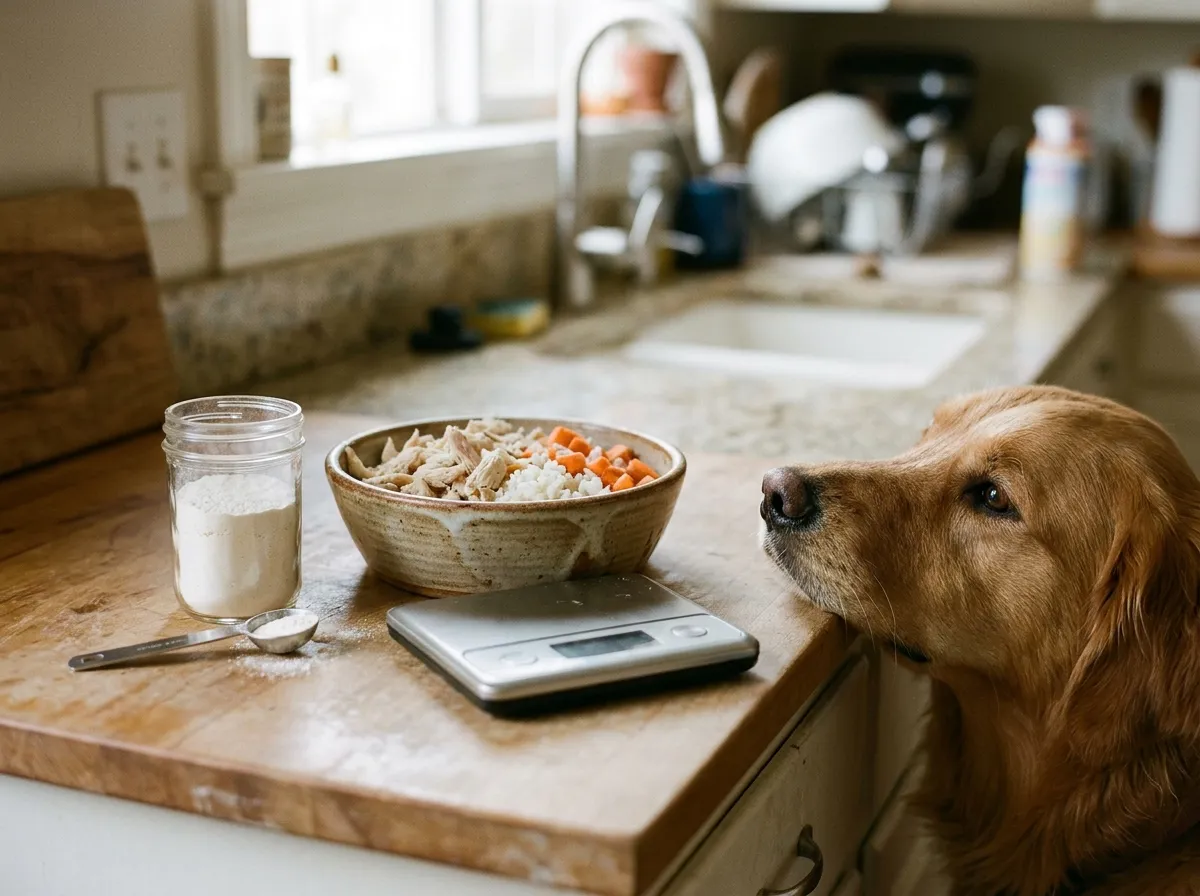
Here’s why. Meat has a lot of phosphorus and almost no calcium. Chicken breast, ground beef, turkey, all the same story. Your dog needs more calcium than phosphorus, about 1 to 2 parts calcium for every part phosphorus (that’s the AAFCO number for adult dogs). So chicken and rice by itself? Way off. Like, backwards off.
Now the part that freaked me out when I first read about it. If your dog doesn’t get enough calcium from the bowl, its body still keeps the blood calcium normal. How? It takes it from the bones. So your vet runs bloodwork, everything looks fine, and meanwhile the bones are getting weaker. Vets have a long name for it (nutritional secondary hyperparathyroidism) but you might hear “rubber jaw,” because in really bad cases the jaw gets soft and teeth loosen.
Puppies have it worst since they’re growing. And with big breed puppies you can’t just dump in extra calcium either, too much causes its own joint problems.
What I’d actually do:
- Don’t guess the calcium. Eggshell powder, bone meal and calcium carbonate aren’t the same strength, so the recipe should tell you which one and how much.
- If you change the meat, check the recipe again. Thighs to lean turkey isn’t a small swap.
- Buy a $10 kitchen scale. Cups lie.
- Tell your vet your dog eats homemade. If it’s been months on a recipe no one checked, they might want X-rays or other tests, not just blood.
What Can Go Wrong
A missing nutrient doesn’t make a dog sick overnight. That’s what makes it sneaky. Your dog can look great for months.
Over time, though, problems can show up:
- Weak or thinning bones, and in bad cases “rubber jaw,” where the jawbone softens
- Dull coat, flaky skin or slow-healing sores
- A weaker immune system
- Urinary stones in some dogs
- Growth problems in puppies, which can be permanent
Puppies worry me most. They’re growing bones at top speed, and messing up calcium during that window can leave lasting damage. Got a puppy? I’d honestly skip the DIY pot unless a vet nutritionist wrote the plan. Our puppy first night home guide covers what to have ready instead.
Funny enough, some dogs with kidney trouble, liver issues or allergies thrive on home-cooked food. But that’s exactly the dog who needs a pro’s recipe, since what they need is even pickier.
Is Homemade Dog Food Better Than Kibble?
Nope, not automatically. A complete and balanced commercial food has to meet AAFCO nutrient profiles, and the label will say so. A random homemade recipe doesn’t have to meet anything.
That said, homemade food has real upsides when it’s done right:
- You know exactly what’s in it
- It’s great for picky eaters and some dogs with allergies
- It’s fresh and smells amazing (to your dog, anyway)
And it has downsides:
- It’s more expensive and takes a lot of time
- It’s easy to get the balance wrong
- It needs careful storage, since cooked food spoils fast
Where I landed after all this: it’s not homemade vs. kibble, really. Good homemade beats junky kibble. Good kibble beats sloppy homemade. Balance is the whole game.
How to Make Homemade Dog Food Safely
Still want to cook? Same, a little. Here’s how I’d do it now, no guessing.
- Chat with your own vet before anything, more so if your dog’s sick or still a puppy.
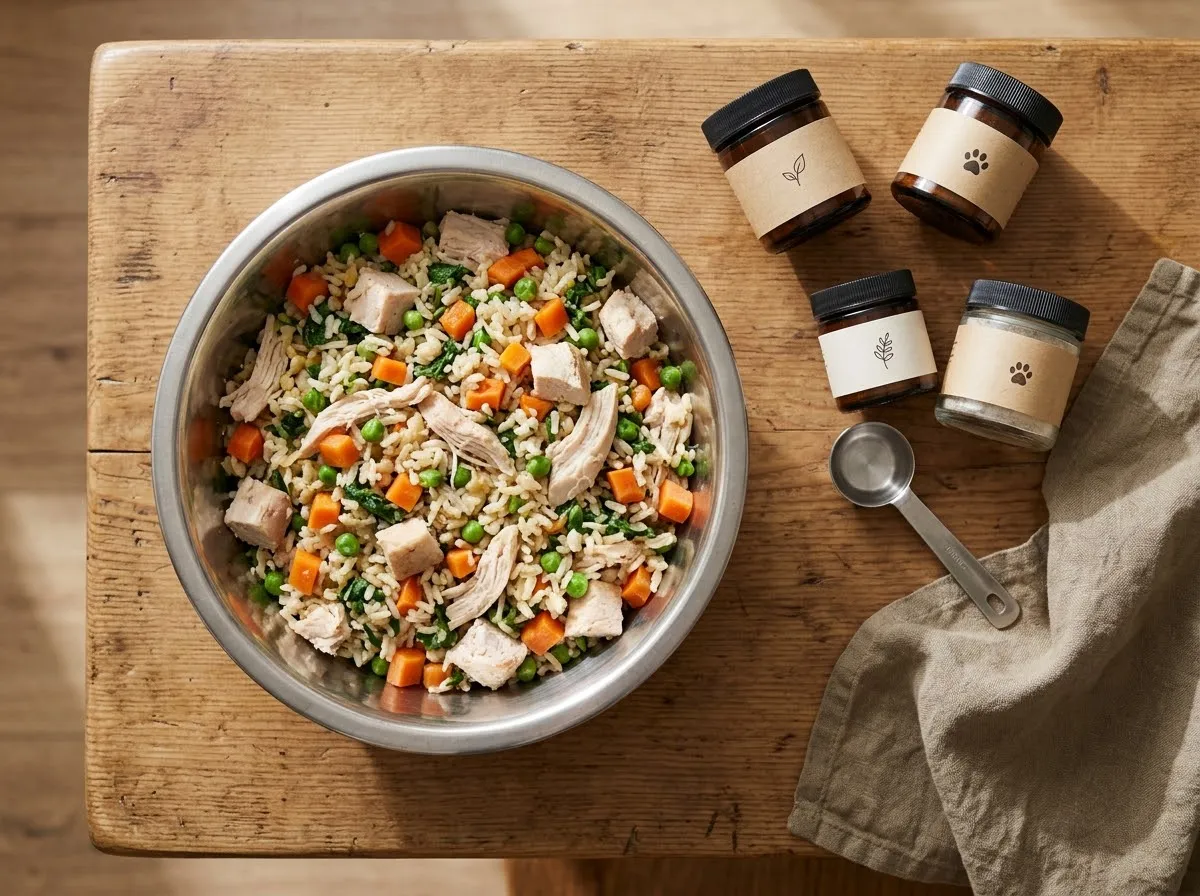
- Get the recipe from a board-certified vet nutritionist. You can find one through the American College of Veterinary Nutrition, and lots of them do video consults. Balance IT, an online tool, was built by vet nutritionists too.
- Don’t freestyle. Same stuff, same amounts, same oil every time. I bought a $15 kitchen scale and stopped using cups.
- The supplement isn’t optional. That little scoop is what plugs the holes.
- Cook meat all the way through and let it cool. Anything you won’t use within three days goes in the freezer.
- Weigh your dog every two weeks or so, and if it’s drifting, call the vet instead of winging it.
- Every year, or when your dog’s health changes, have the recipe looked at again.
It sounds like a lot. It kind of is. That’s honestly the main reason I switched to the topper approach below.
Ingredients to Never Use
Some popular “healthy” foods are toxic to dogs. These should never go in the pot:
- Grapes and raisins (kidney failure risk)
- Onions, garlic, leeks and chives, in any form
- Chocolate and caffeine
- Xylitol, found in some peanut butters and sugar-free products
- Macadamia nuts
- Cooked bones, which splinter
- Lots of salt or seasoning
- Raw freshwater fish or frog, which can carry parasites like the giant kidney worm in dogs
The Texas A&M team actually found grapes and bones in some of the recipes owners submitted, which tells you how common these mistakes are. If you’re cooking around the holidays, our list of which Thanksgiving foods dogs can eat is a good one to keep handy.
A Safer Middle Ground: Toppers
Here’s what I do now. My dog eats a complete commercial food as his base, and I add a spoonful or two of plain cooked food on top. Shredded chicken, a little egg, some plain pumpkin, steamed green beans.
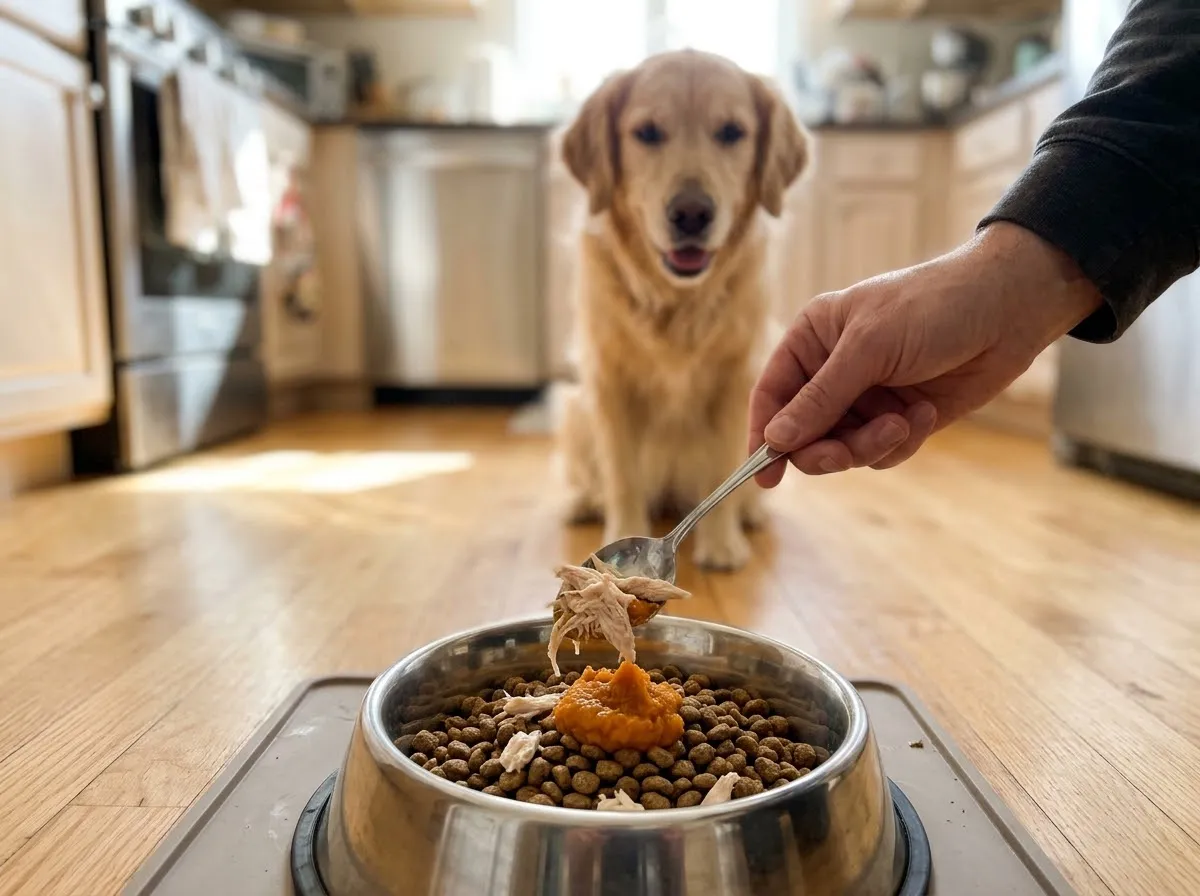
He still gets the “something smells good” excitement at dinner, and I don’t have to worry about calcium math. The rule of thumb many vets use is to keep extras around 10% of daily calories so you don’t unbalance the main diet.
Good plain toppers:
- Cooked chicken breast or lean turkey, no skin or seasoning
- Scrambled or hard-boiled egg
- Plain canned pumpkin (here’s how much pumpkin is safe)
- Steamed carrots or green beans
- A little plain cooked sweet potato
Homemade Dog Food FAQ
What is the veterinarian warning about homemade dog food?
It mostly comes from a Dog Aging Project study published in the American Journal of Veterinary Research. They looked at 1,726 recipes real owners were feeding. Only around 6% had a chance of being complete. So vets keep saying the same thing: don’t feed homemade long term unless a board-certified vet nutritionist checked the recipe.
Do vets recommend homemade dog food?
Most are okay with it, as long as a board-certified vet nutritionist wrote the recipe and you stick to it. They warn against unbalanced recipes from books, blogs or social media.
Is chicken and rice enough for a dog every day?
No. Chicken and rice is fine for a few days when a dog has an upset stomach, but long term it’s missing calcium and several vitamins and minerals. Dealing with a runny tummy right now? Check out our post on why your dog has diarrhea.
What supplements does homemade dog food need?
Pretty much always a calcium source, plus a vitamin and mineral blend made for dogs. Which one depends on the recipe, and that’s the nutritionist’s job.
Is homemade dog food cheaper than kibble?
Not in my experience. Good meat, fresh veggies and supplements add up fast, especially if you’ve got a 90-pound dog. My grocery bill jumped.
Can I mix homemade food with kibble?
Yes. Yep, and it’s what I’d recommend to most people. A spoonful of plain cooked stuff on top of a complete food is low-risk. Just keep it small.
How do I know if my dog’s homemade diet is lacking?
Tricky, because most dogs look totally fine for a long time. A dull coat, flakes, weight going up or down, or a tired dog can hint at it. Having a vet nutritionist read your recipe is the only real way to know.
Last thing. If cooking for your pup makes you happy, don’t stop. Just put a vet nutritionist’s name on the recipe card before you put it on the stove.
If this helped, save it to your Pinterest board, and tell me in the comments: do you cook for your dog, or are you a topper person like me?
Leave a Reply