A friend steps through the door, and before they’ve even got their coat off, your dog has shoved their nose right into the one spot nobody wants a nose. Or it’s you getting the treatment every time you walk in from work. It’s awkward. It’s a bit mortifying in front of the in-laws. And it’s incredibly common. If you’ve been wondering why does my dog keep sniffing my private area, it isn’t about manners at all. It’s about how dogs collect information. The upside? Teaching a more polite hello is pretty easy.
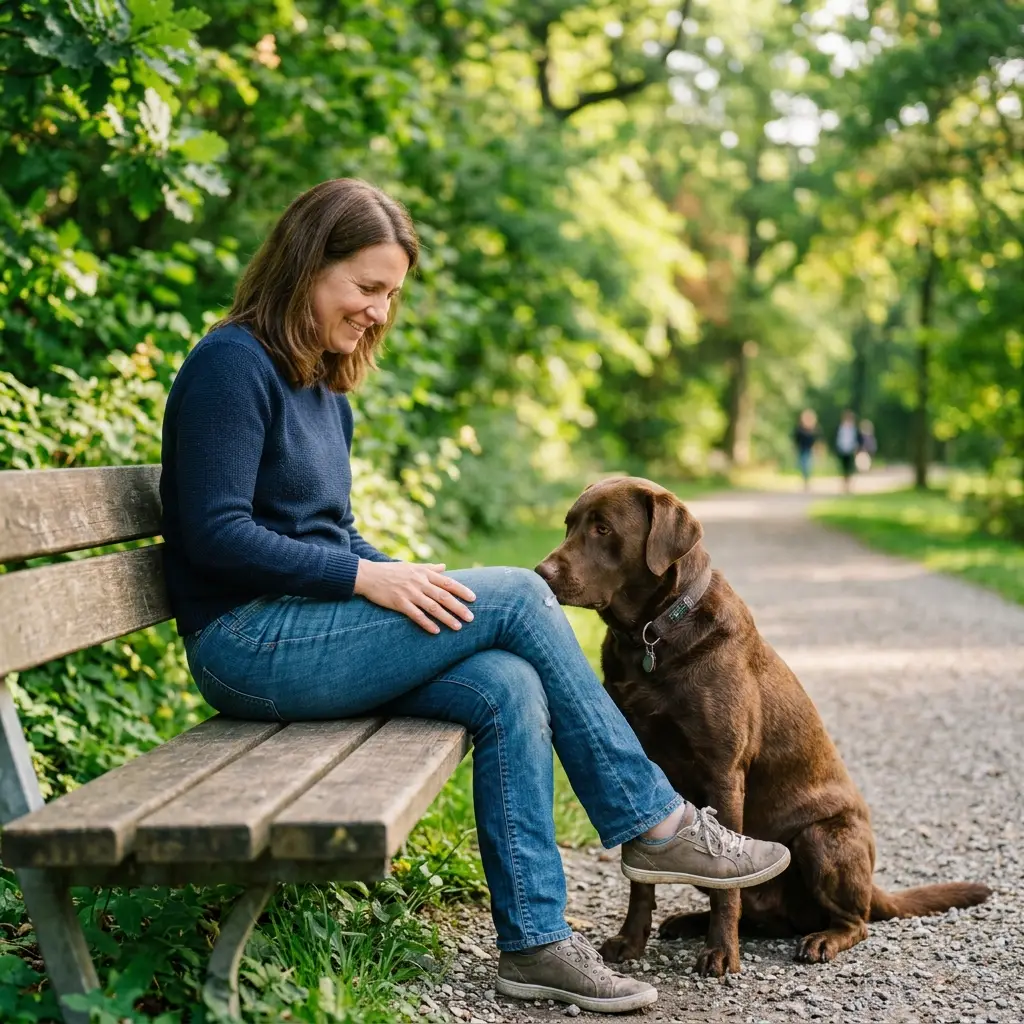
Quick answer: the groin is where people carry some of their strongest scent glands. To your dog, a quick sniff there is like scanning an ID badge: who you are, where you’ve been, maybe even how you’re feeling. In dog terms it’s perfectly normal, not rude and not a dominance thing. You can steer it elsewhere by teaching a sit-to-greet or a hand touch and rewarding calm hellos.
A nose built for information
Dogs live through their noses. They’ve got vastly more scent receptors than we do, a big chunk of brain devoted to making sense of smells, and a bonus scent organ in the roof of the mouth called the vomeronasal organ (or Jacobson’s organ). That one picks up chemical signals about social status and reproduction. So a sniff isn’t just “oh, a smell.” Your dog is putting together a whole profile.
Why the groin area?
We have two main kinds of sweat glands. Eccrine glands are all over the body and mainly keep us cool. Apocrine glands cluster in the armpits and groin, and what they release is full of chemical signals about age, sex, health and mood. Most dogs can’t reach your armpits. Your groin, on the other hand, is right at nose level.
Watch two dogs meet and you’ll see them sniff each other’s backsides, where their own scent glands are. When your dog goes for someone’s crotch, they’re just using the standard dog greeting on a human.
What your dog can learn from a sniff
- Who you are, and whether they’ve smelled you before.
- Where you’ve been, including any other dogs or animals you’ve petted.
- Hormone changes, like during a period, pregnancy or after having a baby. Lots of owners notice their dog gets nosier at these times.
- How you’re feeling. There’s research suggesting dogs can smell stress on us.
That stress finding comes from a 2022 study at Queen’s University Belfast, published in PLOS ONE. The researchers took breath and sweat samples from volunteers before and after a stressful math task. Trained dogs picked out the stressed sample about 94 percent of the time (read the study, or the ScienceDaily summary). So our scent may tell dogs not just who we are, but something about how we feel.
Why does my dog keep sniffing my private area? Common reasons
1. Greeting and gathering information
By far the most common reason. Your dog wants the update: where have you been, and has anything changed since this morning?
2. Hormonal changes
Dogs often get more curious during a period, ovulation, pregnancy or after giving birth, because body chemistry shifts. It’s just curiosity.
3. New scents
Been hanging out with other dogs, cats, horses, or walked through a field full of wildlife? Your dog will want to check it all out. People often notice a real sniff-fest after visiting friends who have pets.
4. Intact (unneutered) dogs
Dogs who aren’t spayed or neutered, males especially, can be extra interested in reproductive scents.
5. Learned attention
If every sniff gets a shriek, a giggle, or a round of pushing and “no, no, no,” your dog may think it’s a great game and keep it up.
6. Scent hound instincts
Scent hounds like Bloodhounds, Beagles, Basset Hounds and Coonhounds were literally bred to follow their noses, and plenty of Labs and Spaniels are the same. These dogs tend to be the most determined sniffers.
Is it ever a sign of something medical?
Dogs can be trained to pick up certain health changes in people, like low blood sugar and some cancers, and you’ll hear stories of pet dogs fixating on one part of their owner’s body. But a normal crotch-sniff hello is almost always just a dog being a dog. If your dog suddenly starts nosing hard at one spot, over and over, and you already have health worries, it’s fine to mention it to your doctor. Just don’t lose sleep over a regular greeting.
Normal sniffing vs. behavior to address
| Normal | Worth working on |
|---|---|
| Quick sniff, then moves on | Persistent pushing or following guests around |
| Happens mostly at greetings | Knocks people over or jumps up |
| Stops easily when called | Ignores cues and gets more excited |
| Relaxed body | Mounting, grabbing clothes or nipping |
How to stop your dog from sniffing people’s crotches
You can’t turn off your dog’s nose, and you wouldn’t want to. What you can do is give them a better way to say hi:
- Teach “sit to greet.” Ask for a sit before anyone says hello. When they sit, they get a treat and attention. No sit, no greeting.
- Teach a hand target. Train your dog to bump their nose into an open palm when you say “touch.” Then ask guests to hold a hand out low and off to the side, so your dog has something okay to sniff.
- Manage the doorway. Have your dog on a leash or behind a baby gate when people first arrive, and only let them say hi once they’ve calmed down.
- Ask guests to turn a little sideways instead of standing square to your dog. It takes the crotch out of the firing line.
- Give them a job. A toy to carry or a mat to go lie on gives an excited dog somewhere to put all that energy.
- Keep your cool. A big reaction can accidentally reward the sniffing.
- Tire them out. A dog who’s had a long, sniffy walk is usually calmer at home.
Please don’t punish sniffing harshly. It’s natural, and scolding can make greetings stressful, which tends to cause new problems.
Children and nervous guests
For kids, a big dog nosing at them can be scary. Supervise every hello. Teach children to stand still like a tree instead of running or screaming, and keep your dog on a leash around young visitors until the calm greeting is solid. Guests who are nervous around dogs will be grateful to say hi once your dog has settled.
How long does it take to fix?
Most dogs pick up a polite sit-to-greet in two to four weeks if you practice consistently, and if everyone at home, plus regular visitors, sticks to the same rules. The usual problem is mixed messages. If some people let the dog jump and sniff and others don’t, the dog will keep trying. Start with family, doing short, fun sessions at the front door. Then get a patient friend to come over as a practice guest. Once your dog sits reliably for someone they know, move on to new people. Keep a jar of treats by the door so you’re always ready.
Other nose-first habits
Crotch-sniffing is just one piece of how dogs check out the world with their noses and mouths. You might also see your dog licking you a lot or following you everywhere to keep tabs on things. It’s all a curious, social animal trying to figure out their people.
Give your dog better ways to use their nose
A dog with a big sniffing drive will find somewhere to use it, so give them plenty of places where it’s allowed. Let your dog lead part of each walk and stop at every lamppost and hedge, what a lot of trainers call a “sniffari.” Hide treats around a room and let them hunt. Toss kibble into the grass for a snuffle session, or use a snuffle mat inside. Some people even sign up for nose-work classes, a dog sport where dogs search for particular smells. Research suggests nose work can make dogs more upbeat and relaxed, and it wears out a busy dog like nothing else.
What to say to embarrassed guests
A light, friendly explanation takes the awkwardness out of it. Try something like, “Sorry, that’s him reading your news. We’re teaching him to sit and say hi instead.” Guests relax, and most are happy to help. Ask them to ignore your dog until he sits, then say hello calmly. Every visitor who plays along makes the new habit stick a little better.
Frequently asked questions
Why does my dog sniff my private area when I’m on my period?
Hormone changes shift how you smell, and dogs pick up on it. It’s normal and nothing to worry about. The same greeting training works here.
Why does my dog sniff my crotch but not other people’s?
You might just be the person whose scent changes the most from day to day, or the one whose reaction made it fun. Some dogs also zero in on whoever they’re most bonded with.
Is my dog trying to be dominant?
No. It’s information gathering, not a power play. Behavior experts have mostly moved away from explaining normal dog greetings with dominance.
Can dogs smell if you’re pregnant?
Lots of owners say their dog acted differently while they were pregnant, and it makes sense that dogs could smell hormonal changes. There’s no solid science showing dogs actually “know” about a pregnancy, but they often seem to sense something’s different.
Will neutering stop my dog from sniffing people?
It can dial down interest in reproductive scents for some dogs, but it won’t stop everyday sniffing. Training is still what really works.
This article is for general information and is not a substitute for advice from your veterinarian.
Leave a Reply