Grandma swore by Epsom salt for her aching feet, and maybe you do too. So it’s fair to wonder: would it help your dog? Plenty of vets do recommend a warm paw soak for small stuff, like a bit of swelling, a tiny splinter, or sore, grubby feet after a big hike. Done right, Epsom salt for dogs’ paws is simple and soothing. Done wrong, it can upset your dog’s stomach or sting broken skin. Here’s how to do it safely, and when to skip it entirely.
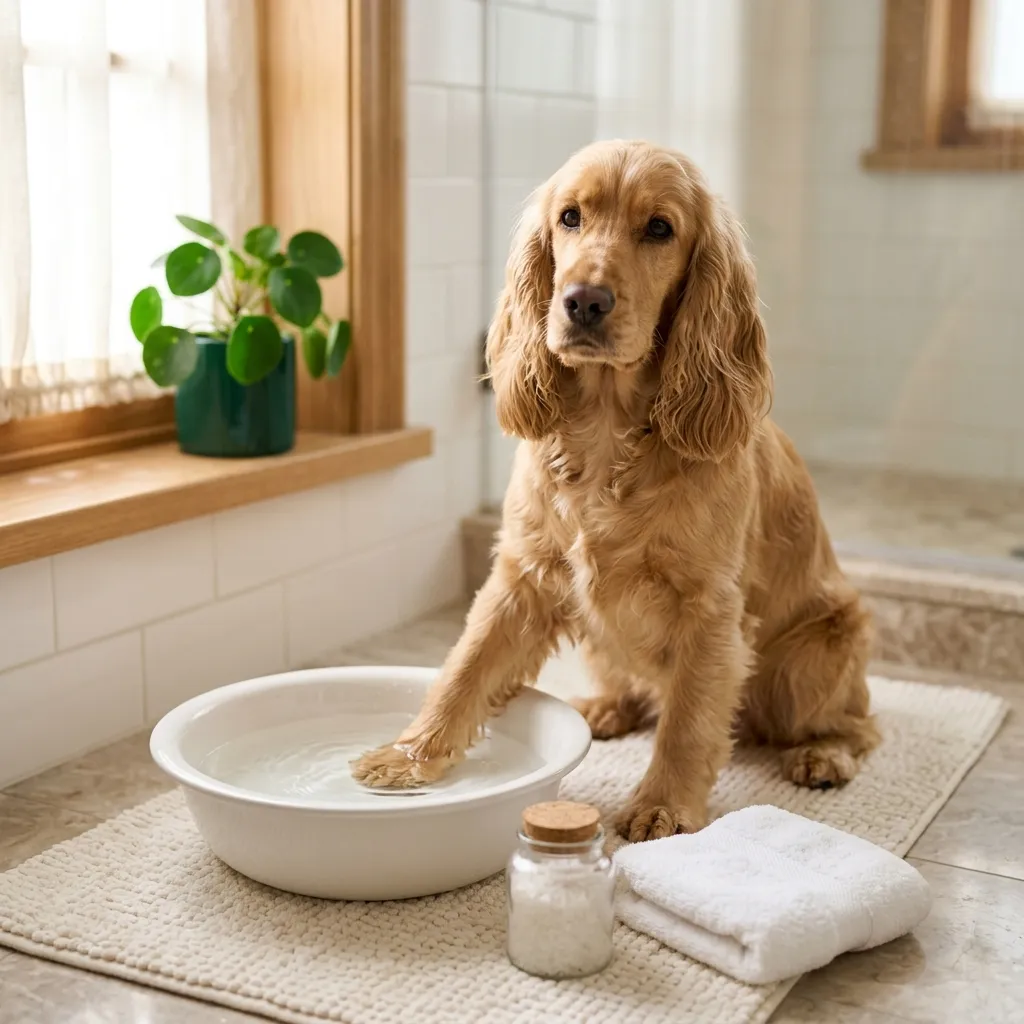
Quick answer: yes, for small stuff. Minor irritation, a bit of puffiness, a tiny splinter. Mix roughly half a cup of Epsom salt into a gallon of lukewarm water (about two tablespoons per liter), soak the paw five to ten minutes, rinse with plain water, dry it properly. Don’t let your dog drink it. Don’t use it on deep, bleeding or infected wounds. And if your dog has health problems, ask your vet first.
What is Epsom salt?
First, a quick clear-up. Epsom salt isn’t the stuff in your salt shaker. It’s magnesium sulfate, a mineral that melts right into warm water, and people have been soaking tired feet in it for ages. With dogs, honestly, the warm water is doing most of the work. It rinses the paw, loosens the gunk and makes a sore spot feel nicer. Real research on Epsom salt itself is thin. So treat it as a comfort thing, not a cure.
When a dog paw soak can help
A warm Epsom salt soak can come in handy for:
- Mild swelling or soreness after a long walk, a hike or a wild play session
- A small splinter or thorn close to the surface, which may slide out more easily once the skin softens
- Dirty, gritty paws after a muddy or sandy adventure
- A bit of redness or irritation between the toes, alongside your vet’s advice
- Softening hard, dry pads before a paw balm, for example in dogs with hyperkeratosis
What it won’t do: fix infections, allergies or proper injuries. If the same paw trouble keeps coming back, a soak might buy some relief, but you still need to find out what’s causing it.
When not to use Epsom salt on your dog’s paws
Skip the soak and call your vet if:
- There’s a deep cut, a bleeding wound or a flap of torn pad. Follow our paw pad injury first aid guide and get it looked at.
- You see pus, notice a strong smell, feel heat or find a painful lump. That can be a paw infection that needs proper treatment.
- Something is stuck deep in there, like glass, metal or a grass seed you can’t see the end of.
- Your dog won’t put any weight on the leg. That could be a sprain, a fracture or a serious infection.
- The skin is raw, burned or blistered. Salt water will sting like crazy.
- Your dog has kidney disease, heart disease or another medical condition, or is very young, unless your vet gives the go-ahead.
How to do an Epsom salt soak for dog paws: step by step
What you’ll need
- Plain, unscented Epsom salt (skip anything with added oils or fragrance)
- A shallow basin, bowl or bucket big enough for the paw
- Lukewarm water
- A clean towel, plus a spare for spills
- Treats, a lick mat or a friend to keep your dog calm
The steps
- Mix it up. Stir about half a cup of Epsom salt into a gallon of lukewarm water, or roughly two tablespoons per liter, until the crystals disappear.
- Test the temperature. Try it on the inside of your wrist. Comfortably warm, never hot.
- Settle your dog. Pick a calm spot, like a towel on the bathroom floor. Get your helper ready with treats or a smeared lick mat.
- Soak. Gently lower one paw into the water so the sore spot is covered. Aim for five to ten minutes. Nervous dog? Start with a minute or two and build up.
- Rinse with plain water. That gets the salt off so your dog doesn’t lick it up later.
- Dry really well. Pat the paw dry and get between the toes. Leftover damp can invite yeast, as we explain in our guide to dog paw yeast infections.
- Tip the water out right away, so your dog can’t drink it.
For small problems, once or twice a day for two or three days is usually plenty. Not clearly better by then? Getting worse? Vet time.
Tips for soaking a wiggly dog
Real talk: not every dog is going to sit nicely with one foot in a bowl. A few tricks help a lot:
- Practice first. Let your dog sniff the empty bowl, then reward them for touching it with a paw.
- Bring out a lick mat. Smear a little xylitol-free peanut butter or wet food on a lick mat stuck to the wall or floor. Busy tongue, relaxed dog.
- Use the bathtub. For big dogs, or when all four paws need a soak, run a few inches of the solution into the tub and let your dog stand in it.
- Pour instead. If your dog won’t keep the paw in the bowl, hold it over the basin and gently pour the solution over it for a few minutes.
- Keep it short and upbeat. Finish with praise and a treat, even if you only got a minute in.
Is Epsom salt safe for dogs?
On the outside of the paw, watered down, Epsom salt is generally considered safe for healthy dogs. Swallowing it is the issue. Magnesium sulfate is a laxative. A dog who laps up the soak, or licks a load of salt off their feet, may end up with the runs or throwing up. Large amounts can knock the body’s mineral balance out in more serious ways. Hence: rinse, dry, dump the water. Every time.
Did your dog guzzle a lot of it? Any vomiting, diarrhea, weakness or odd tiredness afterward? Phone your vet or an animal poison control line.
Alternatives to Epsom salt for a dog paw soak
Epsom salt isn’t your only choice, and it’s not always the best one. Depending on the problem, your vet might point you toward:
- Plain lukewarm water for simple cleanups after walks, especially in pollen season for dogs with paw allergies.
- A diluted antiseptic soak, such as chlorhexidine, for minor infections or irritated skin. Only use the product and strength your vet recommends.
- Medicated wipes or sprays when a full soak isn’t realistic.
- A dog-safe paw balm after soaking for dry, cracked pads.
For more, the American Kennel Club has a handy guide on everyday paw cleaning, and PetMD covers other vet-approved home remedies worth knowing about.
Please skip the DIY soaks with vinegar, bleach, tea tree oil or other essential oils. They can burn tender skin, and some are toxic if your dog licks them.
When to see a vet
Soaks are fine for little, short-lived problems. See your vet if the paw isn’t obviously better after two or three days, if redness or swelling is spreading, if your dog limps or licks nonstop, or if there’s discharge, a bad smell or a lump. Need a new practice? Our guide on how to choose a veterinarian can help you find one you trust.
Frequently asked questions
How much Epsom salt should I use for a dog paw soak?
About half a cup of Epsom salt per gallon of lukewarm water, or two tablespoons per liter. That’s a nice, gentle mix. Stronger doesn’t help. It just stings more and is harder on the tummy if licked.
How often can I soak my dog’s paws in Epsom salt?
For a minor problem, once or twice a day for a few days. For upkeep, like keeping dry pads soft, a couple of times a week is enough. Overdo it and the skin dries out.
Can Epsom salt help a swollen dog paw?
It might help a little with mild puffiness from overdoing it or a small knock. But swelling from infection, a bee sting, something stuck in the paw or a real injury needs a vet. Very swollen, hot or painful paw? Don’t lean on a soak.
Does Epsom salt draw out infection from a dog’s paw?
You’ll hear this a lot, but the evidence is thin. Warm water softens the skin and can help a small pimple or splinter near the surface pop up, which is probably where the “drawing out” idea comes from. A real infection needs proper medicine. Suspect one? Let your vet have a look instead of soaking and hoping.
Can I use Epsom salt for my dog’s whole body?
Keep it to the paws. They’re easy to rinse and dry. Full-body baths make it much more likely your dog swallows some. For skin trouble elsewhere, ask your vet about a medicated shampoo, and check out our guide on how often you should bathe a dog.
This article is for general information and is not a substitute for advice from your veterinarian.
Leave a Reply