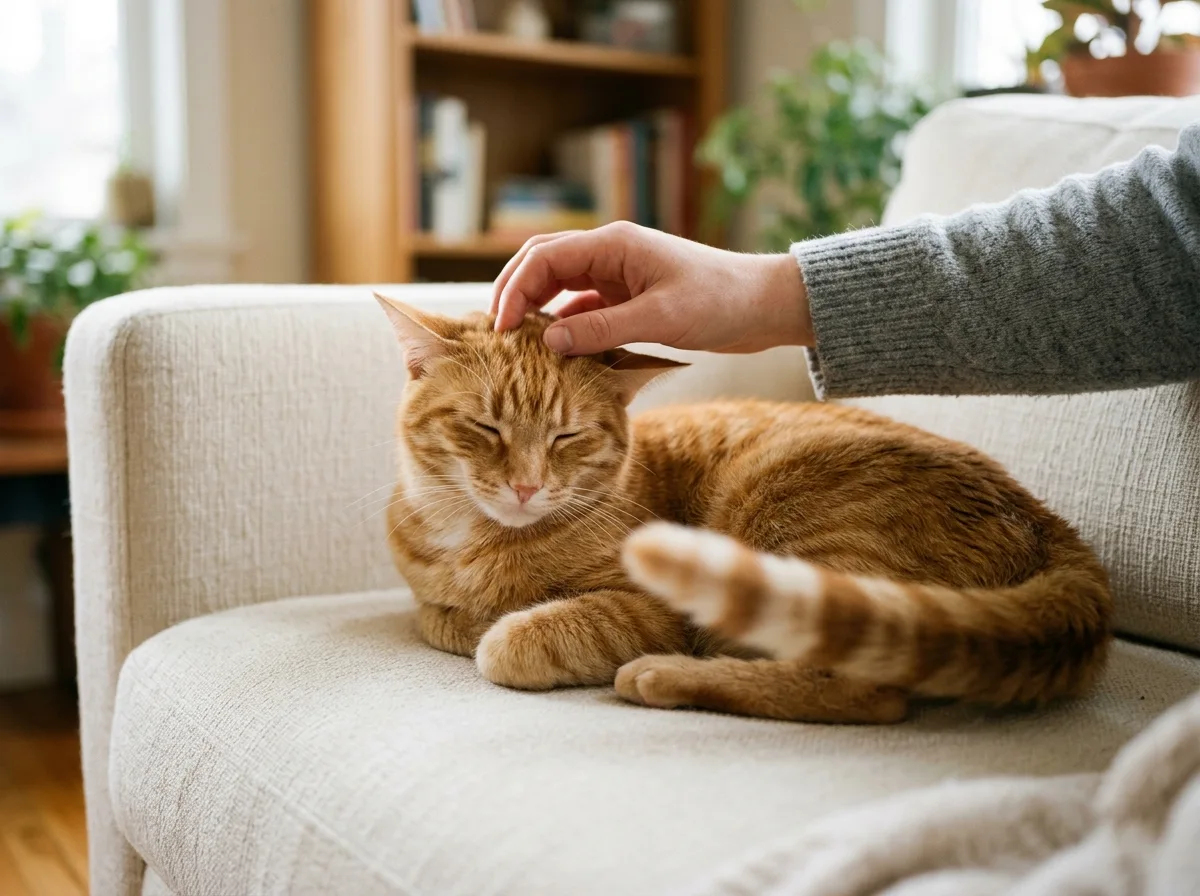
Dogs wag when they’re happy. Cats? As plenty of us have found out the hard way, cats play by different rules. You’re stroking your cat, he’s purring away, and then the tail starts to swish. A few seconds later: swat. Or a nip. So why does my cat wag his tail when I pet him? And is he actually enjoying it or not?
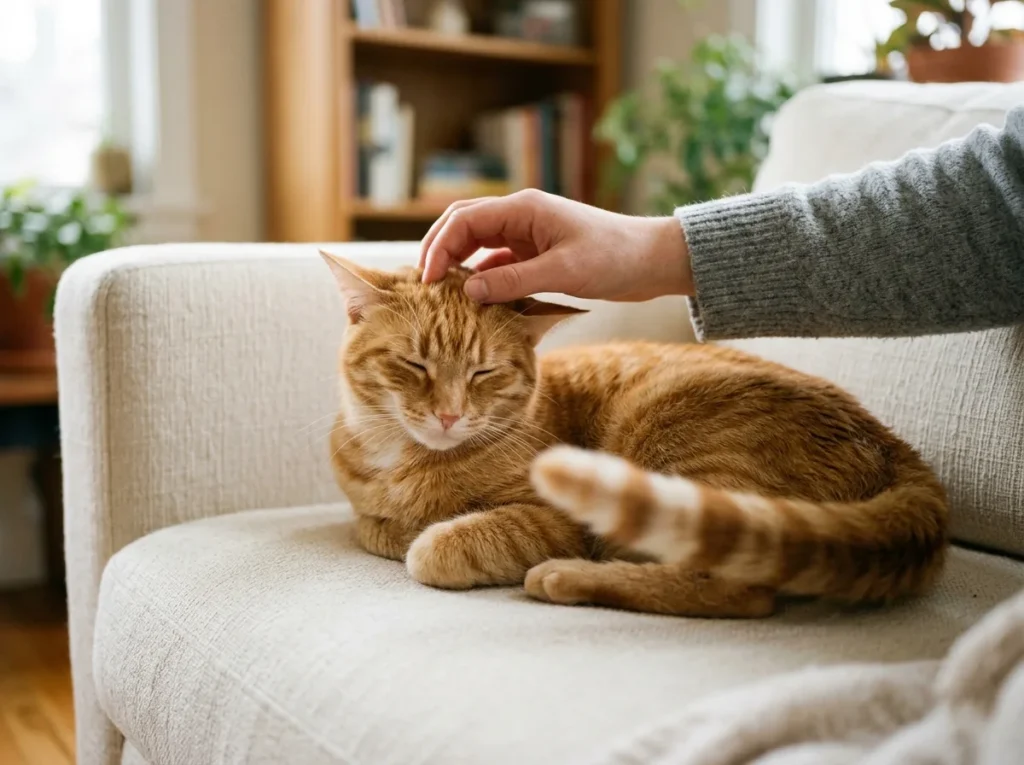
Short answer: depends on the wag. A cat’s tail is one of his clearest ways of talking to you, and while you’re petting him it works a lot like a volume knob for his mood. Learn the different moves and you’ll dodge a few scratches, and petting time gets better for both of you.
Not all wags are the same
Here are the tail moves you’re most likely to see during a petting session, from chilled out to “seriously, stop.”
| Tail movement | What it usually means | What to do |
|---|---|---|
| Tail up, tip softly curled or quivering | Happy, friendly, loving it | Carry on |
| Slow, lazy sway while lying down | Relaxed, content, maybe drowsy | Keep going, gently |
| Just the tip twitching | Getting wound up or distracted | Ease off, watch closely |
| Big, fast side-to-side swish | Irritated or overstimulated | Stop petting |
| Tail thumping on the floor or bed | Annoyed, close to the limit | Stop and give him space |
| Tail tucked or fluffed up | Scared or on the defensive | Stop and back off |
The most common reason: overstimulation
Lots of cats love being petted, but only up to a point. Stroke after stroke, especially along the back and toward the tail, can flip from lovely to too much pretty fast. Behavior experts often call this petting-induced aggression, but it’s less about aggression and more about a cat saying “okay, that’s enough” the only way he knows how.
The wagging or twitching tail is usually warning number one. Keep going, and the next signs tend to show up in this order:
- The tail tip twitches
- The skin along his back ripples or twitches
- Ears swivel sideways or go flat
- The purring stops and his body goes stiff
- He turns his head toward your hand
- Swat, nip or a sudden exit
Learn to stop at step one or two, and most cats will never need to bite.
Other reasons a cat wags during petting
He is focused on something else
A twitchy tail can also just mean he’s alert. If he’s watching a bird out the window or a toy on the floor, his tail might flick while you pet him simply because his mind is somewhere else.
He is conflicted
Some cats want attention and feel a little unsure about it at the same time, especially rescue cats or cats still getting to know you. A swishing tail can show that mixed feeling. Short, gentle sessions on his terms help build trust.
You found a sensitive spot
The belly, the base of the tail and the back legs are sensitive spots for a lot of cats. If the tail starts going the moment your hand gets close to one of them, head back up to the head and cheeks.
He might be uncomfortable
If your cat has suddenly gone touchy in one spot, or reacts more strongly than he used to, pain could be the reason. Arthritis, skin problems or an injury can make petting uncomfortable. If the change is sudden, get him checked by a vet.
How to pet a cat the way most cats like it
- Let him come to you. Hold out your hand and let him sniff and rub first.
- Start with the cheeks and chin. Most cats have scent glands there and love a gentle scratch.
- Keep it short. A few strokes, then pause. If he nudges you for more, keep going.
- Skip long strokes all the way to the tail unless you know your cat likes them.
- Watch the tail, not just the purr. Cats can purr right up to the second they swat.
International Cat Care has a helpful set of guidance on cat body language and handling if you want to dig deeper.
What not to do
Never punish a cat for swatting after petting. He was trying to tell you something, and punishment just makes him more tense around hands. End the session calmly instead, and try again later with a shorter one.
Related questions
Why does my cat wag his tail while purring? A gentle sway usually means he’s content. A fast swish while purring means mixed feelings, so it’s best to pause.
Why does my cat wag his tail when lying down? A slow sway often means he’s relaxed but paying attention. A thumping tail means he’s irritated.
Is tail wagging ever a happy sign in cats? Yes. An upright tail with a little quiver at the tip is one of the happiest signals a cat can give.
Want to decode more cat body language? Read about why your cat sniffs your face and why cats knead.
Leave a Reply