The day you bring your puppy home is one of those days you’ll remember for years, and then the sun goes down and it hits you that the puppy first night home is a whole different story. A few hours ago your puppy was curled up in a warm pile with their mom and littermates, and now every smell, sound and shadow is brand new, so a bit of crying in the dark is almost guaranteed. The good news is that a little preparation goes a long way toward helping them feel safe, and toward you getting at least some sleep.
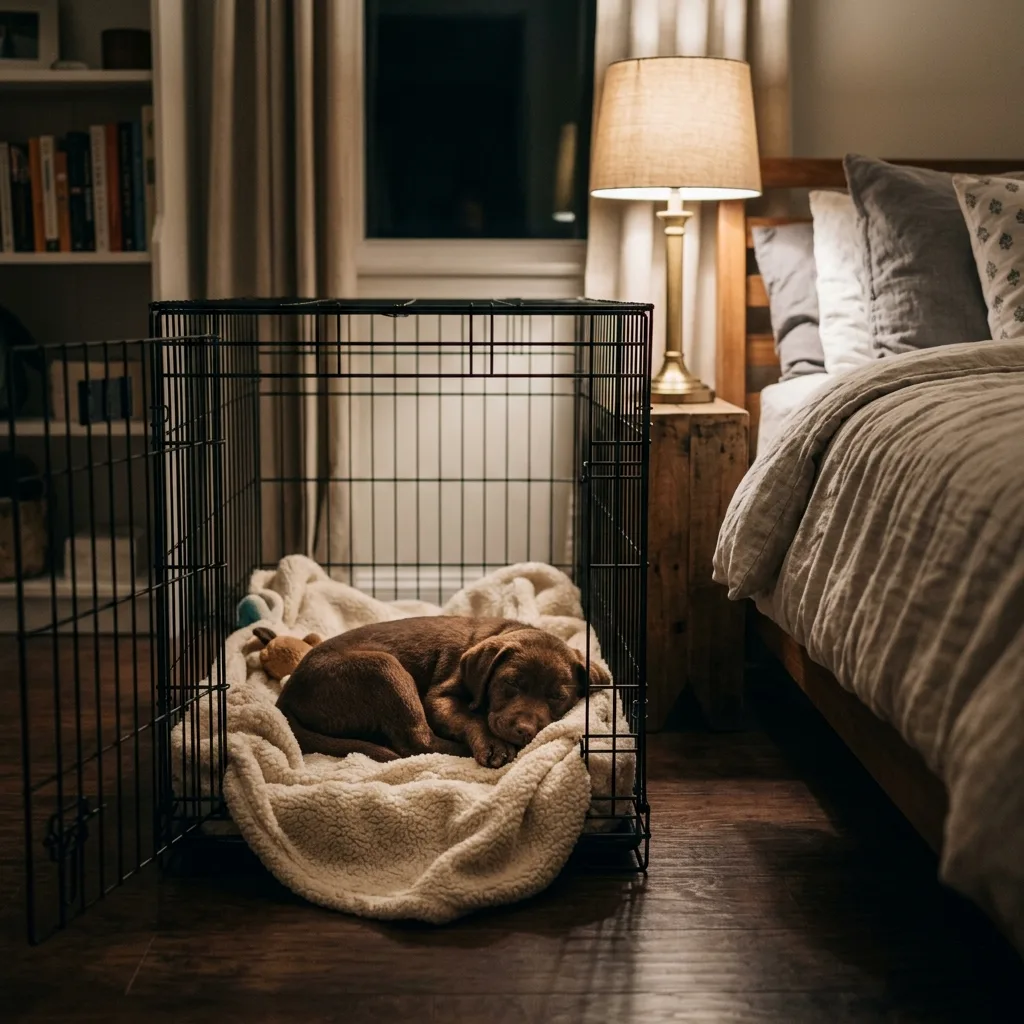
Quick answer: put the crate or puppy bed right up against the side of your bed, take them out for one last wee just before you turn the lights off, and assume a young puppy will need one or two quiet trips outside during the night. Keep those night-time outings as dull as you possibly can, and don’t ever punish crying or accidents.
Before bedtime
- Sort out where they’ll sleep. A crate that’s big enough to stand up, turn around and lie down in, with something soft on the floor, works well for most puppies, and it helps enormously if it’s right beside your bed so they can hear and smell you through the night.
- Smuggle in some home comforts. Ask nicely and most breeders or shelters will give you a blanket or toy that still smells of mom and the litter. It sounds small. To a puppy it’s huge.
- Play, then wind down. A gentle game in the evening, then keep the last hour before bed nice and quiet.
- Time dinner. Feed two or three hours before bed, so there’s time for a bathroom trip afterward.
- Go out one last time. Take your puppy outside right before bed, and give some calm praise when they go.
During the night
You’ll hear a rough guide: a puppy’s bladder lasts about one hour per month of age, plus one. That puts an 8-week-old at two to three hours between trips. Your puppy hasn’t read that guide, obviously, so watch for the sniffing-and-circling routine and tweak the timing as you go.
- Whining at 2 a.m.? Leash on, out the door, same patch of grass as before. Keep the lights down and your voice quiet. This is not playtime, however cute they look.
- When they’ve been, give a quiet “good” and head straight back to bed.
- Crying again the second they’re back in the crate? Slip a hand against the bars, whisper something soothing, and wait it out. Taking them out for cuddles just teaches them that crying gets results.
- Some pups drift off faster with a ticking clock, a white noise app on your phone, or a light blanket over one side of the crate to make it feel more den-like.
Crying: comfort or ignore?
Here’s the thing to hang on to at 3 a.m.: your puppy isn’t being naughty. They’re little, they’re lonely, and they’re a bit frightened. Comforting them doesn’t spoil them. Having you right there is what teaches them the crate is a safe spot. A few weeks down the line, once they’re settled, you can shuffle the crate bit by bit to wherever you want it for good.
Accidents happen
Accidents on the first night are completely normal, so don’t beat yourself up about it. Clean the spot with an enzyme cleaner, which breaks down the smell and makes it less likely they’ll pick the same place next time, and never punish them or rub their nose in it, because all that teaches a puppy is to be afraid of you.
The first week
- Meals, wee breaks, naps, bedtime. Same-ish times every day. Puppies love knowing what comes next.
- Out they go after every nap, every meal, every play session, and every hour or two in between. Yes, really.
- Get a vet visit booked for the first few days. They’ll give your pup a once-over and map out vaccines and deworming with you.
- Resist the urge to invite the whole street round to meet them. Keep the first few days calm while they find their feet.
- Start the fun stuff gently: touching paws and ears, teaching their name, and tiny training games, including some early leash manners.
Puppy first night FAQs
Should my puppy sleep in my bed? In the beginning, a crate or puppy bed right beside yours is usually the better choice, both for safety and for house training.
Should I wake my puppy to pee at night? With very young puppies, many owners set a single alarm for the middle of the night, and as your puppy grows you’ll find the gap between trips gets longer and longer.
When will my puppy sleep through the night? Plenty of puppies are managing most of the night by around four months old, although some get there sooner and some take a bit longer.
For more help with those early weeks, see the ASPCA general dog care guide and our new puppy guides.
Leave a Reply