Walks are supposed to be the highlight of your dog’s day, not an upper-body workout that leaves your shoulder aching and your arm half out of its socket. If you’ve been Googling how to stop a dog from pulling on the leash after yet another tug-of-war around the block, here’s the encouraging bit: pulling is a habit your dog learned, and anything learned can be unlearned. It just takes patience and consistency, not force.
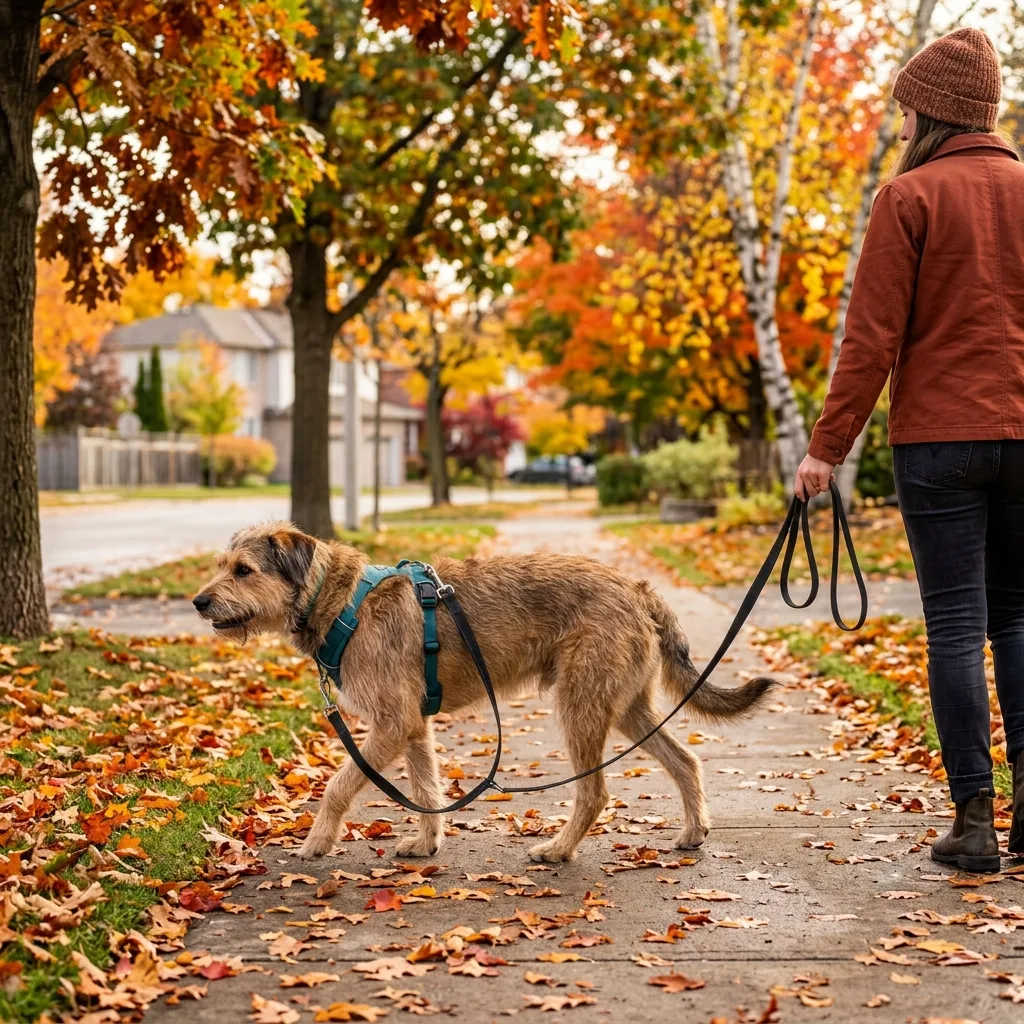
Quick answer: tight leash, you freeze. Loose leash, you walk. That’s the whole game. Pile on the rewards whenever your dog is next to you, clip a front-attach harness on while they’re learning, and start in dull, quiet places before working up to the busy high street. Do a little every day and you should see a real difference in two to four weeks.
Why dogs pull in the first place
Part of it is that dogs naturally walk faster than we do, and the outside world is packed with amazing smells. But mostly, dogs pull because it works. Every time pulling gets them where they want to go, the habit gets a little stronger. So the job is to change what pays off.
5 methods to stop leash pulling
1. Be a tree
The leash goes tight? Plant your feet. Don’t pull back, don’t say a word, just become a tree. Sooner or later your dog will glance round or step back, and the leash will go soft. That’s your moment: “yes!” and off you go. Early on you’ll feel a bit daft, stopping every three steps. Stick with it. Your dog is figuring out that a slack leash is the magic button that makes the walk happen.
2. Change direction
Dog shoots off in front? Spin round, happy as anything, and march the opposite way. When they come trotting up to your side, reward. Before long your dog starts keeping tabs on you, because who knows when you’ll suddenly change course.
3. Reward the spot you want
Choose a side, left or right, and always hand treats over right by your leg on that side. Pay out every few steps to begin with, then less often as it clicks. Put simply, dogs go where the treats are. Make your side the jackpot spot.
4. Give sniff breaks
Sniffing isn’t bad behavior, it’s how dogs read the news. Use a release word like “go sniff” to let your dog explore on a loose leash, then call them back to walking. Dogs tend to pull less once they know sniff breaks are coming.
5. Train where it is easy first
Begin somewhere dull: the hallway, the back garden, a sleepy side street. Asking a dog to learn something new with a squirrel right there is like trying to do homework at a rock concert. Nail it in the easy places first, then slowly turn the distractions up.
The right gear
- Front-clip harness: the leash clips on at the chest, so when your dog pulls they get gently swung round to the side. It’s a brilliant management tool while you’re training.
- A regular 4 to 6 foot leash: gives you control and keeps things consistent.
- Tiny, soft treats: the stuff your dog would sell their soul for, chopped to pea size.
- Ditch the retractable leash during training. It literally rewards pulling with more rope.
Veterinary behavior groups like the American Veterinary Society of Animal Behavior recommend reward-based training and advise against choke, prong and shock collars, which can cause pain, fear and neck injuries.
Common mistakes to avoid
- Letting your dog pull “just this once” because you’re running late. Every exception slows things down, so on busy days, pop the harness on and keep the walk short.
- Taking a dog who’s bursting with energy straight out the door. A few minutes of play in the yard first can take the edge off.
- Marathon sessions. Five or ten good minutes beats an hour of both of you getting cranky.
- Leash jerks. They don’t show your dog what you do want.
How long does it take?
For most dogs, practicing daily gets you real progress in two to four weeks. Young, bouncy dogs, and dogs who’ve been hauling their owners around for years, may take longer. If your dog pulls because they’re frightened or reactive to other dogs, a certified positive-reinforcement trainer can make a huge difference.
Got a new puppy? Start on leash manners early. See our guide to your puppy’s first night home for more on those first few days together.
Leash pulling FAQs
Should I use a harness or a collar? For a puller, a harness that fits well is usually the safer bet. A collar puts all that pressure right on the windpipe.
Can older dogs learn to stop pulling? Sure can. Grown-up and senior dogs learn loose-leash walking the same way. Just give them a bit more time.
Why does my dog only pull at the start of the walk? Because the first five minutes are the most exciting thing that’s happened all day. Burn a little of that off with play or a sniff around the yard first, and do some tree practice right at the front door.
Keep reading: here’s why your dog takes your spot when you get up, and a refresher on dog care basics.
Leave a Reply