A dog in Arizona just became the first dog in the US confirmed with New World screwworm. If you’ve never heard of this bug before this week, you’re not alone. I hadn’t really either until a few months ago, and then I read about what the larvae actually do and kind of wished I hadn’t.
So here’s what happened, what screwworm in dogs looks like, and what you can do about it without panicking.
What happened in Arizona
On October 26, a vet in Cochise County looked at a ranch dog with a wound on its back. The wound was full of maggots. Samples went to the USDA lab in Ames, Iowa, and on October 28 the USDA confirmed it: New World screwworm. It’s the first detection ever in Arizona and the first case in a dog in the US since the pest started moving north.
The part that worries people? Officials say the dog had no travel history. It didn’t come up from Mexico. It got infested right where it lives.
Since then, the USDA and the Arizona Department of Agriculture have set up a 20 km “infested zone” around the ranch with rules on moving animals, more fly traps, and releases of sterile flies. Other animals on that ranch are getting checked too.
What is New World screwworm, exactly?
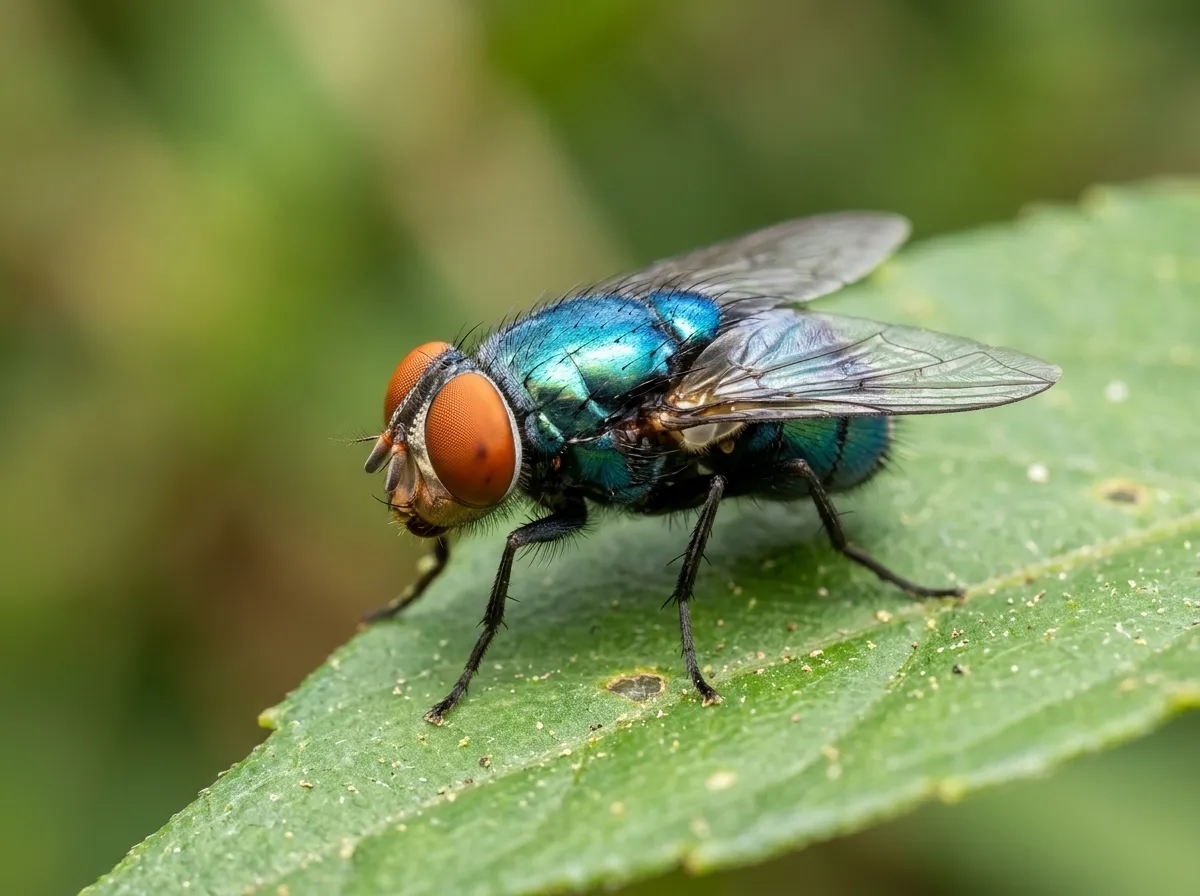
It’s a fly. (Yes, another fly story. If your dog already loses it at a buzzing house fly, our post on why dogs are scared of flies will make more sense now.) Looks a lot like a regular house fly, maybe a bit bigger, with a shiny blue-green body and orange-ish eyes. The fly itself doesn’t bite. The problem is where it lays eggs.
A female lands on an open wound, or sometimes a moist spot like the nose, ears or genitals, and lays a few hundred eggs at the edge. They hatch fast. And unlike normal maggots, which eat dead tissue, these ones eat living flesh. They dig in head first, and the rings of tiny spines on their bodies make them look like little screws. That’s the name.
They feed for about a week, drop to the ground, and turn into new flies. Meanwhile the wound gets bigger and deeper, which draws in more flies. You can see how it spirals.
Here’s the honest bit though. Arizona’s state vet, Ryan Wolker, said it plainly: it’s “very treatable.” It hits any warm-blooded animal, dogs, cats, cattle, deer, even people, but caught early, vets can deal with it.
How it got this far north
Screwworm was wiped out of the US decades ago. The trick was releasing millions of sterile male flies, so females mated with them and laid eggs that never hatched. That pushed the pest all the way down to Panama, where a barrier held for years.
Since 2023 it’s been creeping back up through Central America and Mexico. The USDA logged the first US animal case on June 3 this year, and there have since been cases in sheep and cattle in Texas and New Mexico. Arizona is the newest state, and this is the first dog.
There’s a sterile fly facility planned for Douglas, Arizona, and the University of Arizona got a $3.74 million grant from the USDA to help prepare. So people have been bracing for this.
Screwworm vs. regular maggots
Dogs have always gotten maggots now and then. Vets call it myiasis, and it usually shows up in old, sick or matted dogs, especially in summer. A dog with a dirty coat near its back end, a dog who can’t move much, a wound nobody noticed under thick fur. Normal fly maggots in those cases mostly eat dead tissue and gunk.
Screwworm is the nasty version. The larvae go after healthy, living tissue, so a small clean cut can turn into a deep hole. They also tend to pack together tightly, heads down, almost like a little cluster pointing into the wound, rather than crawling all over the surface.
You won’t be able to tell for sure at home, and that’s fine. Your vet can’t either without the lab. Any wound with maggots in it is a same-day vet visit no matter which kind it turns out to be. The difference matters for reporting and for the drugs they’ll use, not for whether you should go.
Signs of screwworm in dogs

You don’t need to know much bug biology. You just need to look at your dog. The USDA says to check animals daily for:
- A wound that’s draining or getting bigger instead of healing
- Maggots or white egg masses in or around a wound
- Your dog acting off: restless, licking or chewing one spot, not wanting to be touched there
- Sores around the ears, nose, eyes, genitals or the belly button area (that last one matters for newborn puppies)
A few other things people describe: a really bad smell from the wound, bloody discharge, and sometimes you can actually see movement under the skin. Gross, I know. But a smell that’s worse than a normal scrape is a pretty big clue.
And remember, it starts with a wound. A tick bite, a scratch from a fence, a hot spot, a surgery incision that’s still healing. Anything open.
What to do if you think your dog has it
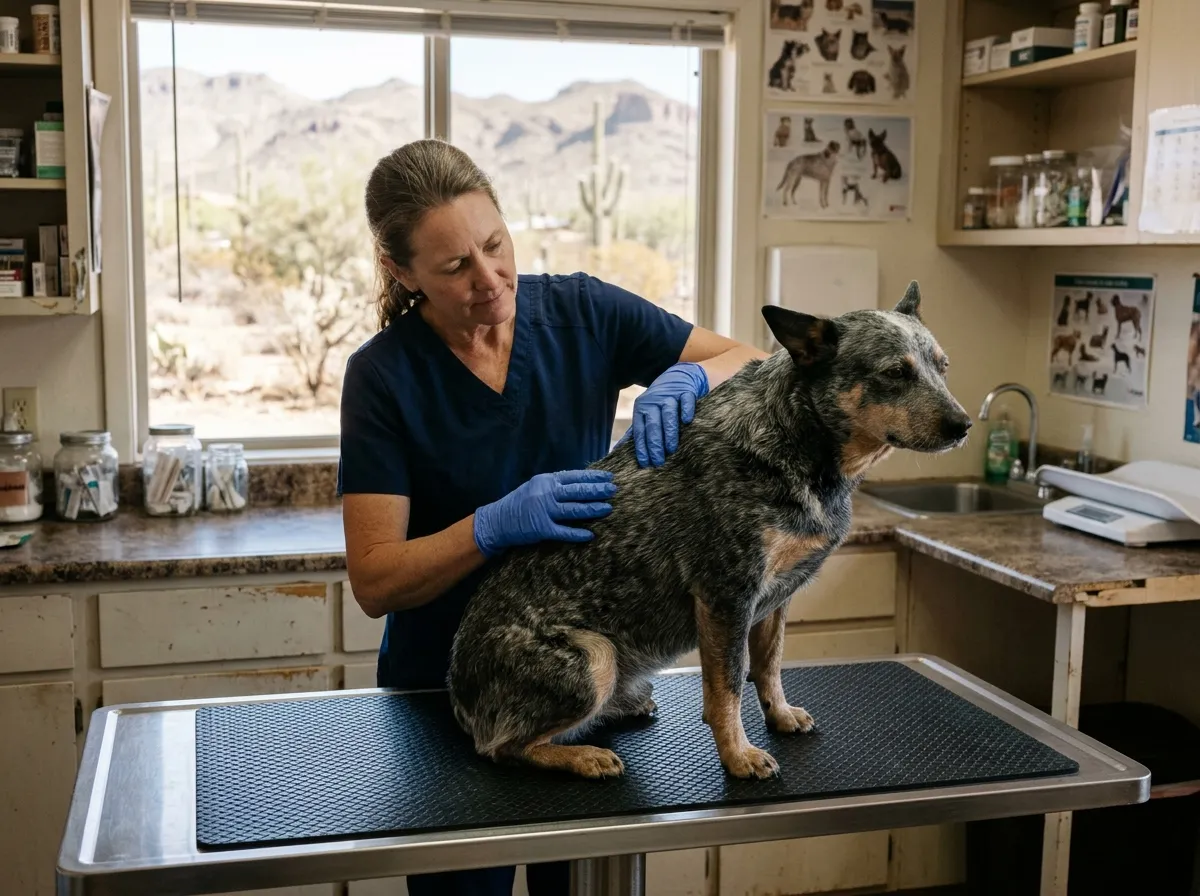
Call your vet right away. Today, not next week. Tell them on the phone what you’re seeing so they’re ready when you get there.
Don’t try to dig the maggots out yourself. They go deep, and you’ll leave some behind. Your vet will clean the wound, pull out the larvae, and send a sample to the lab if they think it’s screwworm. Vets are also expected to report suspected cases to the state animal health office or the USDA, so you don’t have to figure that out on your own.
Treatment usually means:
- Removing every larva the vet can reach
- Cleaning and treating the wound
- A prescription anti-parasite drug
That last one is newer. In October 2025 the FDA gave emergency use authorization to Credelio (lotilaner) for screwworm in dogs. In February 2026 it added NexGard for dogs and NexGard COMBO for cats, and Credelio Quattro has conditional approval for dogs. All of them are prescription only, so you’ll need your vet anyway.
Can my dog’s flea and tick pill prevent it?
Probably the most common question I’ve seen this week. Short answer: those products are authorized to treat screwworm, not prevent it. A dog on a monthly chew still needs to be checked. That said, keeping ticks off your dog means fewer bites, and fewer bites means fewer open spots for a fly to use. So keep giving it, just don’t treat it like a force field.
Who should worry most right now?
If you live in southern Arizona, New Mexico or Texas, especially near the border or in ranch country, this is your week to be extra careful. Dogs that work outside, hunt, or hang around cattle and sheep are the most exposed.
Everyone else? Stay aware but don’t lose sleep. Cases are still rare and they’re getting caught. A few habits make a real difference:
- Check your dog’s skin after hikes, farm visits or rough play
- Clean small cuts and keep an eye on them until they close
- Stay on top of flea and tick control (and the other parasites, like kidney worm in dogs)
- Keep surgery sites covered and clean, and don’t skip the cone
- Look at newborn puppies’ belly buttons every day for the first couple of weeks
Can people get screwworm from dogs?
Not directly. It’s not passed from a dog to you like a virus. People can get infested the same way animals do, a fly laying eggs on an open wound, but there haven’t been any human cases from the current US outbreak, and officials say the risk to people is very low. Still, if you’re cleaning up a dog’s wound, wash your hands and cover any cuts of your own.
Screwworm in Dogs FAQ
Is screwworm in dogs fatal?
It can be if nobody catches it, because the larvae keep eating tissue and infections set in. Treated early, most dogs recover. That’s why the daily check matters.
What does a screwworm wound look like?
A wound that keeps getting deeper instead of scabbing over, often wet, smelly and sometimes with a pink or bloody discharge. You may see maggots packed tightly together, heads down.
How fast does it spread on a dog?
Fast. Eggs hatch in about a day, and the larvae feed for roughly a week. A small wound can get much worse in a few days, so don’t wait it out.
Are cats at risk too?
Yes. Any warm-blooded animal can be infested. NexGard COMBO and Credelio have emergency authorization for cats as well.
Where can I see current screwworm cases?
The USDA runs a public dashboard at screwworm.gov that lists confirmed US cases and updates every day.
One last thing
The scary name does a lot of the work here. In real life, screwworm in dogs comes down to one habit: look at your dog’s skin, and don’t ignore a wound that won’t heal. Do that and you’re already ahead of most of what can go wrong.
Leave a Reply