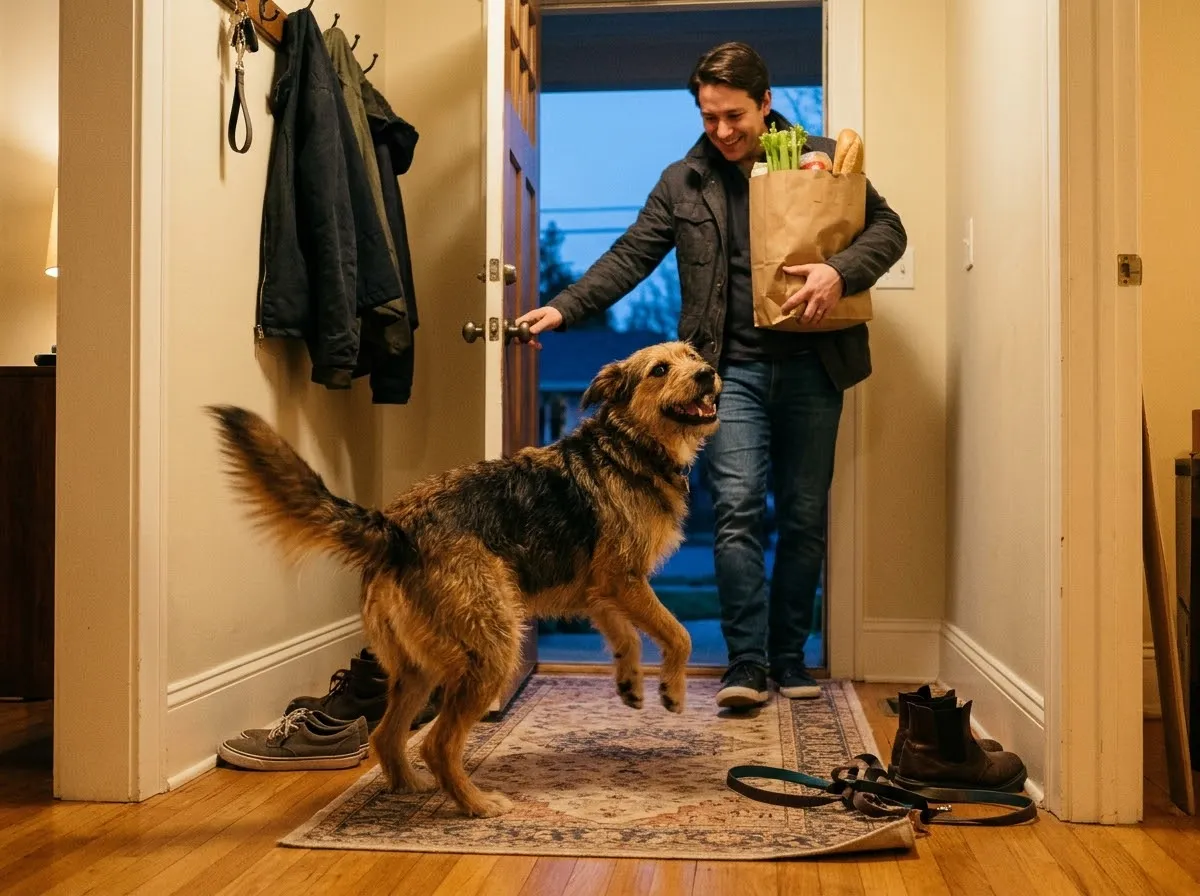
Key in the lock, and boom. Claws skidding on the hardwood, something thuds into the door, and then this whole-body wiggle that sends my groceries flying. Like I’d been off at war. I went to the post office. For twenty minutes. Why do dogs lose it like this when we get home? Short answer, they missed you and they love you. Seeing you gives them a little hormone rush, you coming back is kind of the main event of their day, and (guilty) most of us reward the wildest hellos without noticing. The spinning and jumping is usually fine. You can tone it down with some practice, and once in a while it’s a clue that a dog is stressed when alone.
Cheat sheet:
| What you see | What it usually means |
|---|---|
| Wiggling, tail wagging, happy whining | Normal, happy greeting |
| Jumping up on you | Trying to reach your face to greet you |
| Grabbing a toy or shoe | Excess energy, a “gift,” or a calming habit |
| Peeing a little when you walk in | Excitement or submissive urination, common in puppies |
| Panting, pacing, damage around doors | Possible separation anxiety, worth a vet chat |
Jump to:
Why Does My Dog Get So Excited When I Come Home?
Dogs live in groups, always have. Wolves and wild dogs greet pack members coming back from a hunt by licking their mouths, wiggling and crowding close, and a lot of that greeting ritual survived into our pets. You’re their family. Coming back is a big deal.
There’s also the boredom factor. For many dogs, the hours you’re gone are pretty dull. Sleep, look out the window, sleep some more. Then you walk in and suddenly there’s attention, maybe food, maybe a walk. That’s the highlight of the day, and they act like it.
And then there’s us. We walk in squealing “WHO’S A GOOD BOY,” hands everywhere, baby voice on full blast. Perfectly human. But it teaches the dog that a huge reaction gets a huge reward. I did this for years and then wondered why my dog greeted me like a pinball.
What Science Says About Dog Greetings
Researchers have actually measured this. A Swedish study by Therese Rehn and Linda Keeling looked at how dogs greeted their owners after being left alone for 30 minutes, two hours and four hours. The dogs greeted their people with more intensity after two hours than after 30 minutes, with more tail wagging, more physical contact and more energy. So yes, your dog notices when you’ve been gone longer.
Follow-up work from the same research group found that reunions raise oxytocin, the so-called bonding hormone, in dogs. That warm, fizzy feeling you get hugging someone you missed? Your dog’s getting a version of it too.
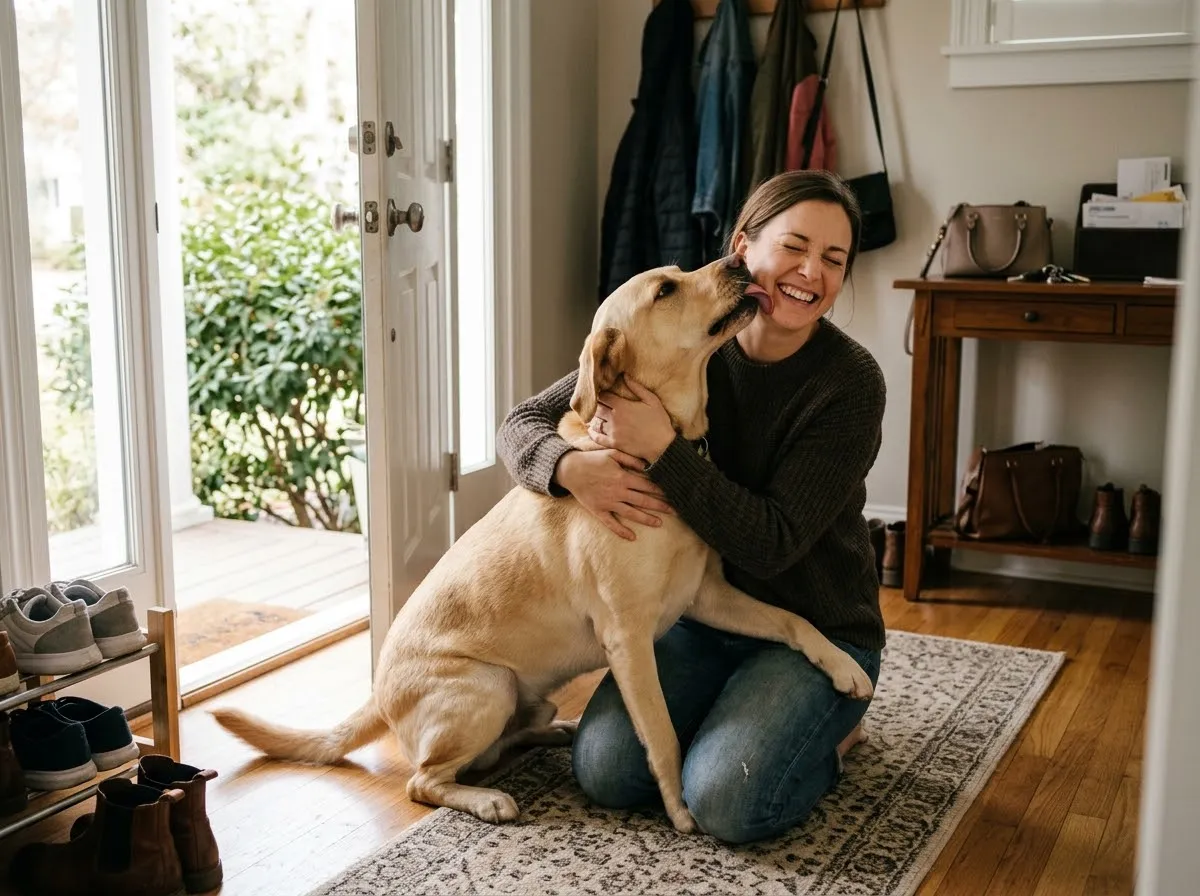
None of this is a sign that something’s wrong. A happy, wiggly greeting that settles within a few minutes is just a dog who’s glad you’re back.
Is It Normal or Separation Anxiety?
This is the question worth asking. At the front door a happy dog and an anxious dog can look kinda the same. The difference shows up while you’re out.
| Normal excitement | Possible separation anxiety |
|---|---|
| Dog is relaxed while you’re out | Dog howls, barks or whines for long stretches |
| Greeting calms down in a few minutes | Greeting is frantic and slow to settle |
| No damage at home | Scratching or chewing at doors and windows |
| Normal potty habits | Accidents only when left alone |
| Eats normally when you leave | Won’t eat or drool heavily when alone |
Easy test, costs nothing. Prop your phone up or use a pet cam and film the first half hour after you head out. If your dog naps, great. If they pace, cry and scratch the door the whole time, talk to your vet. The ASPCA’s guide to separation anxiety is a good place to start, and serious cases often do best with a vet behaviorist.
Dogs who glue themselves to you all evening might be on the clingy side too. We covered that in why your dog follows you everywhere.
Why Dogs Jump, Bring Toys and Pee When You Come Home
Jumping up
Dogs greet each other face to face. Your face is way up there, so they jump to reach it. It’s friendly, not dominant. It’s still a problem when it’s a 70-pound Lab and your grandma, though.
Bringing you a toy or a shoe
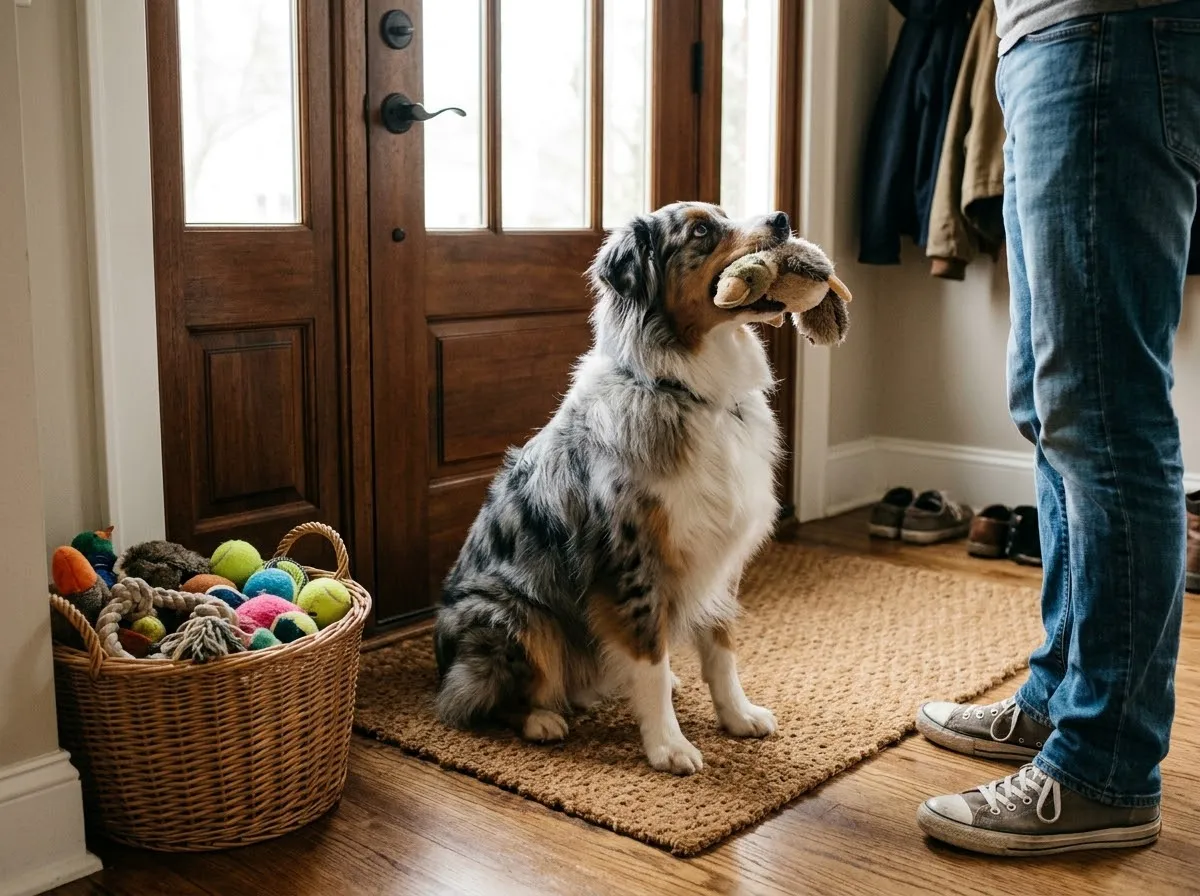
My dog grabs whatever’s closest, usually a sock, and parades around with it. Some dogs do this to burn off energy, some because it’s a “gift” that once got them attention, and some because holding something in their mouth seems to calm them down. It’s a pretty good habit to keep, honestly. A dog carrying a toy can’t jump and lick at the same time.
Licking
Licking your face or hands is part of that old greeting ritual. Here’s more on why dogs lick you if yours goes overboard.
Peeing when you walk in
Ugh, the happy pee. Super common with puppies, and most outgrow it by their first birthday or so. Submissive peeing is a bit different, the pup crouches low, flips over or won’t look at you while it dribbles. Calm hellos help with both. Don’t yell about it, ever. It only makes it worse. If an adult dog suddenly starts leaking, get a vet check to rule out a medical cause.
How to Calm an Overexcited Dog When You Come Home
The goal isn’t a dog who doesn’t care that you’re home. It’s a dog who’s happy but keeps four paws on the floor. Here’s what worked for us.
- Make arrivals boring for the first minute or two. Walk in, put your stuff down, don’t make eye contact or talk in that squeaky voice yet.
- Turn away if they jump. Fold your arms and turn your back. The second all four paws hit the floor, calmly say hi and pet them.
- Once “sit” is solid, use it at the door. Butt on the floor gets a treat or a quiet scratch.
- Stash a toy by the entrance. Hand it over or chuck it down the hall as you walk in, and all that energy lands on the toy, not your pants.
- Practice fake arrivals. Step out for 30 seconds, come back in calmly, repeat. Boring is the point.
- Make your exits low-key too. Long, emotional goodbyes can crank up the excitement on the other end.
- Burn some energy first. A dog who had a decent walk and a puzzle toy during the day greets you more calmly than one who’s been bouncing off the walls.
Give it a couple of weeks of everybody in the house doing the same thing. If one person still does the big squeaky greeting, the dog will wait for that person and lose it.
Mistakes That Make It Worse
- Pushing the dog away with your hands. To a dog, that looks like play.
- Yelling “No! Down!” in an excited voice. You’re adding energy, not removing it.
- Kneeing a jumping dog. It can hurt them and it doesn’t teach them what you want.
- Giving attention only when they’re wild and ignoring them when they’re calm. Flip that around.
- Expecting overnight results. These habits took months to build.
Dog Excited When Owner Comes Home FAQ
Is it normal for my dog to go crazy when I come home?
Yes, a big happy greeting is normal. It becomes a concern only if it doesn’t settle within a few minutes, if someone gets hurt, or if it comes with signs of distress while you’re away.
Do dogs miss their owners when they’re gone?
Looks like it. Those Swedish researchers saw way bigger greetings after two hours away compared to just half an hour, so they do seem to notice.
Should I ignore my dog when I get home?
Only for a minute or two, not like a cold shoulder. Once they settle, go say hi properly. They figure out pretty fast that chill gets the cuddles.
How do I know if my dog has separation anxiety?
Film them while you’re out. If you see nonstop barking or howling, pacing, pee on the floor, or chewed-up door frames, that’s worth a vet visit.
Will my puppy grow out of excited peeing?
Usually, yeah, around the one-year mark, quicker if you keep hellos low-key. If a grown dog suddenly starts leaking, though, book a vet check.
Why does my dog only go wild for one person?
Bet that’s the person who goes the most bananas at the door, or the one in charge of dinner and walks. Dogs do what works.
My last tip: I keep a little basket of toys right by the front door now. Grab one on the way in, toss it down the hall, and by the time he brings it back, we’re both calm enough to say a proper hello.
If this helped, save it to your Pinterest board, and tell me in the comments what your dog does when you walk in the door. I bet somebody’s dog brings a shoe too.
Leave a Reply